Why Basic Gun Dog Training Builds a Lifelong Partnership
Basic gun dog training is about more than just commands—it’s about building a partnership with your pup that makes every hunt a joy. Whether you’re dreaming of watching your dog work a field or just want a well-mannered companion at home, the foundation starts with simple, consistent obedience.
Quick Answer: The Core of Basic Gun Dog Training
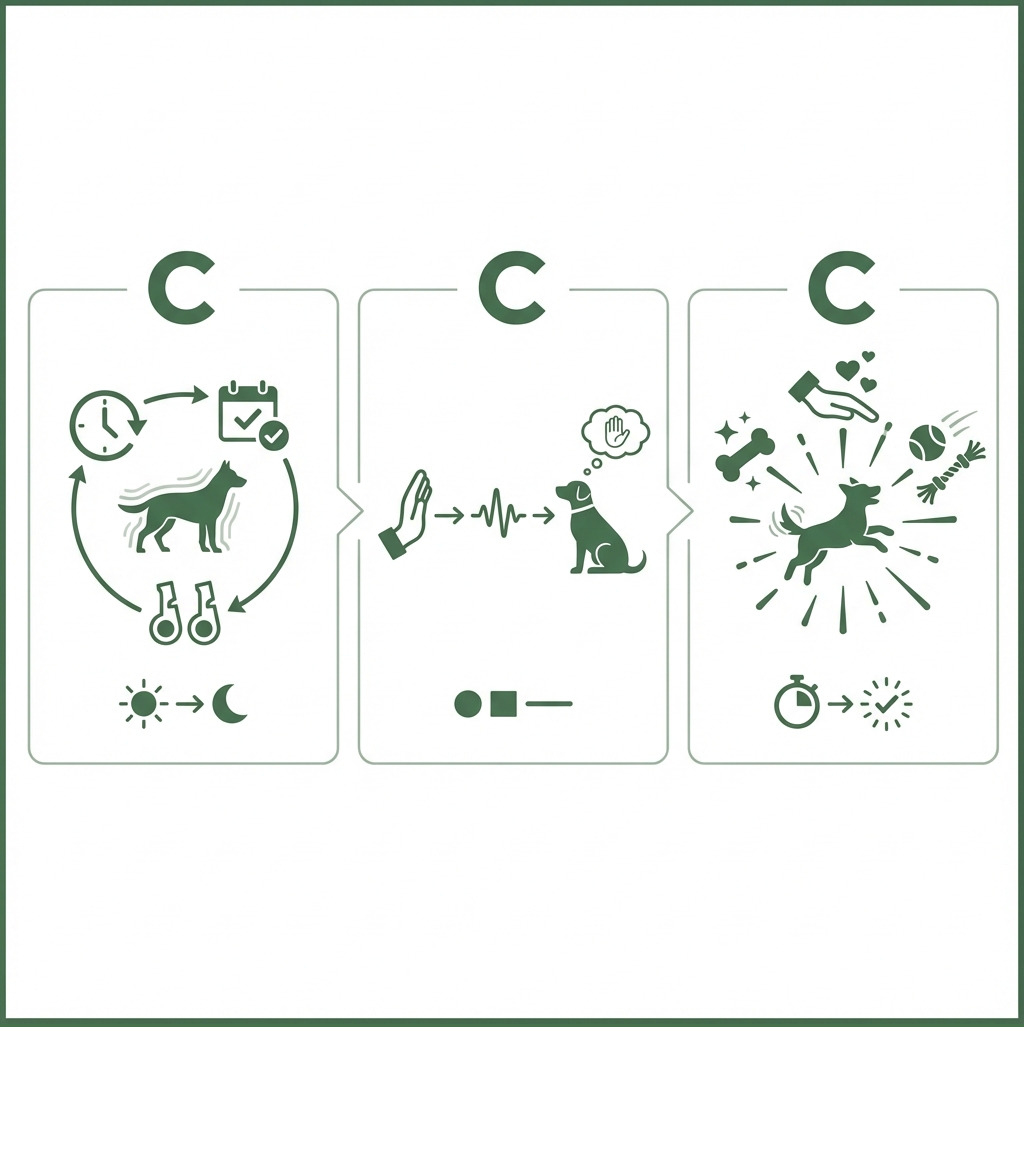
- Start Early – Begin gentle socialization and play-based training at 8-10 weeks old
- Master the Core Four – Focus on Sit, Come, Heel, and Stay as your foundation
- Keep It Positive – Use praise and treats to reward good behavior
- Be Consistent – Train 10-15 minutes daily, always enforce the commands you give
- Build Gradually – Move from voice commands to whistle cues as your dog progresses
Here’s the truth: dogs are born with 90% of what they need to be great hunters. Your job isn’t to force them into something unnatural—it’s to channel those instincts and teach them to hunt for you. The beautiful part? This training strengthens your bond and creates a dog that’s a pleasure both in the field and curled up on the couch at home.
The journey from wiggling puppy to reliable hunting partner takes patience, but it’s one of the most rewarding experiences a dog owner can have. Most owners see real progress within a few weeks when they commit to short, fun training sessions. The secret isn’t fancy techniques or expensive gear—it’s consistency, clear communication, and celebrating every small win.
At Pet Caddy, we understand that training doesn’t stop when you walk out the door. That’s why our hands-on human interaction and reinforcement of good behavior are always included at no extra cost. We believe a well-trained dog deserves a place where their good habits are celebrated and continued, not just during formal training sessions.
The Groundwork: Setting Your Pup Up for Success
When we welcome a new puppy into our lives, especially one destined for the field, we’re not just getting a pet—we’re bringing home a future partner. The early days are about laying a solid foundation, which means setting your pup up for success right from the start.
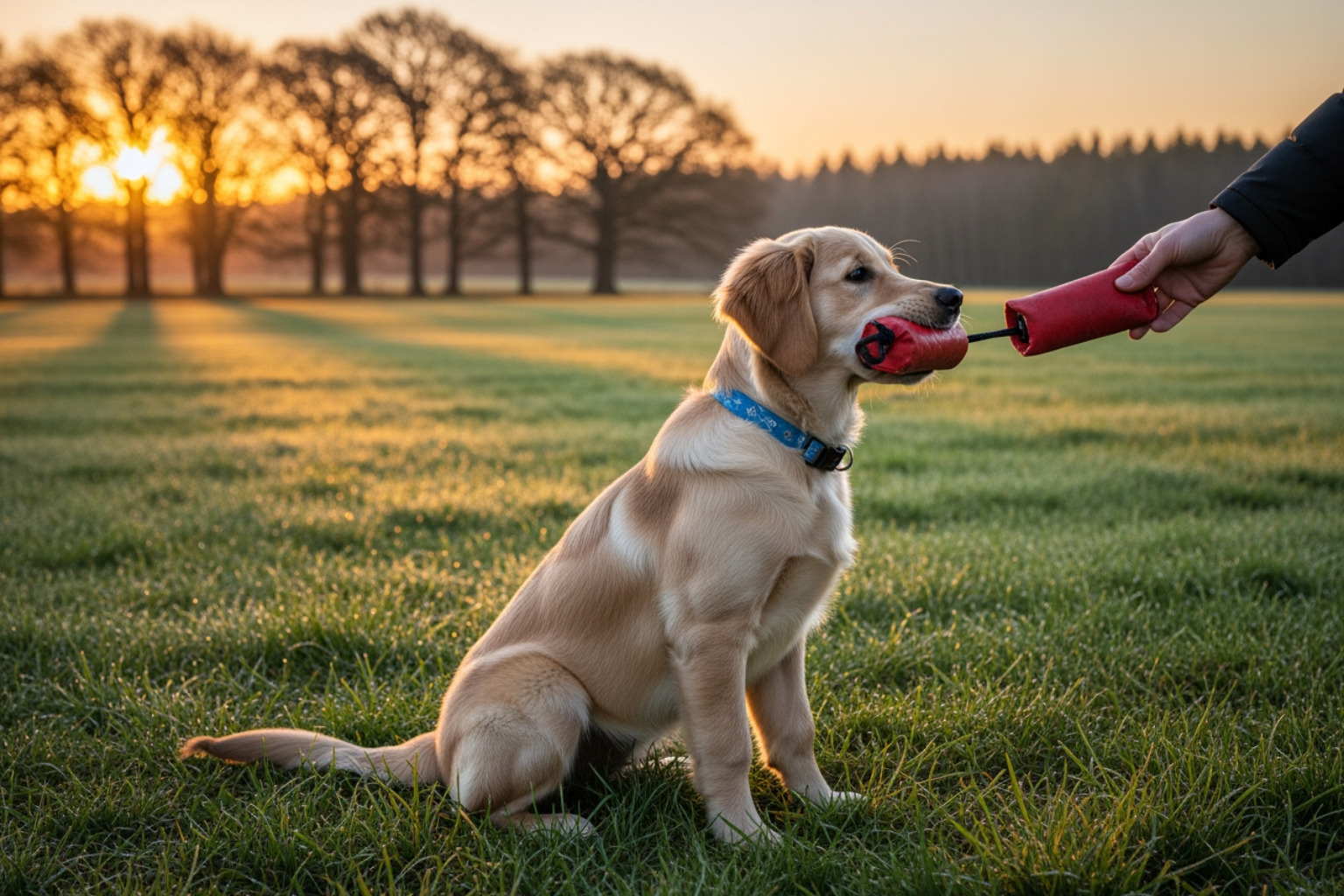
The Importance of Consistency
“Obedience training is simply a matter of applying fundamental repetitive training techniques in a controlled environment until each command becomes a conditioned habit.” This isn’t just a fancy way of saying “practice makes perfect”; it’s the bedrock of all successful training. Consistency is key, not just in what we teach, but how we teach it. Imagine trying to learn a new language if the rules changed every day—our pups feel the same way!
Training the Trainer First
Often, the most impactful element of a gun dog’s future success isn’t about the dog at all, but about us, the humans. We need to be clear, confident, and consistent in our commands. Our pups rely on us to be their patient guides.
The Power of Positive Reinforcement
We want our young dogs to associate coming to us when called, and indeed all training, with a positive experience. This is where positive reinforcement shines. All of our puppy training is 100 percent food motivated in the early stages. Rewarding good behavior promptly and enthusiastically helps our pups understand what we’re asking of them, making training a joyful game, not a chore.
Praise and Food Motivation
A happy “Good dog!” and a tasty treat go a long way. Treats are like little gold stars for our pups, letting them know they’ve hit the mark. As they grow, our praise becomes more powerful, building that special bond.
Early Socialization with New People and Sounds
Socialization is incredibly important for a pup. Think of it as preparing them for the big, wide world. Take your puppy everywhere, exposing them to different people, dogs, sounds, and environments. This helps them become confident, adaptable companions, ready for anything from a lively family gathering to a busy hunting blind. A well-socialized dog is a calm, focused dog, even amidst distractions.
The Role of Crate Training in Creating a Safe Den
A crate isn’t a punishment; it’s a cozy, safe space—a personal den for your pup. Introduce the crate as a positive space using a command like “kennel.” We want the crate to be a happy place, a spot where they feel secure and can relax. This can be invaluable for potty training, travel, and giving your dog a quiet retreat in a busy home or while visiting one of our Pet Caddy locations in Austin, Lakeway, or Marble Falls. If you’re considering extended stays for your pup, you can learn more about our dog boarding services.
Essential Gear to Get Started
You don’t need a truckload of gadgets to begin. For early retrieving, buy a couple of natural canvas dummies and a check cord. The check cord helps guide and control your pup gently. For obedience, a slip-lead is invaluable. During training sessions, your dog should be on a slip-lead until you are absolutely certain they can be handled successfully off-lead.
Establishing Clear Boundaries From Day One
“Start as you mean to go on, be positive, and be consistent.” This simple mantra guides us. Establishing clear boundaries from day one helps your pup understand their place in the family and what’s expected of them. This isn’t about being bossy; it’s about clear communication and building a relationship based on mutual respect.
Mastering the Core Four: Essential Obedience Commands
Once your pup has settled in and learned the basics of positive reinforcement, it’s time to dive into the core commands. These aren’t just tricks; they’re the language we use to communicate, build trust, and ensure safety, both at home and out in the field.
Teaching the ‘Sit’ Command: The First Step to Steadiness
The ‘sit’ command is more than just a polite posture; it’s the foundation for steadiness, a crucial trait for any gun dog.
Step-by-step instructions:
- Get their focus: Kneel down to be at your pup’s level. Hold a tasty treat just above their nose, slowly moving it backward over their head.
- Lure and command: As their nose follows the treat, their rear will naturally lower into a sit. The moment their bottom touches the ground, give the clear, confident command, “Sit!”
- Praise and reward: Immediately offer the treat and lavish them with enthusiastic praise. “Good sit!” This instant feedback is vital.
- Gentle guidance: If they don’t quite get it, gently apply pressure to their rear with one hand while retarding forward movement with the lead. Release the pressure the instant they sit.
The Importance of Eye Contact
Developing eye contact and focus in the earliest phases of training will pay big dividends as their training progresses. Eye contact establishes a connection and allows your dog to read you, anticipating your next cue. It’s like having a little conversation without words!
Why You Shouldn’t Wear Sunglasses
This might sound like a small detail, but it’s important: you cannot establish eye contact with a puppy when you are wearing sunglasses. Your eyes are a key part of your communication with your dog, conveying intent and emotion. So, ditch the shades during training sessions.
Adding a Simple Hand Signal
Once your pup reliably sits with the verbal command, start pairing it with a simple hand signal—perhaps an open palm moving downwards. Soon, you’ll be able to use the hand signal alone, which is incredibly useful for silent communication in the field.
Practicing in New Environments to Build Reliability
Start practicing ‘sit’ in quiet, familiar places. As your pup gets the hang of it, move training outdoors to increase distractions and distance. A dog that can ‘sit’ in your peaceful backyard needs to learn to ‘sit’ when there’s a squirrel in the park or a bird in the field.
Teaching ‘Heel’: Walking Together in Harmony
A gun dog that pulls on the lead is no fun, especially when you’re trying to steer rough terrain. ‘Heel’ teaches your dog to walk politely by your side, shoulder aligned with your leg, making every outing a pleasure.
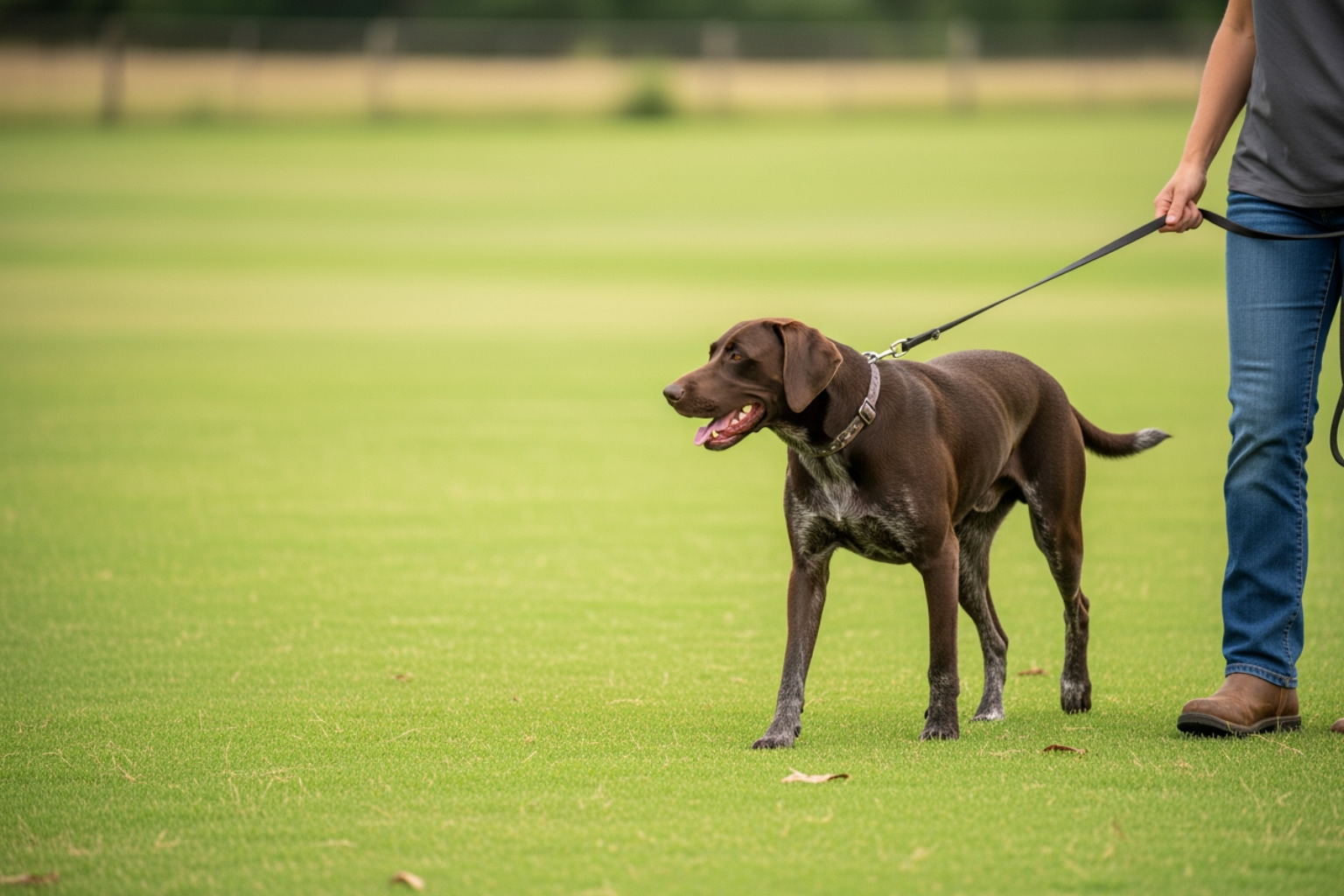
Proper Slip-Lead Placement for Clear Signals
The slip-lead is a crucial tool here. Place the slip-lead so it forms a ‘P’ shape around the dog’s neck, with the live ring on top. This allows for immediate pressure and release, giving clear signals to your dog. During training sessions, the dog should be on a slip-lead until you are absolutely certain they can be handled successfully off-lead.
Using a Wall or Fence as an Initial Guide
To start, use a barrier like a wall or fence. With your dog on the slip-lead, position them between you and the barrier. This naturally encourages them to stay close to your side. Get their attention, command “Sit,” then “Heel.” Move your foot forward and give a slight tug on the lead.
Common Challenges Like Pulling
Pups pull! It’s natural. If they get ahead, give them slack, turn, and walk the opposite direction, giving them an unpleasant jerk. This isn’t harsh; it’s simply communicating that pulling gets them nowhere. They’ll quickly learn that staying by your side is much more comfortable.
Simple Corrections Like Reversing Direction
A common and effective correction for a dog that’s not heeling correctly is to reverse direction. The moment they pull or lag, change direction sharply. This quick, unexpected movement helps correct their heeling position. A quick snap of the lead can also serve as a gentle reminder.
Keeping Walks Fun and Engaging
Vary your walking speed and direction during heeling practice. Make it a dynamic exercise, not a monotonous march. Always end your training sessions on a positive note, perhaps with a little play, so your pup associates ‘heel’ with fun and connection.
Mastering the ‘Come’ Command: The Most Important Cue of All
The ‘come’ command is arguably the most vital cue for any dog, especially a gun dog. It’s a safety command, a bonding command, and a cornerstone of control.
Making Recall a Happy Event
We want our young dog to associate coming to us when called with a positive experience. Every single time. When your dog comes, celebrate them like they’ve just won the lottery! Enthusiastic praise, a favorite treat, or a quick game of fetch will make them eager to return.
Using a Long Check Cord for Control
Start teaching ‘come’ in a controlled environment using a long check cord (like a 20-foot rope). This allows you to practice recall while still having a safety net. Tug on it gently, crouch down, clap your hands, and command “Come!” as they start towards you. Praise them as they come directly to you.
Why You Should Never Punish a Dog for Coming to You
This is paramount: never, ever punish your dog when they finally come to you, even if it took a while. If you do, you teach them that coming to you leads to bad things, and you’ll quickly lose this essential command. Always make coming to you the best decision they can make.
Starting in a Quiet, Low-Distraction Area
Begin recall training in a quiet, low-distraction environment. A long hallway or a fenced yard is perfect. As they become reliable, gradually introduce more distractions, always ensuring success before moving to the next level.
Celebrating Every Successful Recall with Enthusiasm
Every time your dog comes when called, make it a party! This reinforces the positive association and builds a strong, reliable recall that could save their life one day.
The ‘Stay’ and ‘Place’ Commands: Building Patience and Control
These commands are about building self-control and patience, invaluable traits for a steady gun dog who needs to wait calmly before an action.
Teaching ‘Stay’ by Gradually Increasing Duration and Distance
Once your dog masters ‘sit’, you can introduce ‘stay’. With your dog in a sit, hold your palm in front of their face, and command “Stay.” Drop the leash and take one step back. Return, praise, and reward. If they move, gently return them to the ‘sit’ position and start again. Gradually increase the distance and duration.
The ‘Place’ Command for a Designated Spot
The ‘place’ command teaches your dog to go to a specific spot—a bed, a mat, or even a designated patch of turf at one of our Pet Caddy ranches in Austin, Spicewood, or Horseshoe Bay—and stay there until released. This is essential for retrievers who need to wait patiently in a blind and useful for any dog to have a calm spot in the home.
Using a Dog Bed or Mat as a Target
Start by luring your dog onto a dog bed or mat with a treat, saying “Place!” as they step on it. Reward them for staying. Soon, the bed itself becomes the cue. This command helps create a calm dog at home and can be a lifesaver when you need your dog to settle down amidst excitement. If you’re looking for extra enrichment and structured play during the day, our doggy daycare services can reinforce these good habits.
Field-Ready Skills: Your Guide to Basic Gun Dog Training
With a solid foundation of basic obedience, your gun dog is ready to start honing skills specifically for the field. This is where their natural instincts truly begin to shine!
Introduction to Retrieving: Tapping into Natural Instincts
The joy of watching a gun dog retrieve is unparalleled. It’s a dance between instinct and training, and it all starts with making it fun.
Keeping Early Retrieving Sessions Short and Fun
In the early stages of your puppy’s life, you want to make learning to retrieve quick, fun, and unstructured. Toss a natural canvas dummy only a few feet initially, encouraging your pup to pick it up and bring it back. Keep sessions short—a few minutes for young puppies—and full of praise.
Using a Hallway to Encourage a Straight Return
A simple trick for early retrieving is to use a hallway with closed doors. This creates a natural corridor, limiting your puppy’s escape routes and encouraging them to run straight back to you with the dummy. It helps them build good habits from the start.
Ending the Game While the Pup Still Wants More
Always end retrieving sessions while your pup still wants to play more. This keeps their drive high and ensures they always associate retrieving with excitement and positive feelings.
Teaching the ‘Give’ Command Gently
Once your pup brings the dummy back, you need them to release it. Command “Give!” while gently taking the dummy from their mouth. Reward them immediately. If they’re reluctant, you can gently guide their mouth open. Consistency here will lead to a soft mouth and a willing retrieve.
From Voice to Whistle: Advancing Your Basic Gun Dog Training
Verbal commands are great up close, but in the field, a whistle becomes your best friend. It cuts through wind and distance, providing clear, consistent signals.
Why a Whistle is a Great Tool for the Field
The transition from voice to whistle is very important because this forms the basis for controlling the dog during future training sessions. Verbal commands and audible commands, such as whistle blasts, are key handling and training tools. Owners are terrifically inconsistent in their delivery of verbal commands—we often vary our tone or repeat ourselves. A whistle, however, always sounds the same, making communication crystal clear for your dog.
How to Transition from a Verbal ‘Sit’ to a Whistle Command
Once your dog reliably performs a verbal ‘sit’, you can transition to a whistle. Give your verbal “Sit” command, and as your dog sits, immediately blow your chosen whistle signal for ‘sit’ (often a single, long blast). Reward. Over time, your dog will associate the whistle with the action. Eventually, you’ll be able to use just the whistle.
Using a Single Whistle Blast for ‘Stop’
A single, quiet blast on the whistle is commonly used as a ‘stop’ or ‘sit’ command from a distance. If your pup is running towards a retrieve, a single blast can tell them to stop and sit, waiting for further direction. The key is to be steadfastly consistent about that association. Only one command should be issued.
Keeping Whistle Cues Simple and Consistent for Clear Communication at a Distance
Dogs respond to concise commands that are delivered with consistent energy and enthusiasm. Whether it’s a single blast for ‘sit/stop’, two short pips for ‘come’, or a series of pips for direction, the command should be given with confidence, and compliance should be consistent. This forms the basis for controlling your dog during future training sessions, even when they’re far away.
Preparing for the First Hunt: A Positive Introduction
The first hunt is a milestone, but it’s crucial to make it a positive, confidence-building experience for your gun dog.
Gradual Introduction to Gunfire
A gun-shy dog is hard to cure and useless in the field, so proper introduction to gunfire is paramount. Never start with a loud shotgun blast! Introduce birds first until your dog loves chasing and retrieving them. Then, while your dog is happily occupied with a bird, have someone fire a blank pistol (using .22 or .209 primers) from a distance (e.g., 100 yards). Gradually decrease the distance over time, always associating the sound with the excitement of birds. Eventually, you can graduate to a shotgun at a distance.
Associating Loud Noises with Positive Things Like Retrieving
The goal is to create a positive association: gunfire equals birds and fun! If your dog looks back at you after the first shot, act as if nothing happened and encourage them back to the bird. Never comfort a frightened dog, as this can reinforce their fear.
Keeping the First Hunt Short, Simple, and Successful
The first hunt isn’t about filling your bag; it’s about your dog’s experience. Control the situation by choosing a familiar, low-pressure environment. Keep it short, simple, and ensure success. This might mean having a friend shoot while you focus on your dog’s behavior, reinforcing good habits and celebrating every effort.
Focusing on the Dog’s Experience, Not the Number of Birds
“The first hunts are more about the dog’s development and learning, controlling the situation to ensure a good start, rather than on the quantity of birds shot.” Your dog’s confidence and positive association with hunting are far more important than the harvest.
Managing Your Dog’s Excitement
Hunting is exciting! Dogs can get overwhelmed. Don’t get angry if your dog forgets some training in the heat of the moment. They’re likely just over-excited. In new, exciting settings, practice your basic ‘sit’ and ‘stay’ commands to reinforce discipline. This helps them learn to channel their enthusiasm into focused work.
Frequently Asked Questions about Gun Dog Training
We often hear similar questions from proud pup parents starting on this wonderful journey. Here are some of the most common ones, with our insights.
When should I start formal gun dog training?
The great news is that training begins the moment your puppy comes home! You can start gentle socialization and play-based training as soon as your puppy is around 8-10 weeks old. This includes positive exposure to new sights, sounds, people, and other friendly dogs. More structured obedience like ‘sit’ and ‘heel’ can start to take shape around six months of age, but the foundation of communication, trust, and positive associations is built from day one. Consistency is key from the very beginning.
What commands should my gun dog know by six months old?
By the time your pup reaches six months, they should have a solid understanding of several key commands. A great goal for a six-month-old pup is to have a good handle on:
- “Sit”: Reliable and consistent, even with minor distractions.
- “Get out” (or “back”): Used for sending them for a retrieve or to a specific spot, potentially combined with left, right, and back hand signals.
- “Heel”: Walking politely by your side, ideally responding to a gentle tap on your left leg as a cue.
- “[Name], come”: A rock-solid recall, associating coming to you with positive experiences.
- “In”: For entering their bed, car, or transit box happily.
Establishing these commands provides a wonderful foundation for all future specialized gun dog training.
How do I correct my dog without being harsh?
The most effective corrections are clear, immediate, and fair, without being harsh. We focus on celebrating what your dog does right! For minor infractions, a quick pop of the lead for heeling that immediately releases, or redirecting them from an unwanted behavior, is often enough. The key is clear communication and ensuring you never give a command you can’t gently enforce.
If your dog is doing something you don’t want, like jumping up, a firm, gentle “No!” followed by removing them from the situation and ignoring them for a short period can be very effective. Discipline should be firm, gentle, and only administered if the dog is caught in the act. There’s no reason to hit a dog. Remember to act fast—dogs don’t understand corrections for things that happened even a few seconds ago. This approach builds trust and helps your dog understand boundaries without fear.
The Rewarding Journey of a Hunting Partnership
The journey of basic gun dog training is a truly special one. The bond built through this shared experience is deep and enduring. A well-trained gun dog is more than just a hunting escort; they’re companions that, when properly trained, are a pure joy to watch work. Training isn’t a one-time event; it’s an ongoing conversation with your dog, evolving as they grow and learn.
We encourage you to celebrate the small wins, the tiny moments of understanding, and to simply enjoy the process. Every successful ‘sit’, every happy recall, every confident retrieve builds not just skill, but also that invaluable partnership.
For our friends needing dog training in the Lakeway, Steiner Ranch, or Marble Falls areas, a well-trained dog is a joy both in the field and at home. At Pet Caddy, we understand the importance of continuing good habits and nurturing that bond. We offer a home-like environment where your dog’s training is reinforced through consistent care, hands-on human interaction, and plenty of wide open spaces for healthy, supervised play. Our commitment to transparent pricing means you’ll never find hidden fees, and services like all-day play and personalized attention are always included.
If you’re looking to deepen your dog’s obedience and field skills, or simply reinforce the great habits you’ve already established, we’re here to help. Learn more about our board and train programs. We believe every dog deserves to release their full potential, and we’re passionate about helping them do just that, right here in the heart of Texas.