More Than Just Good Manners: Why Every Dog Deserves Training
Basic obedience dog training is the foundation for a well-behaved, happy dog and a stronger bond between you and your pup. If you’re looking for training services in the Austin area, here’s what you need to know:
What Basic Obedience Training Covers:
- Core Commands: Sit, Down, Stay, Come, Leave It, and Heel (loose-leash walking)
- Training Methods: Positive reinforcement using treats, praise, and play
- When to Start: As early as 8 weeks for puppies, but it’s never too late for adult dogs
- Session Length: Short 5-10 minute sessions, multiple times per day
- Results Timeline: Noticeable improvements within a few weeks with consistent practice
A well-behaved dog isn’t just about having good manners around the house or on walks through Steiner Ranch. It’s about building a shared language with your pup. Training creates clear communication between you and your dog, turning everyday moments into opportunities for connection instead of frustration.
Think of it this way: a dog that understands what you’re asking is a confident dog. They know their place in the family. They feel secure. And that security translates into a calmer, happier companion who’s a joy to live with—whether you’re at home in Lakeway or exploring the greenbelt.
Training isn’t about control. It’s about partnership. It’s teaching your dog how to steer the world safely and how to make good choices. It’s the difference between a dog that bolts toward traffic after a squirrel and one that checks in with you first. The most important command—”Come”—can literally save your dog’s life.
At Pet Caddy, we understand that training is part of the bigger picture of responsible dog ownership. That’s why our Board & Train programs combine the ranch adventure your dog craves with hands-on training that reinforces good behavior. No hidden fees. No cramped kennels. Just wide-open spaces, custom play, and the kind of care that helps your pup become their best self.
Key basic obedience dog training vocabulary:
Why Training Matters: Building a Foundation for a Lifetime of Tail Wags
At Pet Caddy, we believe that basic obedience dog training is one of the best gifts you can give yourself, your family, and your beloved pet. It’s a journey that builds a strong foundation for a lifetime of happy moments and wagging tails.
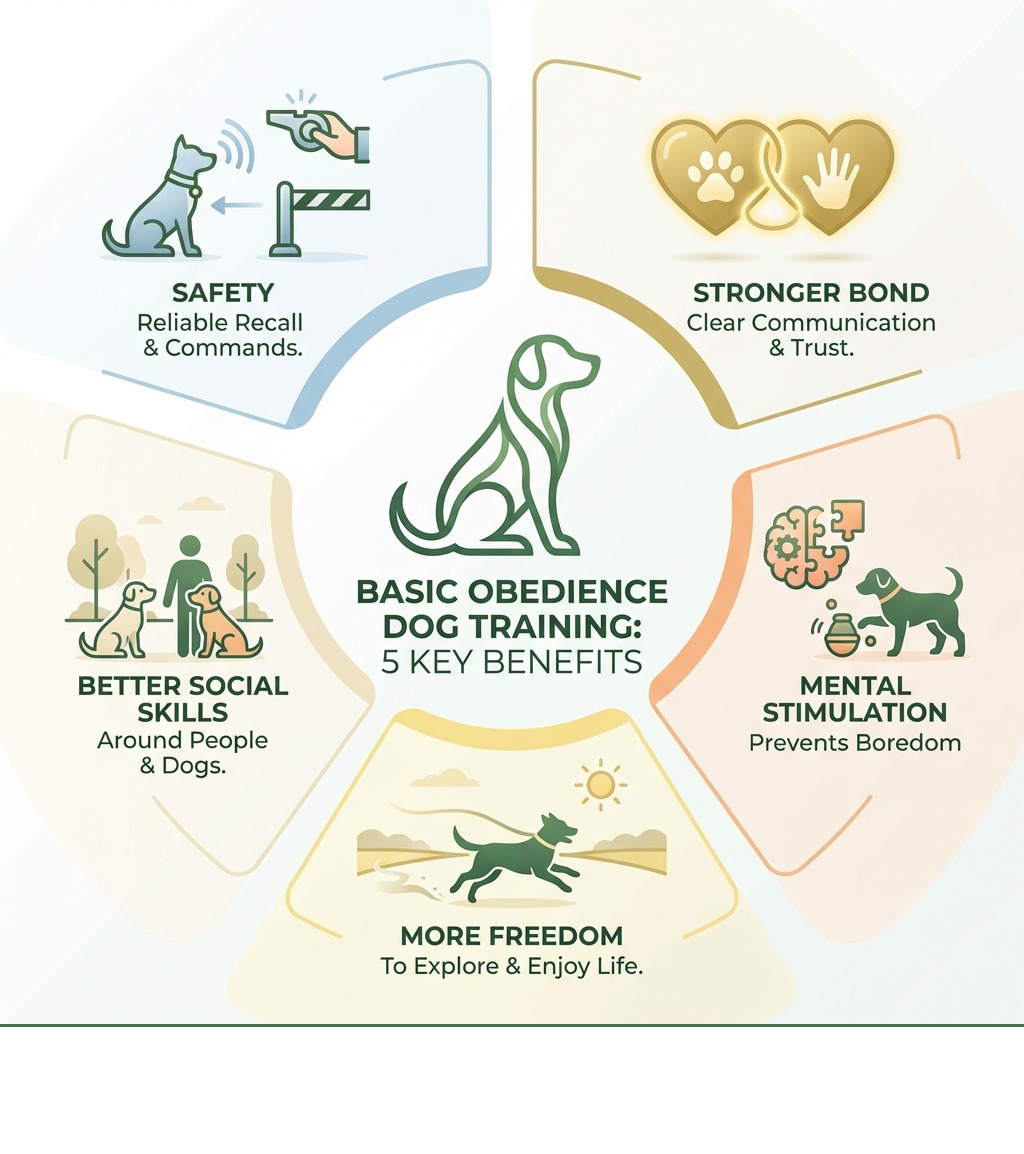
One of the most profound benefits of training is how it strengthens the bond between you and your dog. When you engage in training, you’re not just teaching commands; you’re building mutual trust and respect. It’s a dance of clear communication, where your dog learns what to expect from you, and you learn to understand their cues better. This deepens your connection, making every interaction more meaningful.
Beyond the emotional connection, training is incredibly important for your dog’s safety and well-being. Imagine your pup darting off after a squirrel near a busy road in Bee Cave. A strong “Come” command, or recall, can be the difference between a scare and a tragedy. As experts often say, “Come” is the most important command because it can literally save a dog’s life. Commands like “Stay” and “Heel” also play crucial roles in preventing dangerous situations, keeping your furry friend safe in various environments.
Training also provides vital mental stimulation for your dog. A tired dog is often a happy dog, and that doesn’t just mean physical exercise. Engaging their minds with learning new commands and behaviors helps prevent boredom, which can often lead to “annoying behaviors” like excessive chewing on furniture, digging up the yard in Lakeway, or barking at every passerby. It helps them feel satisfied and fulfilled, like they’ve done a good day’s work.
Moreover, basic obedience dog training introduces your dog to important socialization benefits. Learning to behave calmly around new people and other dogs builds confidence. Training classes, for instance, offer a fantastic opportunity for dogs to feel comfortable and build their self-assurance in social settings. This is particularly valuable for pups growing up in busy communities like Steiner Ranch or Spicewood. For more on this, check out our insights on Dog Obedience Training.
Investing in training is a cornerstone of responsible dog ownership. It teaches your dog appropriate social behavior, helps correct less-than-ideal habits, and keeps them entertained and happy. It’s about ensuring your dog is a well-adjusted member of your family and community, ready for any adventure you start on together.
Getting Started: Your First Steps in Basic Obedience Dog Training
Starting on the journey of basic obedience dog training can feel a bit like learning a new language, but we promise it’s a rewarding experience for both you and your canine companion!
So, when is the best time to start? The good news is, puppies can begin very simple training as soon as they come home, often around 8 weeks old. This early start, sometimes as young as six to seven weeks, allows us to tap into their natural curiosity and eagerness to learn. It’s easier to form good habits from the get-go than to try and “un-learn” less desirable behaviors later on.
But what if your furry family member isn’t a puppy anymore? Don’t you fret! It’s truly never too late to teach an old dog new tricks. While it might take a bit more patience to retrain an adult dog who has established certain habits, the benefits are just as significant. The key ingredient here is, you guessed it, patience! Consistency and a positive attitude will go a long way, no matter your dog’s age.
To help you get started on this exciting journey, we’ve put together some fantastic resources, including our guide on Unlock Good Behavior: The Must-Know Basic Dog Commands.
The Fundamental Commands Every Dog Should Know
When we talk about basic obedience dog training, we’re typically referring to a set of fundamental commands that are essential for a well-mannered and safe canine companion. These aren’t just parlor tricks; they’re vital tools for communication and safety in daily life.
Let’s explore the seven basic commands every dog should know:
- Sit: A classic for a reason! “Sit” is incredibly useful for greeting visitors calmly, waiting patiently before crossing a street in Lakeway, or simply asking for attention politely instead of jumping.
- Down: This command is fantastic for calming an excitable dog, settling them down in a restaurant patio in Bee Cave, or providing a comfortable resting position during quiet times. Some trainers even advocate teaching “Down” before “Sit” to prevent “sloppy problems” later on.
- Stay: Crucial for safety, “Stay” allows you to control your dog’s movement, preventing them from running into dangerous situations, like bolting out an open door.
- Come: As we’ve mentioned, “Come” (or recall) is arguably the most important command. It ensures your dog’s safety and keeps them under control, especially in off-leash environments like our wide-open spaces at Pet Caddy. For a deeper dive into this life-saving command, check out Teach Dog to Come.
- Off / Don’t Touch / Leave It: This command helps prevent your dog from picking up harmful objects, chasing wildlife, or bothering other animals. It teaches them to ignore or leave items alone when instructed, a valuable skill in any Austin neighborhood.
- Heel (Loose-leash walking): Teaching your dog to walk politely by your side without pulling ensures enjoyable and controlled walks for both of you, whether you’re strolling through Steiner Ranch or exploring a new trail.
- Drop It: Helpful for preventing resource guarding and safely retrieving objects from your dog’s mouth, especially if they’ve picked up something they shouldn’t have.
Each of these commands serves a practical purpose, making life with your dog smoother, safer, and more enjoyable. They form the bedrock of a well-behaved dog, ready to explore the world with you.
The Perks of Puppyhood: Starting Basic Obedience Dog Training Early
Starting basic obedience dog training during puppyhood offers some wonderful advantages. It’s much like teaching a child good habits from a young age—it’s often easier to instill them early than to correct them later. As the saying goes, “It’s easier to train a puppy how to act properly than it is to retrain an adult dog who may have already established less-than-ideal behaviors.”
Puppies are sponges, eager to soak up new information and experiences. This early training capitalizes on their impressionable stage, helping them quickly learn what’s expected. It means less “un-learning” of unwanted behaviors down the road, saving you time and potential frustration. For a comprehensive guide on navigating this exciting phase, our Dog Puppy Training Guide is a great resource.
Beyond commands, puppyhood is a critical window for socialization. Exposing your pup to new sights, sounds, people, and other friendly dogs in a positive, controlled manner helps them grow into a confident, well-adjusted adult dog. This early exposure helps them feel comfortable in various situations, whether it’s a visit to the vet in Spicewood or a busy dog park. It’s about building a solid foundation for a lifetime of happy interactions and adventures.
The ‘How-To’ of Happy Training: Effective Methods & Essential Gear
Now that we’ve covered the ‘why’ and ‘when’ of basic obedience dog training, let’s dive into the ‘how-to’. Our approach at Pet Caddy, and what we recommend for all dog owners, centers around effective, humane methods that strengthen your bond with your pup.
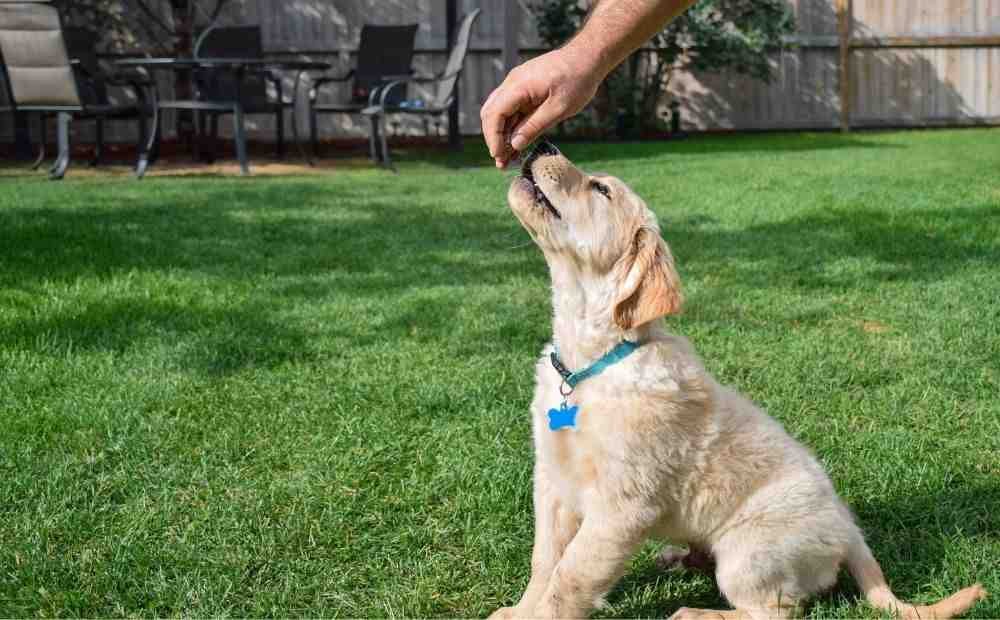
The most effective method, widely supported by animal welfare organizations and experts, is positive reinforcement. This means rewarding the behaviors we want to see more of. When your dog does something right—like sitting when asked—they get something wonderful in return, whether it’s a tasty treat, enthusiastic praise, or a favorite toy. This makes training a fun, positive experience that your dog looks forward to, fostering eagerness to learn rather than fear or reluctance. It’s all about making good choices rewarding!
Clicker training is a fantastic tool within positive reinforcement. A clicker acts as a precise marker, telling your dog exactly the moment they performed the desired behavior correctly. It’s like taking a picture of the good behavior. The click is always followed by a reward, helping your dog quickly understand what they did to earn that treat.
Basic obedience dog training teaches your dog about basic commands, behavior, socialization, and even how to handle basic grooming tasks. It’s a comprehensive approach to raising a well-adjusted companion. You can read more about this comprehensive approach here: Obedience training teaches your dog about basic commands, behavior, socialization, even how to handle basic grooming tasks.
Your Training Toolkit: What You’ll Need
Getting started with basic obedience dog training doesn’t require a mountain of gear. In fact, a few simple, effective tools are all you need to set yourselves up for success:
- Standard Leash (not retractable): A 4-6 foot standard leash provides better control and clearer communication than a retractable one, which can teach a dog to pull.
- Collar or Harness: A comfortable, well-fitting flat collar or a front-clip harness can be excellent choices. We want our pups comfortable and safe!
- High-Value Treats: These are small, soft, and extra-tasty morsels that your dog absolutely loves. Think freeze-dried liver, small pieces of cheese, or cooked chicken. They should be easy to chew and swallow quickly so as not to interrupt the flow of training.
- Clicker (optional): As mentioned, a clicker can be a powerful tool for precise marking of desired behaviors.
- Favorite Toy: For dogs who are highly toy-motivated, a special toy can be a fantastic reward.
With these simple items, you’re well-equipped to begin your training adventures. For a more in-depth look at all things training, our Dog Training Complete Guide is an invaluable resource.
Structuring Your Sessions for Success
When it comes to basic obedience dog training, especially with puppies or dogs new to learning, quality trumps quantity. We’ve found that shorter, more frequent sessions are far more effective than long, drawn-out ones.
- Keep sessions short: Aim for just 5 to 10 minutes per training session. Dogs, especially puppies, have relatively short attention spans. Trying to push beyond this can lead to frustration for both of you.
- Multiple times a day: Instead of one long session, spread these short bursts throughout the day. You can strive for at least 15 minutes of training per day, broken into three 5-minute increments. This frequency helps reinforce learning without overwhelming your pup.
- End on a positive note: This is a golden rule! Always finish each training session with a success, even if it means asking your dog to perform a command they already know perfectly. This leaves them feeling happy and eager for the next session. We want them to associate training with good feelings and accomplishments.
This approach ensures that training remains fun, engaging, and builds a positive association with learning. It’s about consistency and positive experiences, not about drilling commands until exhaustion.
Navigating the Journey: Handling Setbacks & Knowing When to Ask for Help
Even the most seasoned dog trainers encounter bumps in the road, and that’s perfectly normal! The journey of basic obedience dog training is filled with learning, growth, and occasional “oopsie” moments.
The bedrock of successful training is patience and consistency. There will be days when your dog seems to have forgotten everything they learned yesterday, or when a new distraction makes them completely lose focus. It happens! The key is to stay calm and positive. Getting frustrated or angry will only deter your dog from interacting and listening to you. They are intuitive creatures and can sense our stress, which can hinder their learning.
Common training problems often crop up, such as jumping up on guests, playful nipping, or pulling on the leash during walks around Horseshoe Bay. These are often just your dog’s way of communicating or expressing excitement. For instance, a puppy nipping at hands is often an invitation to play, a behavior perfectly acceptable between dogs but not so much with humans. A dog jumping is usually a gesture of affection that needs to be redirected.
When you encounter these setbacks, a good troubleshooting tip is to “go back a step.” If your dog is struggling with a command, simplify it. Reduce distractions, shorten the duration, or go back to a familiar environment where they reliably perform the behavior. You might also need to increase the value of your reward—that super-tasty treat might be just what they need to refocus!
For more guidance on understanding and addressing these challenges, our article on Behavior Training for Dogs: What It Is and How to Get Started is a great resource.
When to Call a Professional
While much of basic obedience dog training can be handled at home with consistent effort, there are times when seeking professional help is the wisest choice.
Consider calling a professional if you’re dealing with persistent behavioral issues that you can’t seem to resolve on your own. This might include aggression towards other dogs or people, severe anxiety (like separation anxiety), or if you simply feel overwhelmed and unsure how to proceed. A trainer can offer fresh perspectives and custom strategies.
It’s also helpful to understand the difference between a trainer and a behaviorist. A dog trainer is equipped to handle the symptoms of behavioral issues, focusing on teaching new behaviors and commands. A dog behaviorist, on the other hand, digs into the underlying causes of complex behavioral problems. They might be able to help determine the root cause of issues like severe anxiety and then refer you to a trainer for the behavioral modification. Our guide, From Puppy to Pro: Unpacking Dog Training Programs and Their Benefits, offers more insights into professional training.
If you’re looking for a good trainer in the Austin area (including Spicewood, Horseshoe Bay, Marble Falls, Steiner Ranch, Hudson Ranch, Lakeway, Barton Creek, Barton Creek Lakeside, and Bee Cave), word-of-mouth recommendations are golden. Ask friends and neighbors with well-behaved dogs who they recommend. Another excellent tip is to observe a training class before enrolling. This allows you to see the trainer’s style, ensure it aligns with your beliefs, and confirm you feel comfortable with their approach.
Frequently Asked Questions about Basic Obedience Dog Training
We often hear similar questions from pet parents eager to start on their basic obedience dog training journey. Let’s tackle a few of the most common ones.
How long does it take to see results from training?
The timeline for seeing results from basic obedience dog training can vary quite a bit, much like how quickly people pick up a new skill! Factors like your dog’s age, previous experiences, and your consistency in training all play a role. However, most pet parents begin to notice improvements within a few sessions, especially with consistent daily practice at home. Training is a lifelong process, not a one-time fix, but you’ll certainly see positive changes fairly quickly when you commit to it.
Can you train an older dog that has never had training?
Absolutely! It’s a heartwarming myth that you can’t teach an old dog new tricks. While it might take a bit more patience to retrain an adult dog who has established certain less-than-ideal behaviors, it’s never too late to start. Older dogs can learn just as readily as puppies, and often with more focus! The key is to keep training sessions positive, fun, and consistent, focusing on building those good habits one step at a time.
What’s the single most important command to teach?
While all basic commands are valuable, if we had to pick just one, it would be “Come.” A strong and reliable recall can literally be the difference between life and death for your dog. Imagine your dog spotting a squirrel and darting into traffic in a busy area like Lakeway—a swift “Come!” could bring them back to safety. We always emphasize making the “Come” command mean something incredibly rewarding, so your dog eagerly returns to you every single time. It’s truly a life-saving tool in your basic obedience dog training toolkit.
Conclusion: A Well-Behaved Companion and a Stronger Bond
Starting on basic obedience dog training is more than just teaching your dog to sit or stay; it’s an investment in a stronger relationship, a safer companion, and a happier home. We’ve seen how training provides vital mental stimulation, fosters good social skills, and can even save a life with a reliable “Come” command. It’s a continuous process of learning and growing together, changing everyday moments into opportunities for connection and understanding.
At Pet Caddy, we understand that this journey is important to you. That’s why our approach to dog care, including our specialized Board & Train programs, is designed to support your training goals in a way that feels like a ‘home away from home’ for your beloved pup. Imagine your dog enjoying a genuine ‘ranch adventure’ on our five spacious acres, where hands-on human interaction and all-day play are always included at no extra cost. We believe in transparent pricing and a stress-free environment, ensuring your peace of mind while your dog reinforces good manners and enjoys custom play with supervised pals.
Whether you’re looking for foundational training, need help with specific behaviors, or simply want to ensure your dog is a well-rounded member of your family, we’re here to help. Find how Pet Caddy can release your dog’s potential and strengthen your bond.
Unleash Their Potential: Comprehensive Dog Training Services & Solutions