Choosing the Right Path for Your Pup
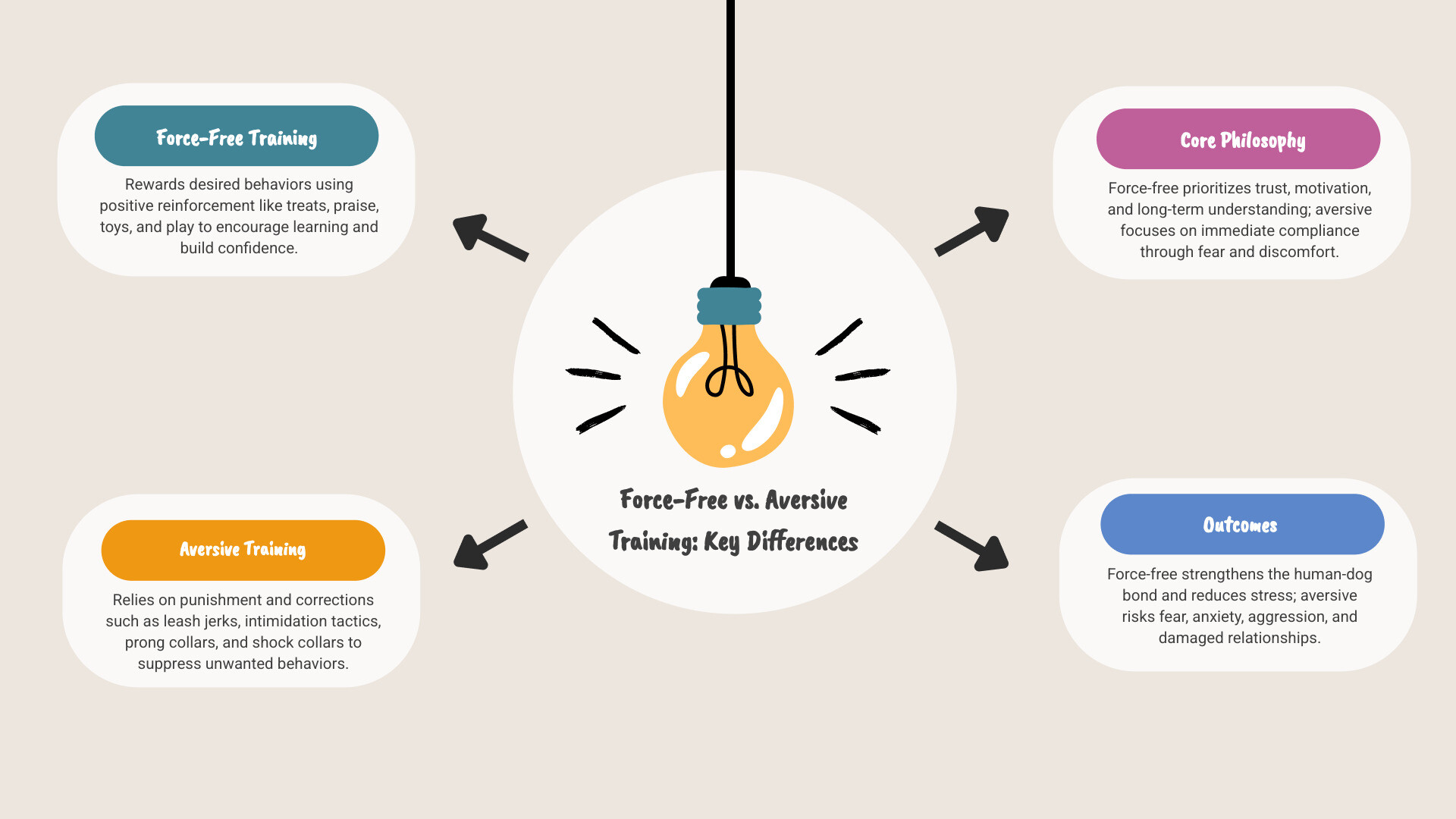
Force free training is a modern, science-based approach that teaches dogs through positive reinforcement. It’s all about rewarding good behavior with treats, praise, or play, without using fear, pain, or intimidation. Instead of corrections with tools like shock or prong collars, force-free methods focus on showing your dog what you want them to do, building trust and confidence along the way.
What Force-Free Training Looks Like:
- Rewards desired behaviors with treats, toys, praise, or life rewards (like walks)
- Avoids fear, pain, or intimidation—no shock collars, prong collars, or yelling
- Builds trust and confidence in your dog, strengthening your bond
- Uses management and redirection to prevent unwanted behaviors
- Based on scientific research on how dogs learn
For pet parents in the Austin area, hearing terms like “force-free,” “balanced,” or “positive reinforcement” can be overwhelming. You want training that’s effective and humane, setting your dog up for a happy life—not one filled with anxiety.
The truth is, not all training methods are created equal. Research shows that positive, force free training leads to more reliable behavior and better well-being for your dog. It’s not permissive; it’s about clear communication and teaching your pup what to do, rather than just punishing what not to do.
In this guide, we’ll break down the difference between force free training and “balanced” training, explain the science, and help you make an informed choice for your dog. Understanding these methods is key to building a joyful, lasting partnership with your pup.
Force free training definitions:
What is Force-Free Dog Training All About?
At its heart, force free training is a modern, humane, and science-backed approach to teaching dogs. It’s built on the idea that dogs learn best when they feel safe, respected, and motivated. Instead of fear or pain, we use positive experiences to encourage good behavior, rewarding our pups when they get things right.
The core principles are simple:
- Use Positive Reinforcement: We find what motivates your dog—a tasty treat, a favorite toy, or a good belly rub—and use it to reward behaviors we want to see more of.
- Build Trust, Not Fear: A strong bond is our goal. When your dog trusts you, they learn willingly, not out of apprehension.
- Avoid Aversives: This means no shock collars, prong collars, choke chains, leash jerks, or yelling. These methods can cause physical and emotional harm.
- Set Them Up for Success: We manage the environment and break down tasks into small steps so your dog is likely to succeed.
As the Pet Professional Guild (PPG) highlights, force-free methods ensure animals are trained with kindness, not intimidation. It’s an approach grounded in science that boosts a dog’s confidence and encourages them to think. For families in Austin, from Spicewood to Lakeway, it means creating a happier home with a dog who learns because they want to, not because they’re afraid.
The Science Behind the Tail Wags
How does your dog learn to sit on cue or get excited by the jingle of keys? It’s all thanks to learning theory, the foundation of force free training. The main idea is positive reinforcement: when your dog does something you like (like sitting), and it’s followed by something they like (a treat!), they’re more likely to do it again. This builds their confidence and makes them an active partner in learning.
Science has shown that this low-stress approach leads to more reliable behavior. And rewards aren’t just food! Anything your dog loves can be a reward:
- A game of fetch or tug
- Enthusiastic praise
- A good sniff on a walk
- Getting to go outside
By finding what truly excites your pup, we make learning a joyful experience. To learn more about positive reinforcement, check out our guide on Gentle Giants: Understanding Positive Reinforcement in Dog Training.
How Force-Free Training Handles Unwanted Behaviors
A common myth is that force free training is permissive. The opposite is true! It’s about effectively managing unwanted behaviors without punishment. Instead of scolding a puppy in Lakeway for chewing furniture, we ask why and use smart strategies:
- Proactive Management: This is our first line of defense. If your pup chews shoes, we put the shoes away. This prevents the behavior from happening and sets your dog up for success.
- Teaching Alternative Behaviors: Instead of just saying “no,” we teach a “yes.” If your dog jumps on guests, we teach them to sit politely instead and reward that good choice.
- Understanding Behavior as Communication: A dog’s actions are often a way of communicating fear, boredom, or anxiety. We listen to what they’re telling us and address the root cause, not just the symptom.
This approach is less stressful for everyone and strengthens your bond. We guide dogs toward what’s “right” instead of punishing what’s “wrong.” For more on this, explore our article on Behavior Training for Dogs: What It Is and How to Get Started.
Understanding “Balanced” and Aversive Training Methods
You might also hear about “balanced training,” a term that sounds appealing but often includes punishment-based techniques. This means that while good behaviors might be rewarded, unwanted ones are corrected using methods that cause discomfort.
What are common aversive training methods?
These methods rely on punishment or intimidation, rooted in the outdated idea that you must assert dominance over your dog.
Common tools and techniques include:
- Prong Collars: Metal prongs pinch the dog’s neck.
- Choke Chains (Slip Chains): Tighten around the neck when pulled.
- Shock Collars (E-collars): Deliver an electric shock, vibration, or sound.
- Leash Jerks/Pops: Sharp, forceful tugs on the leash.
- Physical Corrections: Hitting or forcing a dog onto its back (alpha rolls).
- Verbal Intimidation: Yelling or harsh scolding.
These methods are often justified by debunked “dominance theory,” which came from flawed studies of captive wolves. Modern science shows that wolf packs operate like families, not through aggressive power struggles. Applying these old ideas to our dogs is not only inaccurate but can be harmful. As experts agree, it is “neither necessary nor effective to intimidate dogs and inflict pain.” When kinder methods are available, there’s no reason to use fear.
The Fallout from Fear and Pain
While aversive methods might seem to offer a “quick fix,” they come at a high cost to your dog’s well-being and your relationship.
Here’s what happens when we rely on fear and pain:
- Increased Fear and Anxiety: A dog constantly worried about being corrected becomes anxious and hesitant to learn.
- Aggression: A punished dog may eventually lash out in self-defense. Punishment doesn’t teach them what to do, leading to frustration and aggression.
- Breakdown of Trust: When you become the source of pain or fear, the bond you share erodes. Compliance comes from apprehension, not cooperation.
- Suppression, Not Resolution: Punishment often just suppresses a behavior, like barking, without addressing the underlying cause, such as fear. The problem remains, often showing up in worse ways.
Experts state that aversive methods can cause a “breakdown in trust, cause dogs to become fearful or aggressive, increase anxiety, and potentially cause permanent damage.” Our dogs, whether playing in our Wide Open Spaces or learning at home in Horseshoe Bay, deserve better.
The Long-Term Impact: Building a Bond vs. Breaking It
Your choice of training method profoundly impacts your dog’s emotional well-being and your relationship. When we compare force free training with methods that use aversives, the long-term differences are stark.
Force free training builds a relationship on mutual respect and joy. This leads to a stronger bond, a more confident dog, and reliable, long-lasting behavior. Your dog learns to trust you and wants to work with you.
Conversely, training that relies on pain or intimidation can have lasting negative effects. It erodes trust and can lead to new behavioral issues like fear-based aggression or anxiety. The dog’s compliance is fragile and based on fear, not a cooperative partnership.
Statistics show force free training is more effective for long-term change and fostering a positive relationship. It’s about nurturing a happy, confident dog who is a joy to live with, whether in your Barton Creek home or exploring the Wide Open Spaces at our ranch.
Here’s a quick comparison:
| Aspect | Force-Free Training | Aversive Training |
|---|---|---|
| Dog’s Emotion | Happy, confident, eager to learn, relaxed | Fearful, anxious, stressed, potentially aggressive, confused |
| Owner-Dog Bond | Strong, trusting, cooperative, joyful partnership | Strained, fearful, compliant out of apprehension |
| Long-Term Effectiveness | More reliable, lasting behavior change, addresses root causes | Behavior suppression, potential for new problems, unreliable |
| Tools Used | Treats, toys, praise, harnesses, long lines, management | Prong collars, shock collars, choke chains, leash jerks, yelling |
| Core Principle | Reward desired behaviors, set for success, build trust | Punish unwanted behaviors, exert dominance, instill fear |
How to Find a True Force-Free Trainer in the Austin Area
Navigating dog training can be tricky, as the profession is unregulated. Anyone can call themselves a trainer, so it’s important to know how to find a true force free training professional in areas like Bee Cave or Steiner Ranch.
Here’s our guide to identifying a professional who uses kind, science-based methods:
- Ask Direct Questions: When interviewing trainers, be direct about their methods.
- “Do you use leash corrections, prong collars, choke chains, or shock collars?” (The answer should be a clear “no.”)
- “How do you handle unwanted behaviors like jumping or barking?” (Look for answers about management and teaching alternative behaviors, not punishment.)
A trainer who avoids a straightforward answer is a red flag.
- Beware of Red Flags and “Quick Fixes”:
- “Dominance” or “Alpha” Talk: Any trainer who talks about being the “alpha” is using outdated, debunked science.
- Guarantees of “Quick Fixes”: Sustainable change takes time. Be wary of trainers promising instant results, as this often involves harsh methods.
- Lack of Transparency: If a trainer isn’t open about their methods or won’t let you observe a session, walk away.
- Look for Certifications and Professional Affiliations: While not required, certifications show a commitment to ethical, science-based practices. Look for credentials like:
- CPDT-KA (Certified Professional Dog Trainer – Knowledge Assessed)
- IAABC (International Association of Animal Behavior Consultants)
- PPG (Pet Professional Guild)
- Seek Local Expertise with a Force-Free Philosophy: A local expert in the Austin area can tailor advice to your specific needs. Look for trainers who prioritize the dog’s welfare and building a positive relationship between you and your pup.
Choosing a force free training professional is an investment in a happier, more confident dog and a stronger bond. For those starting with a new pup, getting the right guidance is invaluable. Check out our insights on Best Puppy Training Austin for more tips.
Common Myths About Force-Free Training
Despite its proven success, force free training is sometimes misunderstood. Let’s clear up some common myths with reassuring truths, so every dog owner in Austin has accurate information.
Myth #1: “It’s just permissive and lets dogs do whatever they want.”
Reassuring Truth: Force free training is not a lack of rules; it’s a better way of teaching them. We set clear boundaries, but we do it kindly. Instead of punishing a dog for jumping on guests, we proactively manage the situation (perhaps with a leash) and teach them to sit politely for greetings, rewarding them for that good choice. It’s about guidance, not control through fear.
Myth #2: “My dog isn’t food motivated, so this won’t work.”
Reassuring Truth: While food is a great motivator, it’s not the only one in our force free training toolkit! Every dog is motivated by something. As the Alberta Force Free Alliance notes, a dog’s interest in food can vary. If they aren’t taking treats, they might be stressed or distracted. Beyond food, we use a whole buffet of rewards that are meaningful to your dog, such as:
- Play (a game of tug or fetch)
- Praise and affection
- Sniffing on a walk
- Access to a favorite toy or a car ride
The beauty of this approach is its flexibility in finding what truly motivates your unique pup.
Myth #3: “You need a ‘firm hand’ for stubborn breeds.”
Reassuring Truth: This damaging myth stems from outdated ideas. All dogs, regardless of breed, learn in the same fundamental ways. A dog’s breed might influence their energy level or what they find motivating, but it doesn’t change how they learn. As The Muzzle Movement emphasizes, “No breed needs a ‘firm hand’.” The idea of enforcing “respect” through dominance is based on debunked theories. A strong, trusting relationship built on clear communication and positive motivation is far more effective than force for any dog, from a spirited Aussie to a gentle French Bulldog.
Conclusion: A Partnership Built on Trust and Tail Wags
As we’ve seen, the training path you choose has a lasting impact on your dog. Force free training, rooted in science and kindness, offers a powerful alternative to traditional methods. It’s a journey built on trust, clear communication, and positive reinforcement, fostering a joyful partnership where both you and your dog can thrive.
The benefits are clear: a stronger bond, a confident and happy dog, and reliable, long-lasting behavior changes. It’s scientifically proven to be a kind and effective method that builds trust between dogs and their guardians.
At Pet Caddy, our commitment to your dog’s well-being mirrors these principles. We provide a “Like Home” environment with personalized, Hands-On Care. Our five-acre ranch offers Wide Open Spaces for a true Ranch Adventure, ensuring peace of mind for pet owners in Austin, Spicewood, and beyond. We believe in transparent pricing, and services like all-day Supervised, Custom Play are always included. We want your dog’s time with us to be filled with positive experiences, just like their training should be.
Choosing force free training means choosing a life of mutual respect, understanding, and endless tail wags.
Ready to start your puppy off on the right paw? Learn about our Puppy Training programs.