Why Learning How to Train a Bird Dog is Worth Every Moment
How to train a bird dog starts with understanding that you’re not just teaching commands—you’re building a partnership. Your pup already has hunting instincts; your job is to guide those instincts into reliable field performance while keeping the journey fun for both of you.
Quick Answer: The First Steps
- Build a foundation (0-6 months): Focus on bonding, basic obedience (‘Sit,’ ‘Here,’ ‘Stay’), and early bird exposure
- Master core commands: Teach ‘Whoa’ for pointers, reliable recall, and steady retrieves
- Practice in small spaces: Use backyard drills for casting, delivery to hand, and distance work
- Introduce birds and gunfire: Start around six months with positive associations
- Train year-round: Keep skills sharp with consistent, short sessions (5-10 minutes)
- Be patient: This is a two-year journey with setbacks and breakthroughs
The research backs it up: the first six months of your dog’s life set the stage for everything that follows. During this time, you’re not just teaching commands—you’re establishing yourself as a confident, consistent leader your dog wants to work for. And here’s something many folks don’t realize: keeping your bird dog in the house with your family actually strengthens their hunting drive. The stronger your bond, the more your dog wants to please you in the field.
Most bird dog owners face the same challenge—over 80% of us live in urban or suburban areas, not on sprawling ranches with endless training grounds. The good news? You can teach the foundational skills in a backyard. A dog that reliably comes when called, sits at a distance, and delivers to hand can become a finished hunting partner, even if their early training happened in a small yard in town.
This guide will walk you through each stage, from those first playful puppy weeks to a steady, reliable hunting companion. We’ll cover the mindset you need, the commands that matter most, and how to adapt training to your space and your dog’s unique personality. Whether you’re working with a pointer or a retriever, the principles stay the same: patience, consistency, and a whole lot of tail wags along the way.
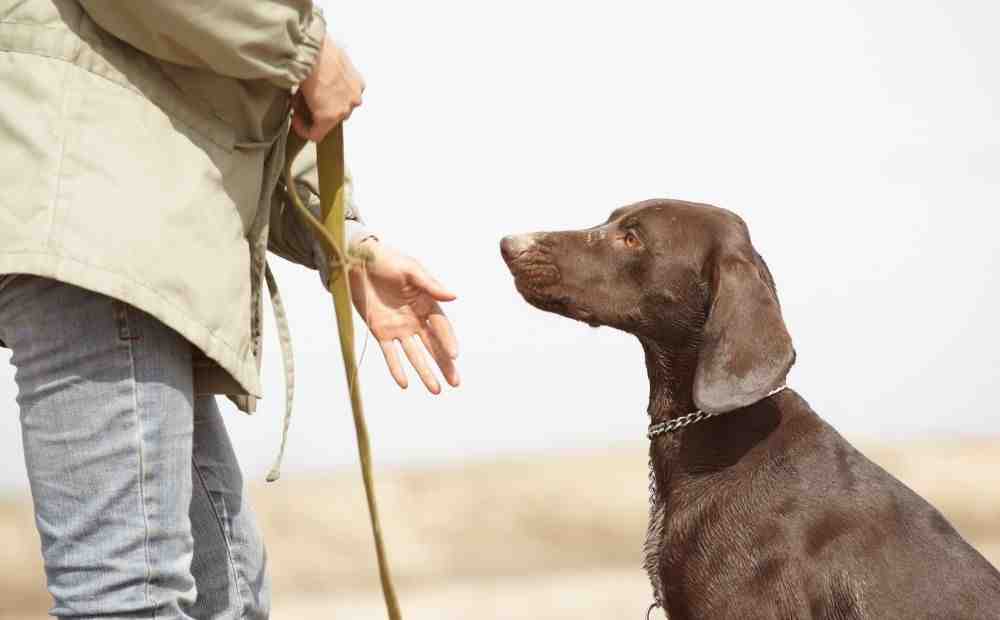
Simple how to train a bird dog word guide:
- Basic gun dog training
- Gun dog e-collar training
- wing and shot gun dog training
The Right Foundation: Starting Your Pup Off on the Right Paw
The journey to how to train a bird dog truly begins in those first six months of a puppy’s life. This important period sets the stage for everything that follows, laying down the groundwork for a happy, well-adjusted, and trainable hunting companion. We believe that building a strong bond with your furry friend is paramount, and it all starts with your mindset as an owner. Patience and positivity are your best tools in these early days.
During this time, we want to expose our pups to new sounds, sights, and environments, helping them become comfortable and confident in the world around them. Think of it as gently expanding their world, one wagging tail at a time! For our Austin-area dog lovers, supervised play in a safe environment like our doggy daycare can be a big help. These positive interactions help shape a pup’s temperament, making them more adaptable and eager to learn later on.
A strong bond with your dog makes all the difference. When your dog sees you as their trusted leader and best friend, they’ll be far more eager to please you, both at home and in the field. And here’s a little secret: keeping your bird dog indoors with the family doesn’t make them “soft” or less of a hunter. In fact, it often improves their hunting abilities and desire because it strengthens that incredible bond and desire to work alongside you. The more time you spend together, especially as a pup, the quicker and stronger that connection becomes, paying huge training dividends down the road. This strong connection forms the backbone of all future training, including Puppy Basic Obedience Training.
Why Early Exposure to Birds Matters
One of the unique aspects of how to train a bird dog is working with their natural instincts. A common question we hear is, “When should I introduce my pup to birds?” Our advice? Don’t wait too long! Introducing a bird dog puppy to birds earlier, sometimes as early as six months or even sooner, is highly recommended to “wake up” that innate bird dog instinct. The risk of “ruining” a pup by introducing birds too early is low, and the likelihood of sparking their natural drive is much higher.
The key is building positive associations. We want our pups to see birds as exciting, fun, and rewarding. This isn’t about formal training yet; it’s about letting them explore, sniff, and engage with birds in a controlled, positive way. Keep it fun, light, and always end on a good note. This early exposure helps them understand what their purpose might be and ignites that spark that makes a bird dog truly special. You can find More about puppy development in our comprehensive guides.
The Role of a Trainer’s Mindset
Your attitude as a trainer sets the entire tone for your dog’s learning journey. If we’re frustrated or stressed, our pups pick up on that faster than a bird dog on scent! A calm, confident, and joyful mindset makes a world of difference. We encourage celebrating every small win, no matter how tiny it seems. Did your pup sit for two seconds? That’s a party! These little victories build confidence in your dog and keep you both motivated.
Understanding that setbacks are a natural part of the process is also incredibly important. There will be days when it feels like your dog has forgotten everything you taught them yesterday. That’s okay! We simply take a deep breath, perhaps go back to a previously mastered step, and approach it with renewed patience. Being a confident leader means providing clear direction, fair expectations, and unwavering support. It’s about balancing demanding training with ensuring your dog’s enjoyment and well-being. After all, a happy dog is a willing partner, and that makes the whole process of how to train a bird dog a joyful ranch adventure for everyone. We believe every dog can succeed, and we refuse to make excuses, because we know with the right mindset, anything is possible.
Building Blocks of Obedience: Commands Every Bird Dog Needs
When we start on the journey of how to train a bird dog, it’s tempting to want to teach everything at once. But we’ve learned that breaking down complex training goals into smaller, manageable steps is the secret sauce to success. Think of it like building a house: you start with a solid foundation before adding the roof!
Consistency is truly our best friend here. Instead of infrequent, long training sessions that can overwhelm both you and your pup, we advocate for consistent, short bursts of training. Just 5-10 minutes, a few times a day, can work wonders. This keeps your dog engaged, prevents boredom, and helps new lessons stick.
We strongly believe in positive reinforcement. It’s a wonderful way to build enthusiasm and clearly communicate to your dog when they’ve done something right. Using praise, tasty training treats, or a favorite toy makes learning a joyful experience. For those interested in diving deeper into this method, our guide on Gentle Giants: Understanding Positive Reinforcement in Dog Training offers fantastic insights.
While positive reinforcement builds desired behaviors, sometimes a fair, clear, and dispassionate correction is necessary when a dog knowingly disregards a command. This isn’t about punishment; it’s about establishing clear leadership and helping your dog understand the consequences of their choices. The key is that corrections are quick and to the point, never prolonged or born of frustration. Understanding how to use both praise and correction, and working closely with a trainer to learn these nuances, is what truly builds a responsive bird dog. For custom guidance, explore our Basic Obedience Training services right here in Austin.
Foundational Commands for How to Train a Bird Dog
Every well-trained bird dog stands on a foundation of important obedience commands. These aren’t just parlor tricks; they are needed for safety, control, and effective communication in the field.
- ‘Here’ (Recall): This is perhaps the most important command. A reliable recall means your dog will come to you immediately, no matter the distractions. Imagine being out in wide open spaces near Lakeway or Spicewood, and your dog spots a rabbit. A solid ‘Here’ can prevent a dangerous chase. Learn more about Teach Dog Come.
- ‘Sit’ and ‘Stay’: These commands teach your dog self-control and patience. A prompt ‘Sit’ at any distance and a steady ‘Stay’ until released are invaluable. Whether you need your dog to wait patiently in the blind or hold their position while you flush a bird, these are non-negotiable. Our article Freeze Frame: Training Your Dog for a Rock-Solid Stay offers great tips.
- ‘Whoa’ for Pointing Breeds: For our pointer pals, ‘Whoa’ is the first hunting command we teach, and it means “don’t move.” This command is taught using a suitcase leash and a ‘whoa board,’ where the dog learns to remain absolutely still, even when birds are flushing. It’s a key step for preventing them from chasing after a bird once it’s been found.
- ‘Heel’ for Control: ‘Heel’ isn’t just about walking politely on a leash; for a bird dog, it’s about holding a precise position next to you, moving with you, and remaining steady when you stop. This gives you great control when navigating through cover or approaching a bird.
These commands, and others, are the building blocks. You can find a comprehensive overview in Unlock Good Behavior: The Must-Know Basic Dog Commands.
Using the Right Tools for the Job
Having the right equipment can make all the difference when you’re figuring out how to train a bird dog. Here’s a quick list of some helpful training tools we keep in our kit:
- 6-foot Training Leash: Perfect for teaching ‘Heel,’ recall in controlled environments, and keeping your dog safely by your side.
- Collar or Harness: A comfortable, well-fitting collar or harness is needed for control and safety during training sessions.
- Whistle: A whistle can be an incredibly effective tool for long-distance commands, especially recall or turning commands in the field. We often use it early on by associating its sound with positive things like mealtime, building a strong positive connection.
- Training Treats: Small, high-value treats are fantastic for positive reinforcement, especially when teaching new commands.
- Dummies or Bumpers: These are a big help for teaching retrieving skills without using actual birds. They come in various sizes and textures to keep things interesting.
- Clicker: If you’re interested in marker training, a clicker can precisely mark the exact moment your dog performs the correct behavior. You can learn more about clicker training basics.
How to Train a Bird Dog in Any Environment
Let’s face it, the reality for most of us who love hunting with our dogs is that we don’t live on vast, open properties. Over 80% of Americans, including many avid hunters, live within city limits or in suburban areas like Austin, Lakeway, or Bee Cave. This means we often have limited space, perhaps just a small backyard. But here’s the exciting part: living in town doesn’t have to be an excuse for a poorly trained bird dog!
The conventional wisdom about bird dog training often assumes access to wide-open spaces, but we know that’s not the reality for the majority of dog owners. The good news is that you can absolutely adapt your methods for how to train a bird dog to work within these constraints. With a little creativity and a focus on breaking down skills, small spaces can lead to big potential. We also understand that every dog has a unique temperament and learning style. What works for one high-drive pointer might need a different approach for a more sensitive retriever. Adapting your methods to your dog’s individual personality is key to a joyful training journey. For our younger pups, Dog Training for Puppies can start right in your home and yard.
Creative Backyard Drills
Your backyard, no matter its size, can be a fantastic training ground! The foundational skills a well-trained bird dog needs—like a reliable recall, a prompt ‘sit’ at any distance, remaining steady until sent for a retrieve, and delivering retrieves to hand—can all be taught effectively in a smaller space.
Here are some creative backyard drills:
- Casting Drills for Range: Even in a small yard, you can condition your dog to hunt outwards from you. Start by throwing a dummy to the side and sending your dog with a “Get out!” command. Progress to throwing dummies to each side and sending them in succession. Eventually, you can send your dog out to the side without a visible dummy, using whistle commands to turn them and direct them towards where a bird might be. You can even practice quartering back and forth in front of you.
- Practicing ‘Sit’ at a Distance: Work on your dog’s ‘Sit’ command, gradually increasing the distance between you and your dog. Practice having them hold the ‘Sit’ while you walk away, then return to reward them. This builds incredible self-control.
- Steady Retrieve Practice: Focus on having your dog remain steady until you send them for the retrieve. Use short tosses in the backyard, working on that patient wait and a clean pick-up.
- Delivery to Hand: This is a big one! Practice having your dog bring the dummy all the way back and gently place it in your hand. This can be perfected in a small space, ensuring they don’t drop it prematurely.
- Figure-Eight Drills for Flexibility: Set up two cones or even household items a few feet apart. Guide your dog in a figure-eight pattern around them using a treat. This is a fantastic way to stretch your dog’s back, improve spinal flexibility, and build body awareness. These kinds of canine conditioning exercises are beneficial for overall fitness.
From the Backyard to the Field
The skills mastered in your backyard set you up for success in the field. The goal is a smooth transition, building on that strong foundation. While some advanced field work will eventually require more open spaces, our Austin-area locations, like our 5-acre ranch in Spicewood, offer plenty of room to expand these skills.
In larger spaces, the challenge shifts to maintaining control amidst more distractions. This is where your reliable recall, ‘Sit,’ and ‘Heel’ really pay off. You’ll also learn to assess and manage your dog’s range and hunting style. Some dogs naturally hunt closer, while others have a wider cast. The “ideal” range is often determined by the cover you’re hunting and your dog’s breeding, rather than a fixed distance. We want our dogs to go as far as needed to find a bird, whether that’s 30 yards or 300, as long as they can handle it and the cover dictates it.
It’s also important to acknowledge the differences in how to train a bird dog based on their type. Pointers, for example, need intense focus on the ‘Whoa’ command to hold their point steadily. Retrievers, on the other hand, might focus more on advanced marking and blind retrieves. While the foundational obedience is the same, the specialized field work will differ, allowing us to tailor training to their natural talents.
Field Work: Introducing Birds, Guns, and Steadiness
This is the moment it all comes together! After countless hours in the backyard and mastering foundational commands, the true excitement of how to train a bird dog unfolds in the field. Safety is always our top priority, especially when introducing new elements like gunfire and live birds.
Introducing gunfire requires a gentle, gradual approach. We want to build positive associations, linking the sound of the gun with something fun and rewarding – like a bird! Start with very distant, low-volume sounds, perhaps while your dog is happily retrieving a dummy. Gradually, and always positively, decrease the distance and increase the volume. If your dog shows any apprehension, we simply back up a step. We want them to understand that gunfire means good things are happening, not something to fear.
Ensuring steadiness on the flush is a key part of bird dog training, particularly for pointers. This means your dog remains absolutely still when a bird takes flight, rather than breaking and chasing. This is where that ‘Whoa’ command truly gets its workout! Our trainers often emphasize that if a dog moves even a single step when a quail flushes or a gun goes off, we calmly pick them up and move them right back to their original position. We correct every mistake, no matter how minor, because “not giving an inch” reinforces the expectation. For pointers, a wonderful technique for training steadiness is to walk up to your dog on every point, release them with a word of praise, and give them a rub down the back. This ensures they understand they cannot move until you physically get your hands on them. Occasionally, we might even let a dog mouth a bird after a successful retrieve. It’s a little bit of fun for them, reminding them what it’s all about and keeping them engaged. For personalized guidance on these important steps, our Expert advice from our trainers at Pet Caddy is just a call away.
Maintaining Training Year-Round
The hunting season might be seasonal, but the journey of how to train a bird dog is a year-round commitment. Maintaining your dog’s training and engagement throughout the year, even outside of hunting season, is a great way to keep their skills sharp and their minds active.
During the off-season, we can keep our dogs engaged with fun retrieving games, perhaps in a local Austin park or in our spacious areas at Pet Caddy. Scent work is another fantastic way to tap into their natural abilities, even when birds aren’t available. Regularly reinforcing obedience commands, even the simple ones, ensures they remain responsive and reliable.
Avoiding common mistakes is also key. One frequent slip-up new owners make is inconsistent training. Short, consistent sessions are far more effective than infrequent, long ones. Another mistake is not addressing behavioral issues as they arise. Our guide on Behavior Training for Dogs: What It Is and How to Get Started can offer valuable insights.
Sometimes, the best investment we can make in our dog’s training is to work with professional trainers. They can offer insights, troubleshoot challenges, and help us refine our own handling skills. As Scott Miller, a renowned trainer, puts it, the biggest mistake dog owners make is failing to spend time with their dog and the trainer together. Learning how to correct and praise effectively from a pro is invaluable. For those looking for the right fit, our guide on Top Dog Training: Choosing the Right Gun Dog Program for Your Pup can help you steer the options available, including our specialized services in the Austin area.
Frequently Asked Questions about Bird Dog Training
How do I know if my dog has the right stuff to be a bird dog?
It’s a common and exciting question! While training can certainly bring out latent talents, instinct is truly key. We often look for natural pointing or retrieving behaviors, even in young pups. Do they show intense interest in birds or even toys that mimic birds? Do they have a desire to please, a willingness to learn, and a good temperament? Good breeding from reputable kennels plays a huge role here, as generations of careful selection contribute to strong hunting instincts. If your dog shows a keen interest, has a good disposition, and you’re willing to put in the time, they likely have the “right stuff.”
What’s the biggest mistake new owners make when they start to train a bird dog?
One of the most common slip-ups we see is doing too much, too soon. Pushing a young dog into complex situations without a solid obedience foundation can lead to confusion, frustration, and ingrained bad habits. It’s like trying to run a marathon before you can walk! Another mistake is not spending enough time learning how to train your dog alongside a professional. As one expert noted, many owners expect the trainer to fix everything without learning how to properly communicate with and correct their dog. Keep it simple, build a strong base of basic obedience, and progress at your dog’s pace. Patience, consistency, and clear communication are far more effective than rushing the process.
Can I train a bird dog using only positive reinforcement?
Positive reinforcement is a wonderful tool for building enthusiasm, fostering a joyful attitude toward training, and teaching new skills. We use it extensively at Pet Caddy because it strengthens the bond between you and your dog. However, for reliable performance in the high-distraction, high-stakes environment of a hunt, most successful training programs incorporate a balance of positive reinforcement for correct actions and fair, clear corrections for ignoring commands. This balance helps your dog understand that sometimes, there are non-negotiable expectations, especially when safety is involved. The goal is a dog that is both enthusiastic and reliably responsive, understanding when to have fun and when to be serious.
Your Partner for the Long Haul
The journey of how to train a bird dog is truly one of the most rewarding experiences a dog owner can undertake. It’s not just about cultivating a hunting companion; it’s about forging a deeper, more profound bond with your best friend. The joy of a well-trained companion, responsive and eager to work alongside you, is immeasurable. There’s a unique pride in seeing your dog’s instincts honed into skill, working harmoniously with you in the field.
We understand this journey is a marathon, not a sprint. It takes time, patience, and dedication. But the long-term benefits of a strong foundation in bird dog training extend far beyond the hunting season, creating a more confident, well-behaved, and happier dog for life.
For those looking for hands-on guidance with their hunting partner, Pet Caddy offers specialized programs right here in the Austin area. Our Advanced Obedience Training can help you build a reliable partner for any adventure, ensuring your dog is steady and responsive in any situation. Whether you’re in Lakeway, Steiner Ranch, or right here in Spicewood, we’re ready to help you and your dog thrive.
At Pet Caddy, we believe in providing a Like Home experience. Your dog will enjoy personalized attention, daily updates, and a spacious, stress-free environment on our five acres. We pride ourselves on transparent pricing with no hidden fees, and services like Hands-On Care and all-day supervised play are always included at no extra cost. We’re here to give you peace of mind, knowing your furry family member is enjoying a true ranch adventure while learning valuable skills.
Schedule your pup’s stay or training session and experience the difference of Like Home care, Wide Open Spaces, and Hands-On Care at our Austin ranch.