Is House Training a Dog Really That Hard?
House training a dog is one of the first and most important things you’ll do as a dog owner. The good news? It doesn’t have to be overwhelming.
Here’s the short version of what works:
- Reward immediately – Praise and treat your dog within 1-2 seconds of eliminating outside
- Prevent accidents – Supervise closely or confine your dog when you can’t watch them
- Stick to a schedule – Take your dog out after waking, eating, playing, and every 1-2 hours when awake
- Clean accidents properly – Use an enzymatic cleaner to remove odor so your dog isn’t drawn back to the same spot
- Never punish after the fact – Dogs can’t connect past accidents to your reaction; it only creates fear
That’s the foundation. Everything else is just filling in the details.
Most people run into trouble not because house training is complicated, but because they expect their dog to “just know” the rules. One of the most common questions dog owners ask is some version of: “Shouldn’t she already know to go outside? I take her out a lot and I know she can hold it.”
The honest answer is no. Dogs don’t come pre-loaded with human bathroom etiquette. From your dog’s point of view, the living room rug and the backyard grass look like equally reasonable options. It’s your job – with patience and consistency – to show them which one earns the tail wags.
The process takes time, but dogs that get clear, kind guidance get there faster than you’d think. Puppies as young as 2.5 to 3 months old can make real progress when their owners stay consistent.
Whether you’ve got a brand-new puppy, a rescue adult, or a small breed that’s been giving you fits, this guide walks you through everything – step by step, no fluff.
House training a dog terms made easy:
The Golden Rules of House Training a Dog
When we talk about house training a dog, we like to boil it down to two main principles: the Reward Principle and the Prevention Principle. If you can master these two, you’re already 90% of the way to a clean home and a happy pup.
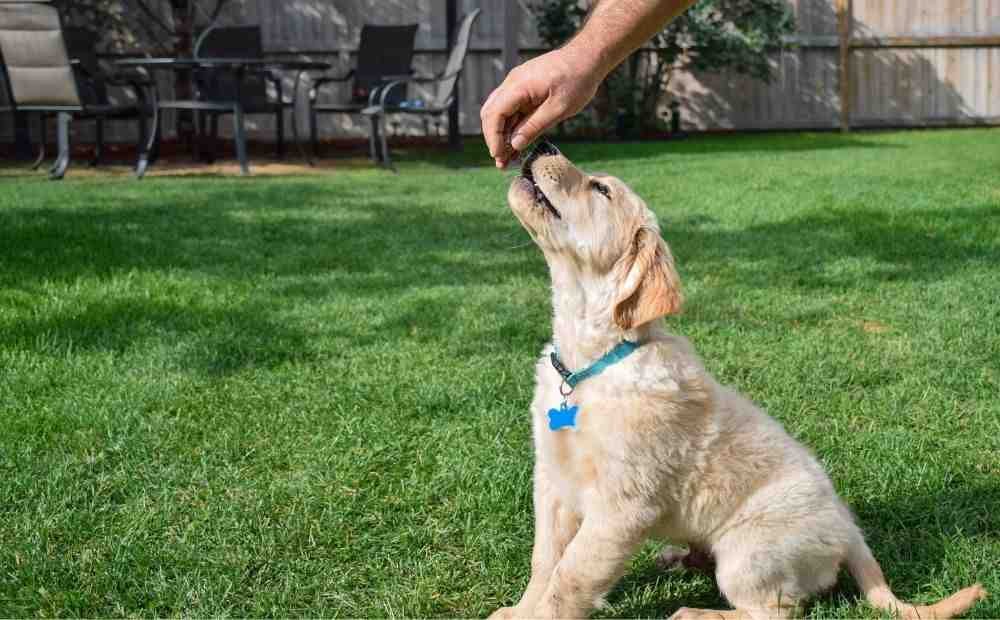
First, let’s talk about the Reward Principle. Dogs learn through immediate feedback. If your pup finishes their business outside and you wait until you’re back in the kitchen to give them a treat, they think they’re being rewarded for walking into the kitchen. To make it stick, you need to provide puppy-potty-training rewards within 1 to 2 seconds of the “event.” Carry high-value treats—think small bits of plain chicken or cheese—right in your pocket so you can praise them the moment they finish.
The second half is the Prevention Principle. This means setting your dog up for success by not giving them the chance to make a mistake. Every accident indoors is a step backward because it reinforces the idea that the carpet is a fine place to go. By using hands-on care and keeping your dog in your sight, you can catch the signs before an accident happens.
Why Consistency is Key to House Training a Dog
Think of your dog like a toddler. They thrive on a predictable routine. If the rules change every day, they’ll never figure out what we want from them. Consistency means everyone in the family uses the same door, the same potty spot, and the same verbal cues.
Supervision is the “secret sauce” here. We often hear from folks who say their dog had an accident while they were just in the other room. In the early stages of mastering-the-basics-essential-tips-for-potty-training-any-dog, eyes-on management is a must. If you can’t watch them, they should be in a safe, confined space. At our ranch, we believe in “small groups, big care,” and that same philosophy applies at home—keeping your circle small and your supervision high leads to the best results.
Setting the Stage: Schedules and Supplies
Success in house training a dog starts with a solid plan and the right tools. You don’t need a lot of fancy gadgets, but a few basics will make your life much easier.
First, establish a strict feeding schedule. What goes in on a schedule comes out on a schedule. Puppies usually need to relieve themselves 15 to 30 minutes after eating. If you leave food out all day, you’ll never be able to predict when they need to go. Similarly, manage water intake by picking up the water bowl about two hours before bedtime to help them make it through the night.
You’ll also need a high-quality enzymatic cleaner. Standard household cleaners often contain ammonia, which actually smells like urine to a dog and might draw them back to the same spot. Enzymatic cleaners break down the proteins that cause odors, completely erasing the “scent map” your dog left behind.
Managing the Clock for Success
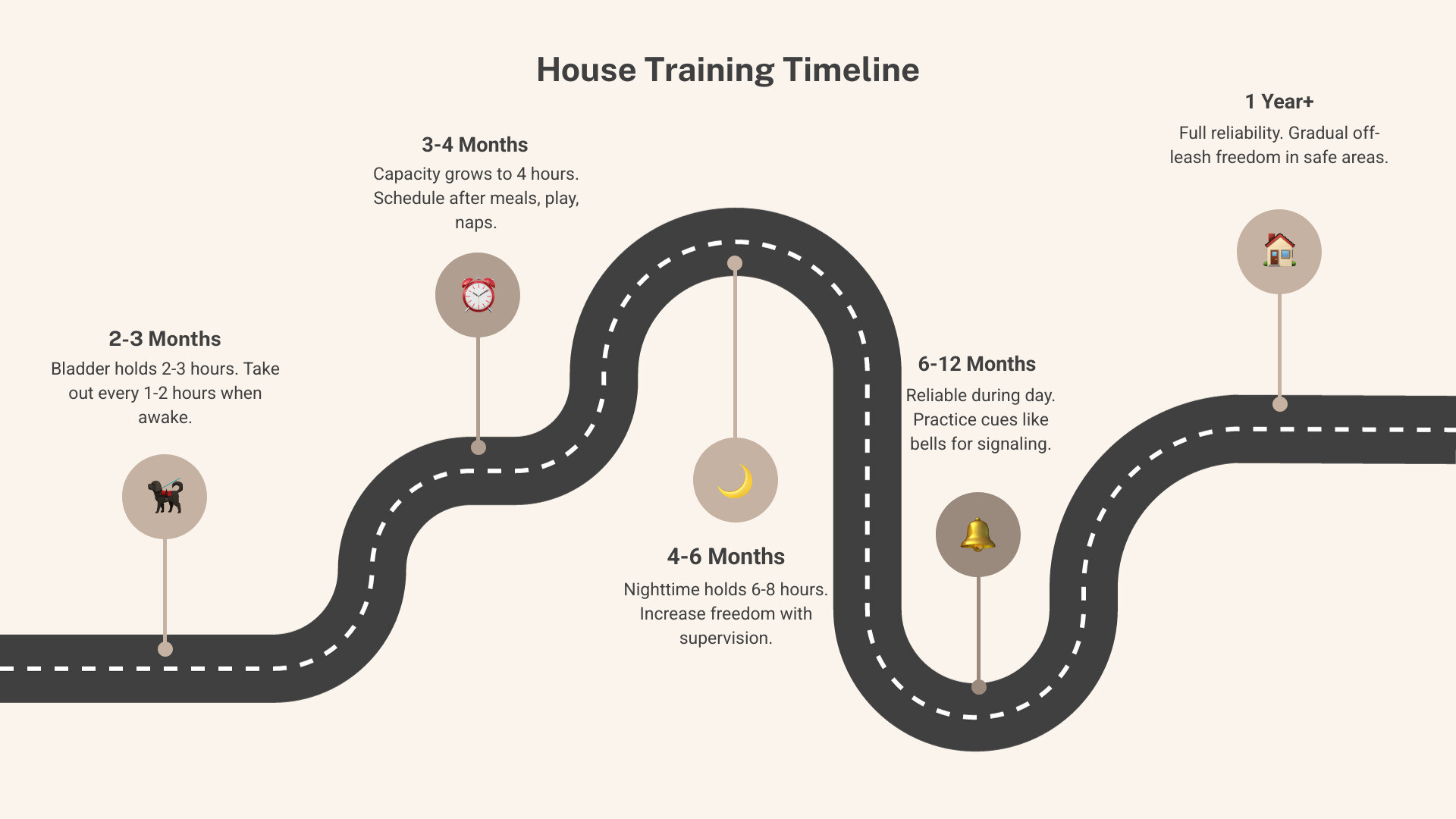
Understanding your dog’s physical limits is half the battle. A general rule of thumb for potty-training-puppy success is that a puppy can hold their bladder for about one hour for every month of age. So, a three-month-old pup can typically go about three hours during the day.
Your daily “clock” should look something like this:
- First thing in the morning: Straight out to the potty spot. No stops for coffee first!
- After every nap: Waking up jumpstarts the bladder.
- After every meal: Digestion moves quickly in dogs.
- After supervised play: Excitement and physical activity often lead to a full bladder.
- Right before bed: Ensure they are “empty” before turning in for the night.
That diet matters too. Research shows that commercial kibble can take 14-15 hours to pass through a dog, while an all-natural diet might only take 5-6 hours. Knowing what you’re feeding can help you predict those bathroom breaks more accurately.
Confinement and the Power of the Crate
One of the most effective tools for house training a dog is a crate. This isn’t about “locking them up”; it’s about leaning into a dog’s natural den instinct. Most dogs have an innate desire to keep their sleeping area clean, which makes the crate a powerful ally in teaching bladder control.
Proper crate sizing is vital. If the crate is too large, your dog might sleep in one corner and use the other as a bathroom. It should be just big enough for them to stand up, turn around, and lie down comfortably. If you have a puppy that will grow significantly, look for a crate with a divider panel so you can adjust the size as they get bigger.
When you can’t be directly supervised, like when you’re cooking dinner or taking a shower, safe confinement in a crate or a small, dog-proofed area keeps them from wandering off to find a hidden corner. Another great trick is “tethering”—using a hands-free leash to keep your pup attached to your waist. This ensures they stay within your sight and prevents “sneaky” accidents.
Creating a “Like Home” Den
At Pet Caddy, we focus on a “like home” experience, and you can do the same with your dog’s crate. Make it a positive, stress-free environment. Add comfortable bedding (unless they are prone to chewing it) and a few engaging, safe toys like a rubber toy stuffed with a bit of peanut butter.
Never use the crate as a place for punishment. We want them to love their little den! Start with short durations and offer plenty of praise when they go in. As they become more reliable and go 8-12 weeks without an accident, you can gradually grant them more freedom in the house, one room at a time.
Handling Accidents and Common Challenges
Accidents are going to happen. It’s just part of the journey of house training a dog. How you handle them, however, makes all the difference.
You’ve probably seen the “guilty look”—the tucked tail, the averted eyes, the slinking away. It’s a common myth that this means the dog knows they did something wrong. In reality, scientific research on the “guilty look” has shown that dogs are simply reacting to our body language and tone of voice. They aren’t feeling “guilt” about the mess; they are showing “appeasement behavior” because they can tell we are upset.
If you catch your dog in the act, give a quick, gentle interrupt—like a clap or a soft “Oops!”—and immediately whisk them outside to finish. If they finish outside, reward them lavishly! If you find an accident after the fact, even if it’s only a few minutes old, do not scold them. They won’t connect the punishment to the act, and it will only make them afraid of you (and more likely to hide their next accident behind the sofa).
When to Seek Help with House Training a Dog
Sometimes, despite your best efforts, things don’t go according to plan. Small breeds can be notoriously difficult to house train because of their high metabolisms and tiny bladders. Rescue dogs, especially those from puppy mills, may have never learned to keep their living space clean and require extra patience and the-long-game-essential-techniques-for-housebreaking-and-beyond.
If your dog was previously trained and suddenly starts having accidents, or if you see a total regression, it’s time for a vet check. Medical issues like urinary tract infections, diabetes, or age-related issues can cause house soiling.
If health issues are ruled out and you’re still struggling, don’t hesitate to reach out for professional behavioral support. Whether you need dog training in Lakeway or a board and train program in Steiner Ranch, getting an expert’s eyes on the situation can save your floors and your sanity.
Advanced Skills: Signaling and Cues
Once your dog understands the basic concept of “outside is for potty,” you can start teaching them to tell you when they need to go.
Bell training is a popular method. Hang a bell by the door and encourage your dog to touch it with their nose or paw every time you go out for a bathroom break. Eventually, they’ll make the connection: “Bell equals door opens.” Just be prepared—some clever pups learn that the bell also means “I want to go out and chase a squirrel!”
You can also teach a verbal cue like “Go Potty” or “Be Quick.” When your dog starts to eliminate, say the cue quietly. When they finish, give them a treat. Over time, you’ll be able to say the cue when you’re in a hurry or in a new environment, and your dog will know exactly what’s expected of them. This kind of joyful learning builds a stronger bond and makes the whole process feel less like a chore and more like a team effort.
Frequently Asked Questions
How long can a puppy hold their bladder?
As a general rule, a puppy can hold it for one hour for every month of age, plus or minus an hour. A 2-month-old pup might need a break every 2 hours, while a 4-month-old can often go 4 or 5 hours. However, this only applies when they are resting. During active play or times of high excitement, even an older puppy might need to go every 20 to 30 minutes. Most puppies can hold it for about 7 hours overnight by the time they are 4 or 5 months old.
What is the best way to clean up accidents?
The only way to truly stop a dog from returning to the same indoor spot is to remove the pheromones entirely. Use a biological or enzymatic cleaner specifically designed for pet messes. These cleaners use “good” bacteria to eat the proteins in urine and feces that cause odors. Avoid any cleaners with ammonia, as they can mimic the scent of urine and actually encourage your dog to go in that spot again.
Is paper training a good idea?
We generally recommend avoiding paper training or pee pads if your goal is for your dog to go outside. Using pads teaches your dog that it is okay to eliminate on a specific surface inside your home. This can make the transition to the outdoors much harder, as the dog has already developed a “surface preference” for something soft and flat—which often looks a lot like your favorite rug. If you must use them due to living in a high-rise or for very small breeds, try to move the pads closer to the door over time.
Conclusion
House training a dog is a journey that requires a big heart and a lot of patience, but the reward is a lifetime of clean floors and a happy, confident companion. Remember to stay consistent, celebrate the wins, and handle the setbacks with grace.
If you’re feeling overwhelmed or just need a little extra help getting your pup on the right track, we’re here for you. At Pet Caddy, our 5-acre ranch in the Austin area offers a stress-free environment where dogs can learn, play, and grow. Whether you’re in Spicewood, Lakeway, or Barton Creek, our personalized attention and professional training services can help turn your “potty pupil” into a “potty pro.”
Our pricing is always transparent with no hidden fees, and hands-on human interaction is included at no extra cost—just like home.
Ready to take the next step? Schedule your pup’s stay or training session with us today!