Unlocking Your Bird Dog’s Natural Instinct
For dog owners in the Austin area and beyond, training a bird dog to retrieve is a truly special journey. It’s about more than just fetching a bird; it’s about nurturing a deep bond, celebrating your dog’s natural instincts, and sharing exciting ranch adventures together. A well-trained retriever can make all the difference in the field, ensuring every bird is brought safely to hand.
If you’re looking for a quick overview on how to teach your bird dog this essential skill, here are the key steps:
Key Steps for Training a Bird Dog to Retrieve:
- Nurture Natural Instinct: Start early (around 9 weeks) with fun, positive games to build desire.
- Confined Space Basics: Use a hallway or small area to teach consistent returns.
- Progress Gradually: Introduce different objects (soft toys, bumpers) and increase distance and distractions slowly.
- Keep it Positive: Use short, frequent sessions with lots of praise and encouragement.
- Be Consistent: Clear commands and predictable expectations build a reliable retriever.
At Pet Caddy, we understand how much your dog means to you. We believe that training should feel like a joyful game, building confidence and strengthening the connection you share. Our spacious 5-acre ranch provides the perfect backdrop for this kind of hands-on care, ensuring your pup’s tail wags with every new lesson. We’re here to guide you through each step, making sure your bird dog develops into a dependable, happy, and enthusiastic retriever.
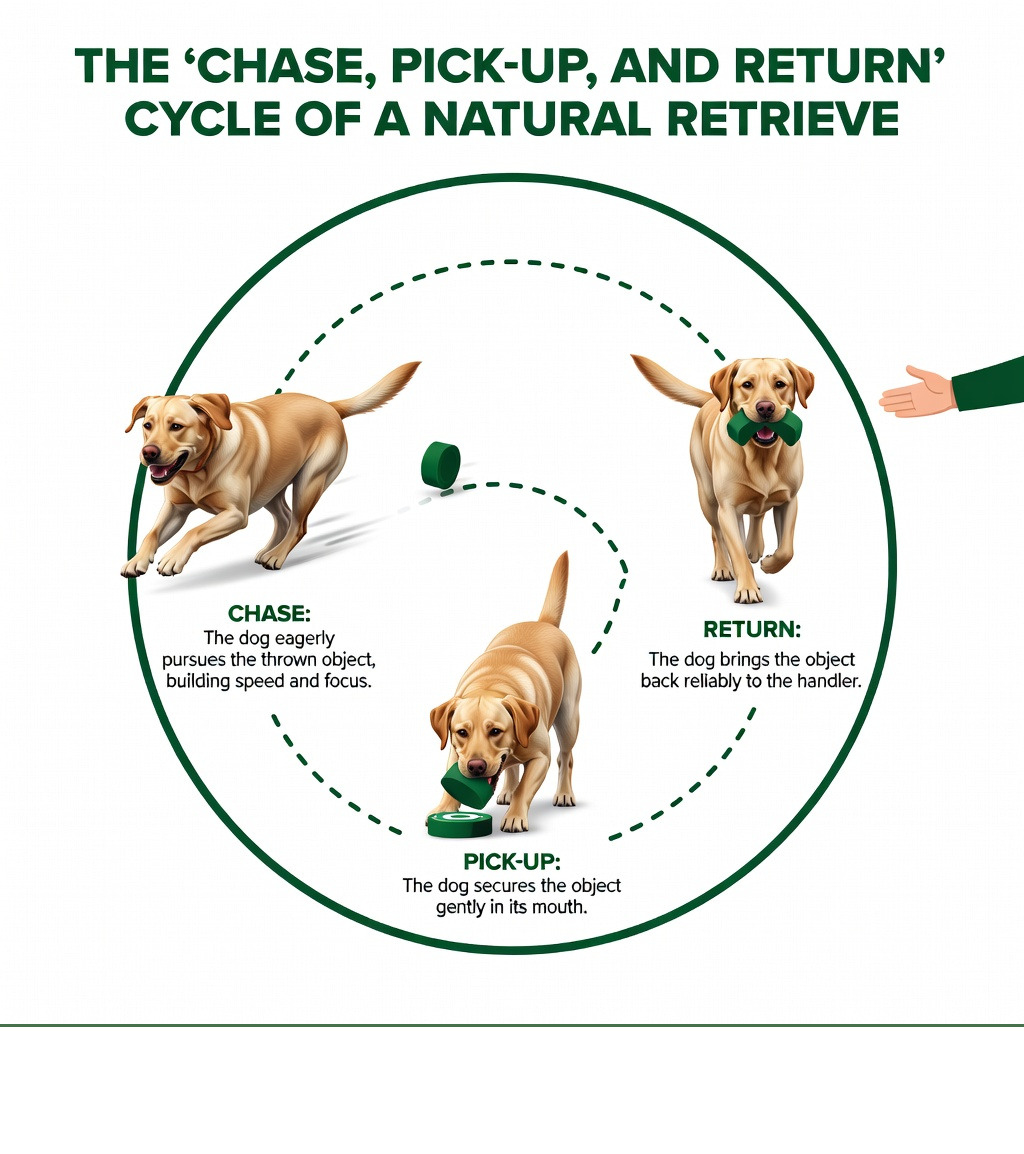
Training a bird dog to retrieve vocabulary:
- Basic gun dog training
- Gun dog e-collar training
- Gun dog classes
Foundational Principles of Training a Bird Dog to Retrieve
Before we throw the first bumper on our 5-acre ranch, we have to talk about the most important part of the equation: you. Your mindset and body language are the steering wheel of this entire process. If you are stressed, your dog will be stressed. If you are having a blast, your dog will think this is the best day of their life.
The Handler’s Mindset
We like to think of ourselves as “cheerleaders” rather than drill sergeants. When training a bird dog to retrieve, your goal is to be the most exciting thing in the field. Use an inviting tone and a welcoming stance. When your dog is coming back with that bumper, don’t just stand there like a statue. Kneel down, open your arms, and let them know they’re doing a fantastic job.
Body Language and Eye Contact
One of the most common mistakes is staring directly into your dog’s eyes as they return. To a dog, a hard stare can feel like a challenge or a “stop” sign, which often leads to them dropping the bird ten feet away. Instead, try looking at your toes. By softening your gaze and looking down, you remove that pressure, making it much easier for your pup to come all the way into your space.
Commands That Stick
We keep our language simple and clear. The two heavy hitters are “Fetch” and “Here.”
- Fetch: This is the green light. It’s the command to go out and get the prize.
- Here: This is the invitation home. It shouldn’t sound like a question; it should be a happy, authoritative call that promises a reward.
Consistency is our best friend. If we use “Fetch” one day and “Get it” the next, we’re just confusing our four-legged students. Stick to your chosen words and use them every single time. For more on these basics, check out our guide on basic gun dog training.
Nurturing the Natural Instinct in Puppies
The best time to start is when your pup is around 9 weeks old. At this age, they are little sponges, and their natural desire to chase is just starting to bloom. We want to take that “prey drive” and turn it into a lifelong love for retrieving.
The Hallway Method
This is a classic for a reason. Inside your home, find a hallway and close all the doors. This creates a natural “chute” where the only way for the puppy to go is back to you.
- Wiggle a soft object, like a rolled-up sock or a small toy, to get their attention.
- Toss it a few feet down the hall.
- When they pick it up, clap your hands and call them back.
- Because the doors are shut, they can’t run off to the living room to chew on it. They have to come to you!
Building Desire Without Pressure
In these early stages, we never reach for the object the second the puppy gets back. If you grab it immediately, the puppy learns that returning means the fun ends. Instead, let them hold it for a second. Pet them, tell them they’re a “good dog,” and let them “love it up.” We want them to feel proud of what they found.
The Right Tools for the Job
Using the right gear makes a difference. We recommend starting with something soft and inviting.
- Soft Socks: Great for the very first indoor sessions.
- Duck Training Dummy: These are wonderful because they mimic the shape of a bird without being intimidating.
- Avoid Squeaky Toys: We generally steer clear of these for bird dogs. Squeaky toys encourage a dog to “chomp” to get the sound, which can lead to a “hard mouth” later on. We want a soft, gentle carry.
Keep these sessions short—maybe five or ten minutes max. We want to end the game while the dog is still begging for more. This builds a “fire” in them that makes future training much easier. For a deeper look at this stage, read about nurturing a natural retrieve.
Step-by-Step Progression for Field Success
Once your pup is consistently bringing back toys in the hallway, it’s time to head out to the wide-open spaces of our ranch. This is where we transition from a fun game to a reliable skill.
Training Bumpers vs. Real Birds
It’s a big jump from a plastic bumper to a feathered bird. We like to bridge that gap slowly.
| Stage | Training Object | Purpose |
|---|---|---|
| 1 | Standard Plastic Bumper | Teaches the basic mechanics of the fetch. |
| 2 | Hexabumpers | Great for visibility and teaching the dog to mark the fall. |
| 3 | Bumper with Wings | Introduces the texture and scent of feathers. |
| 4 | Frozen Bird | Adds weight and realistic feel without the “mess” of a fresh bird. |
| 5 | Freshly Killed Bird | The final step before live bird work. |
Establishing Steadiness
In the field, we don’t want a dog that “breaks” (runs out) the moment they see something move. We want them to wait for the command. We start by holding their collar gently while we throw the bumper. We wait a few seconds, then give the “Fetch” command and let go. Eventually, they learn to sit and wait patiently until we give them the green light. This is a big part of our wing and shot training.
Scent Training and Delivery to Hand
A bird dog’s nose is their greatest asset. We often rub training scent on our bumpers to help the dog learn to “hunt” with their nose rather than just their eyes. When they return, we encourage a “delivery to hand.” This means the dog brings the object all the way to you and holds it gently until you take it. If they drop it early, we don’t scold. We simply back up, encourage them to pick it up again, and try for a better finish.
Moving to Upland Scenarios and Thick Cover
Upland hunting often involves thick brush and tall grass where a dog can’t see the bird fall. This is where the “Hunt Dead” command comes in.
- The Drill: Hide a scented bumper in tall grass without the dog seeing you. Bring them to the area and give the command “Hunt Dead.”
- The Goal: Encourage them to use their nose to find the prize. This builds their confidence in their own scenting ability.
- Tracking: We sometimes tie a pheasant wing to a string and drag it through the grass to create a trail. This teaches the dog to follow a scent line, which is vital for recovering wounded birds that might try to run.
Advanced Drills and Troubleshooting
Once the basics are solid, we can start adding some complexity. This keeps the dog’s mind sharp and prepares them for real-world hunting conditions in places like Spicewood or Lakeway.
Advanced Drills
These drills help with “handling,” which is your ability to direct the dog to a bird they didn’t see fall.
- Wagon Wheel: Place bumpers in a circle around you like the spokes of a wheel. You sit in the center and send the dog to specific “spokes.” This teaches them to take a straight line and listen to your direction.
- ABCD Drill: This involves multiple marks. You throw four bumpers in different directions. The dog has to remember where each one landed and retrieve them one by one in the order you choose.
- Lining and Casting: This is like using a remote control for your dog. Using whistle blows and hand signals, you can tell your dog to go “Back,” “Left,” or “Right” to find a bird.
If you’re planning a long hunting trip, our gun dog boarding is a great way to keep these skills fresh while you’re away.
Solving Problems When Training a Bird Dog to Retrieve
Even the best dogs hit a “speed bump” now and then. Here’s how we handle common issues:
- Dropping Birds Early: This usually happens because the dog is too excited or feels too much pressure. Remember to look at your toes and keep your body language relaxed. You can also try walking away from the dog as they return; they will usually speed up to “catch” you, keeping the bird in their mouth.
- Feather Aversion: Some dogs don’t like the feel of feathers. We solve this by wrapping a bumper in a sock and gradually sticking a few feathers through the fabric. Over a week or two, we add more feathers until the sock is gone.
- Hold Conditioning: If a dog is “sloppy” with their mouth, we spend time on “Hold.” We sit with the dog, gently place a bumper in their mouth, and say “Hold.” We pet them and keep them calm for a few seconds before taking it. This builds a reliable, gentle grip.
Incorporating Distractions
In the real world, there are noises, other dogs, and moving objects. We slowly introduce these into our sessions. We might have a friend throw a “distraction” bumper while the dog is already on its way back with another one. The dog must learn to ignore the new distraction and finish the job at hand. This builds the focus needed for a busy day in the field.
Frequently Asked Questions about Bird Dog Training
What is the best age to start retrieve training?
We recommend starting the fun stuff as early as 8 or 9 weeks. This is when the “natural retrieve” is easiest to nurture. However, formal, high-pressure training should wait until the dog is a bit older and has a solid foundation of basic obedience. It’s never too late, though! Even older dogs can learn to love the game with the right approach.
How do I stop my dog from dropping the bird early?
The “10-foot drop” is the most common complaint we hear. Usually, the handler is reaching for the bird too soon. Try backing up as the dog approaches, or even turning your back and walking away. Your dog will naturally want to get in front of you to show off their prize. Also, remember to look at your toes! Eye contact can be a “stop” signal for many dogs.
Should I use treats or praise for a bird dog?
In the beginning, treats are a great way to build a positive association. However, as the dog gets more experienced, the retrieve itself usually becomes the reward. Most bird dogs live for the chase and the find. We find that a “Good boy!” and a nice ear scratch are often more than enough once the dog understands the game. We keep our pricing transparent and never charge extra for the hands-on interaction and “love” your dog gets during their stay.
Conclusion
Training a bird dog to retrieve is one of the most rewarding things you can do with your canine companion. Whether you’re preparing for a season of upland hunting in Marble Falls or just want a reliable partner for weekend adventures in Barton Creek, the journey is all about trust and teamwork.
At Pet Caddy, we’re proud to be a locally owned Austin-area business. Our 5-acre ranch is a true “ranch adventure” for dogs, offering wide-open spaces and small groups for big care. We treat every guest like family, providing a “home away from home” where your pup can play, learn, and grow.
If you’re looking for help with your dog’s skills, or just need a safe, joyful place for them to stay while you’re away, we’d love to meet you. Our services are all-inclusive with no hidden fees—just plenty of tail wags and hands-on care.
Schedule your pup’s stay at Pet Caddy today and let’s get those tails wagging!