Understanding the Adult Dog Potty Training Journey
How to house train an adult dog starts with understanding that it’s rarely a straight line from accidents to success. Whether you’ve welcomed a shelter pup into your home or your previously trained dog has started having mishaps, the good news is that adult dogs can absolutely learn new bathroom habits—often faster than puppies.
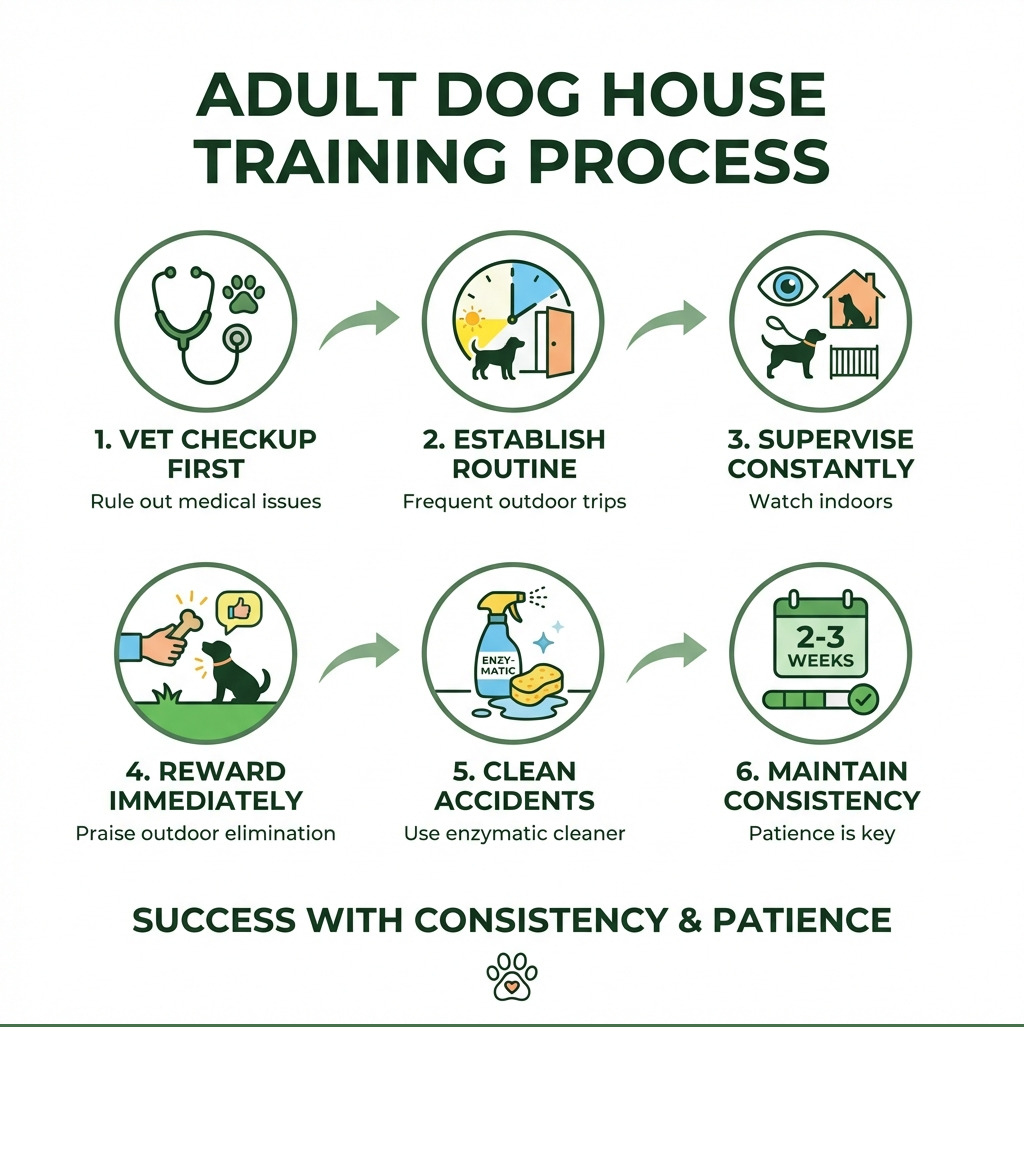
Quick Steps to House Train Your Adult Dog:
- Rule out medical issues – Visit your vet first to eliminate health problems like UTIs or senior incontinence
- Establish a consistent routine – Take your dog out first thing in the morning, after meals, and before bed
- Supervise constantly – Keep your dog in sight or confined when you can’t watch them
- Reward immediately – Praise and treat within 1-2 seconds of outdoor elimination
- Clean accidents thoroughly – Use enzymatic cleaners to remove scent markers
- Be patient – Most adult dogs can be trained in a few weeks with consistency
Many adult dogs need house training for understandable reasons. Shelter dogs may have weakened their habits after spending time in kennels where they couldn’t get outside often enough. Dogs who’ve lived outdoors their whole lives simply don’t understand indoor rules yet. Even previously trained dogs can regress when moving to a new home with unfamiliar scents that trigger territorial marking.
The good news? Adult dogs have better bladder control than puppies—they can generally hold it for up to ten hours. They also pay better attention and want to please you, which makes training easier once you establish a clear routine. Here at Pet Caddy’s 5-acre ranch in the Austin area, we see dogs of all backgrounds learn to love their outdoor bathroom routine when given patient, consistent guidance.
The key is understanding that your dog isn’t being stubborn or spiteful. They simply need you to teach them the rules of their new home, just like you’d need guidance if you suddenly found yourself navigating a foreign country with different customs.
How to house train an adult dog glossary:
Why Your Grown-Up Dog Needs a Refresher Course
When we bring a new adult dog home to places like Lakeway or Bee Cave, we often expect them to arrive with “factory settings” already installed. However, many factors can cause a dog to lose their way. Shelter regression is a major one. In a kennel environment, dogs often have no choice but to soil their living space because they aren’t let out frequently enough. This weakens their natural instinct to keep their “den” clean.
New home scents play a role too. If a previous pet lived in your house, your new dog might smell faint traces of old accidents and feel the need to “claim” the territory through marking. This isn’t spite; it’s just dog communication. In fact, scientific research on “guilty looks” shows that the “shame” we see on a dog’s face after an accident is actually just a reaction to our own frustrated body language, not an admission of a moral failing.
Before diving into training, it is vital to master the basics for any dog by checking for medical issues. Urinary tract infections (UTIs), parasites, or Cushing’s disease can make it physically impossible for a dog to “hold it.” Senior dogs may also struggle with cognitive dysfunction or age-related incontinence. A quick trip to your Austin-area vet ensures you aren’t trying to train away a physical ailment.
How to House Train an Adult Dog: Establishing a Ranch-Style Routine
The most effective way to teach an adult dog is to treat them like a puppy who has never seen a carpet before. We recommend starting from scratch with a consistent, ranch-style routine. Adult dogs thrive on predictability. Because they have better bladder control than puppies—often able to wait up to ten hours—you have a bit more wiggle room, but during the training phase, frequency is your best friend.
Take your dog out on a leash at these specific times:
- First thing in the morning when they wake up.
- Immediately after they eat breakfast or dinner.
- After any period of excitement or play.
- Right before you go to bed.
By taking them out on a leash rather than just opening the back door, you ensure they actually finish their business. Many dogs get distracted by a squirrel or a new scent and forget why they went outside, leading to an “oops” moment as soon as they step back onto your rug. This is all part of the long game of housebreaking, where consistency over a few weeks builds a lifetime of good habits.
How to House Train an Adult Dog with Verbal Cues
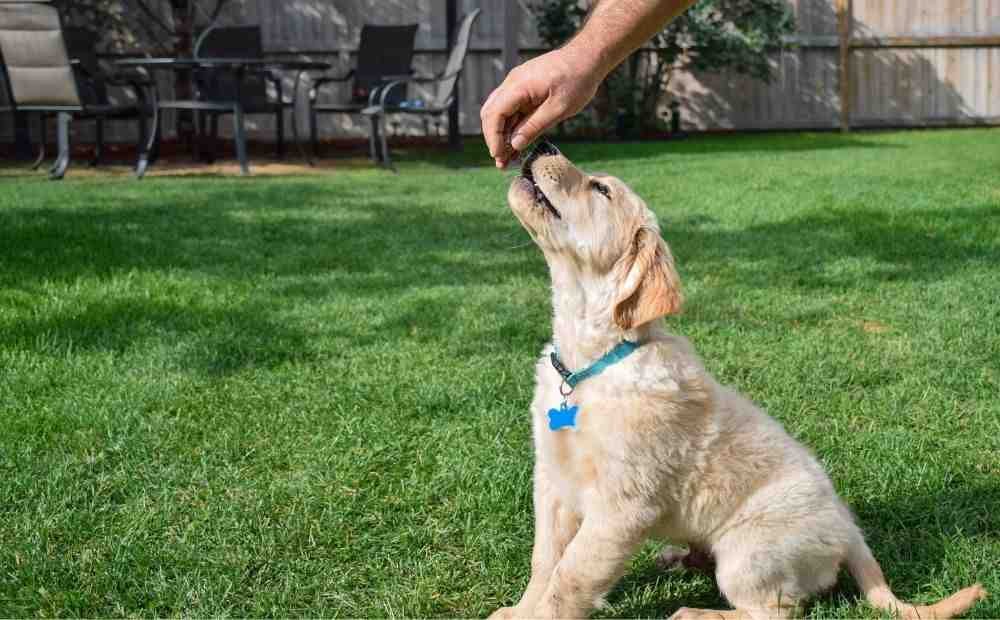
Communication is the bridge between you and your pup. When you take them to their designated bathroom spot, use a specific verbal cue like “go potty” or “be quick.” Say it quietly as they begin to eliminate. The moment they finish, offer immediate rewards. We’re talking high-value treats (think small pieces of chicken or freeze-dried liver) and lavish verbal praise.
The reward must happen within 1-2 seconds of them finishing for the dog to make the connection. If you wait until you’re back inside the kitchen, the dog thinks they’re being rewarded for walking through the door, not for going on the grass. This positive association is just as important for adults as it is when potty training your new puppy.
How to House Train an Adult Dog from a Shelter
Shelter dogs and those from puppy mills often face unique hurdles. These dogs may have spent years on concrete or wire, meaning they haven’t learned to prefer grass or dirt. We often use the “3-3-3 rule” to manage expectations: three days to decompress, three weeks to learn your routine, and three months to feel fully at home.
For these special cases, patience is paramount. They may be “sneaky peers” who are afraid to go in front of humans due to past punishment. If your rescue seems hesitant, try using a long training lead to give them space while still being close enough to offer a reward when they succeed.
Supervision and Confinement: Keeping the Indoors Clean
Until your dog is 100% reliable, they shouldn’t have free rein of your home. We suggest constant monitoring using a method called “umbilical cord training.” This involves tethering the dog to your belt loop with a six-foot leash. This way, they can’t sneak off to a spare bedroom to have an accident.
Keep an eye out for common signals that your dog needs to go:
- Intense sniffing of the floor.
- Walking in tight circles.
- Pacing or whining near the door.
- Suddenly leaving the room.
When you can’t supervise directly, use confinement like baby gates or a crate. A crate should be a safe, happy space—a “den” where they can relax. Since most dogs have a natural instinct not to soil where they sleep, this is a powerful tool. For more on this, check out our puppy potty training tips, which apply perfectly to adult dogs too.
Handling Accidents Without the Guilt Trip
Accidents are going to happen. It’s part of the process. If you catch your dog in the act, use a startling noise—like a firm “Oops!” or a clap—to interrupt them. Don’t scream or scare them; you just want to hit the “pause” button. Immediately redirect them outside to their spot. If they finish outside, throw a mini-party with praise and treats.
If you find a mess after the fact, do not punish the dog. Rubbing their nose in it or scolding them minutes (or hours) later is ineffective because dogs live in the moment. They won’t connect the punishment to the accident; they’ll just learn to be afraid of you.
The most important step for cleanup is using enzymatic cleaners. Standard household cleaners often contain ammonia, which actually smells like urine to a dog and encourages them to go in that spot again. Enzymatic products break down the proteins in the waste, completely removing the scent markers so your dog isn’t tempted to return to the scene of the crime.
Frequently Asked Questions about Adult Potty Training
How long does it take to house train an adult dog?
Most adult dogs can be reliably house trained within two to four weeks of strict consistency. However, every dog is an individual. Factors like their history (shelter vs. home-raised) and breed can influence the timeline. Small breeds sometimes take longer due to higher metabolisms and smaller bladders.
What if my dog has an accident when I’m not looking?
Clean it up quietly with an enzymatic cleaner and resolve to supervise more closely next time. If accidents happen when you aren’t looking, it usually means the dog was given too much freedom too soon. Go back to using leashes indoors or baby gates to limit their access to one room.
Can medical issues cause a house-trained dog to regress?
Absolutely. If a perfectly trained dog suddenly starts having accidents, the first stop should always be the vet. Conditions like UTIs, diabetes, or kidney issues can cause increased urgency. In older dogs, Canine Cognitive Dysfunction (similar to dementia) can also lead to house soiling.
Conclusion
At Pet Caddy, we believe every dog deserves a chance to be a well-mannered member of the family. Whether you’re in Steiner Ranch, Barton Creek, or Horseshoe Bay, our team is here to support you with our “home away from home” philosophy. Our 5-acre ranch in Austin offers the perfect wide-open spaces for dogs to learn, play, and explore in a stress-free environment.
If you’re feeling overwhelmed by the process of how to house train an adult dog, professional help is just a wag away. Our board & train services provide hands-on care and tailored play, giving your pup a “ranch adventure” while working on those essential house manners. We offer transparent pricing with no hidden fees, ensuring that human interaction and all-day play are always included.
Ready to turn those “oops” moments into outdoor success? Schedule your pup’s training today and let us help your dog find their stride!