Your Local Guide to Finding the Right Austin Dog Manners Training
If you’re looking for Austin dog manners training, here’s a quick snapshot of your main options:
- Board and Train — Your dog stays with a trainer for 2–4 weeks and learns through daily, real-world practice
- Private Lessons — One-on-one sessions at home or in your neighborhood, focused on your dog’s specific challenges
- Puppy Training — Starts as early as 8 weeks old; covers potty habits, nipping, crate comfort, and leash basics
- Day Training — Your dog trains during the day and comes home each evening
- Behavior Consulting — Targeted help for reactivity, anxiety, jumping, or aggression
Most programs begin with an evaluation so the trainer can build a plan around your dog’s age, personality, and goals.
Living in Austin with a dog is a good life. The trails, patios, parks, and dog-friendly neighborhoods are part of what makes this city so special. But a dog that pulls, jumps, barks, or bolts can turn a simple walk into a workout you didn’t sign up for.
The good news? Whether you have a brand-new puppy or a grown dog with a few stubborn habits, there’s a training path that fits. Over 1,100 Austin-area dog owners have already found programs that worked for them — and the results show up in everyday life, not just in a training facility.
This guide walks you through what manners training actually looks like in Austin, which programs are worth knowing about, what to expect from the process, and how to pick the right fit for your dog and your family.
Important Austin dog manners terms:
What Austin Dog Manners Means in Everyday Life
When people hear “dog training,” they often think of sit, down, and stay. Helpful? Absolutely. But Austin dog manners goes further. It is about living well together in real life.
That means a dog who can settle while guests come in, walk through a neighborhood without dragging you like a sled team, and relax on a patio without auditioning for a circus act.
At its core, manners training includes:
- Calm behavior around people, dogs, and everyday distractions
- Impulse control at doors, gates, and food bowls
- Loose-leash walking
- Reliable recall and attention
- Polite greetings instead of jumping
- Better barking habits at home
- House routines that make family life smoother
For a deeper look at the big picture, see our guide to dog manners training.
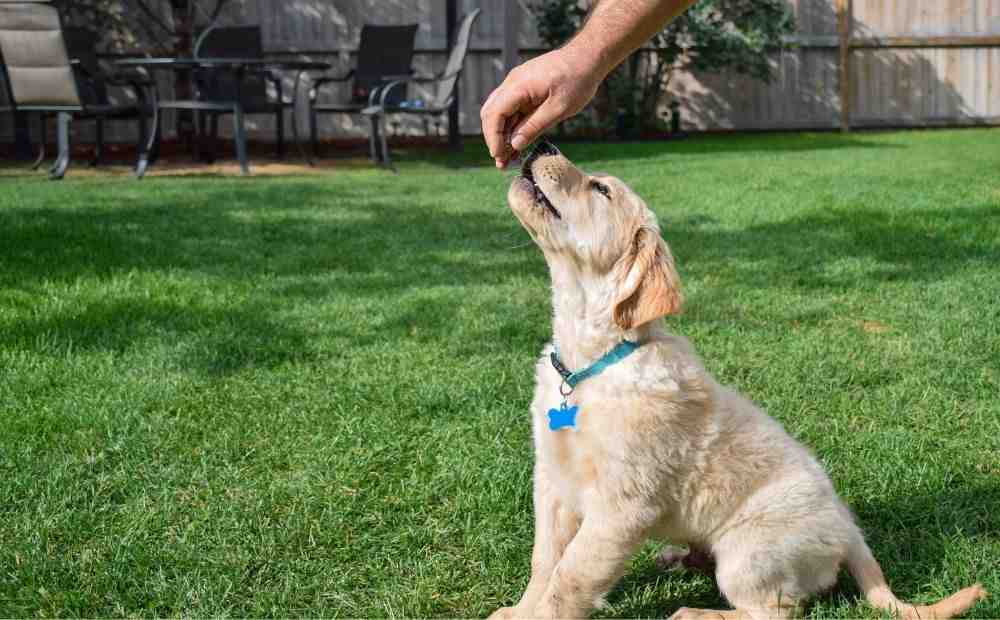
Why Austin dog manners matters at home and around town
Austin dogs do not live in a bubble. They live in apartments, neighborhoods, lake communities, and busy family homes. Good manners matter in all of them.
At home, training helps with:
- Greeting guests without jumping
- Waiting at doors instead of dashing out
- Settling during dinner or while kids play
- Better crate and potty routines
- Less counter surfing and demand barking
Around town, it helps with:
- Elevator and lobby manners in condos
- Calm walking on sidewalks and trails
- Better behavior at dog-friendly patios
- Safer outings in parking lots and public spaces
- Kid-friendly habits on neighborhood walks
In short, manners are not just for class. They are for Tuesday morning, family dinner, and that patio brunch you were hoping to enjoy while your dog did not rearrange the furniture.
The difference between obedience and Austin dog manners
Obedience is learning cues.
Manners is using them when it counts.
A dog may know “sit” in the kitchen and still lose their mind when the doorbell rings. A dog may know “come” in the backyard but forget the word entirely at the park. That gap is where manners training lives.
Good manners training focuses on:
- Reliability with distractions
- Clear boundaries
- Practice in real environments
- Consistency from the whole family
- Calm choices, not just cue-following
If you want to see how that distinction plays out, our article on teaching your dog impeccable manners breaks it down well.
When to start: puppies, adolescents, and adult dogs
A common question is: when should we start?
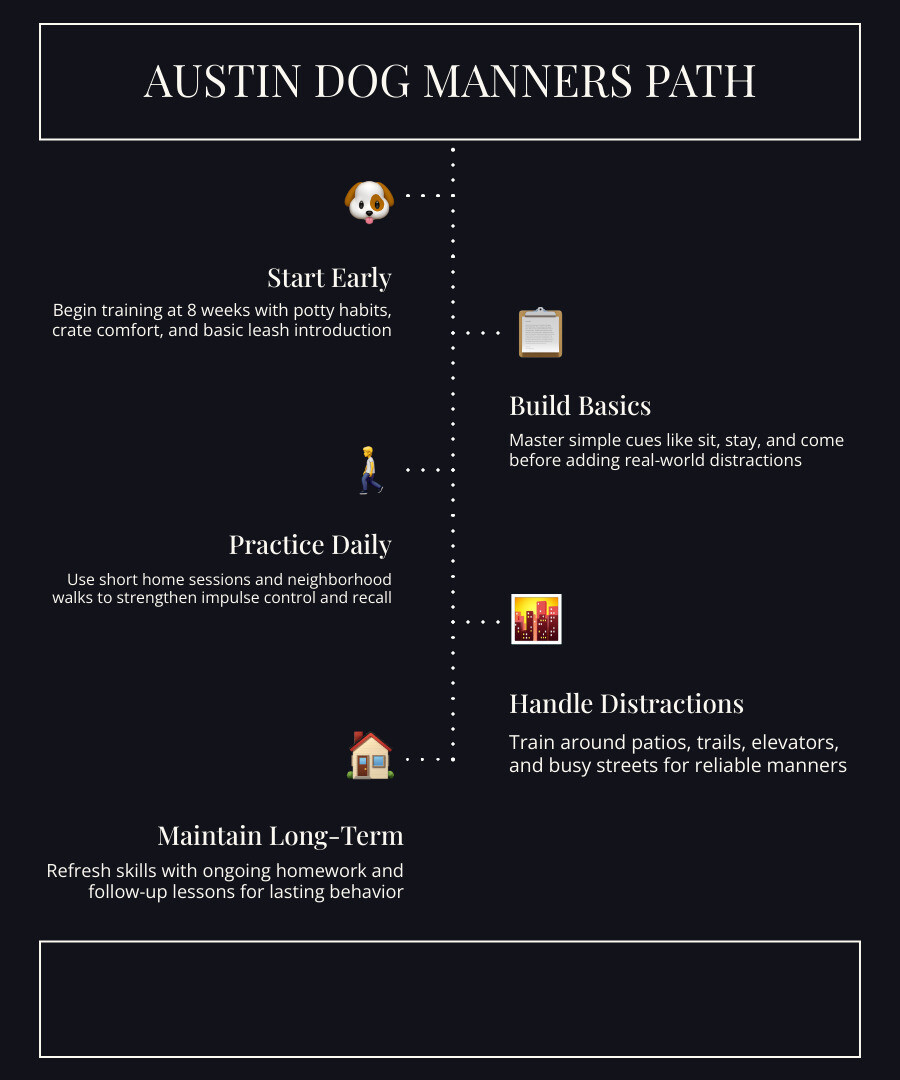
Early is great. Research from local training providers consistently points to starting as young as 8 weeks once a puppy is settled in at home. That early window is helpful for potty habits, crate comfort, leash introduction, chewing, and learning how to be calm.
But there is good news for owners of teenage dogs and adults too: it is not too late.
- Puppies learn routines and confidence
- Adolescents learn impulse control and consistency
- Adult dogs can replace messy habits with better ones
- Older dogs can still build leash skills and home manners
The main thing is matching the program to the dog in front of you, not the dog you wish you had started with six months ago.
How Austin Dog Manners Training Works
Most strong manners programs follow a similar structure: evaluation first, then a custom plan built around the dog’s age, temperament, history, and your goals.
Training methods vary, but many Austin-area programs use some blend of:
- Positive reinforcement with food, praise, and toys
- Clear communication and structure
- Repetition in daily life
- Owner coaching so progress carries over at home
That “real life” piece matters. Dogs do not automatically apply a skill from a quiet room to a noisy sidewalk. They need practice in the places where you actually live together.
| Program | Best for | Typical format | Owner involvement |
|---|---|---|---|
| Private lessons | Home-specific issues, customized coaching | 1-on-1 sessions at home or nearby | High |
| Puppy training | Early habits and foundation skills | Short sessions with routine building | High |
| Board and train | Busy families, faster jump-start, intensive practice | Daily supervised training stay | Medium to high after handoff |
Austin dog manners through real-world practice
One reason local manners work can be so effective is that it often happens where the behavior actually matters:
- Busy neighborhood streets
- Parks and walking paths
- Patios and outdoor seating areas
- Apartment hallways, elevators, and lobbies
- Front doors and living rooms
- Everyday outings with normal distractions
This kind of practice helps dogs generalize skills. In plain English: they learn that “heel” and “settle” still apply outside your kitchen.
That is why real-world training tends to produce more useful results than rehearsing only in a low-distraction setup.
Evaluations, timelines, and how many sessions dogs usually need
There is no honest one-size-fits-all timeline. Some dogs make visible progress in a few sessions. Others need longer support, especially for reactivity, anxiety, or long-standing habits.
An evaluation usually looks at:
- Age and developmental stage
- Temperament and confidence
- Behavior history
- Triggers and daily routine
- Your goals and schedule
From there, trainers can recommend a starting point.
In general:
- Simple puppy foundations may improve quickly with consistency
- Leash pulling may start improving in a few sessions but needs practice
- Reactivity and anxiety often take longer and benefit from gradual exposure
- Household habits stick better when the whole family follows the same plan
How owner involvement makes results stick
This is the part people sometimes underestimate: dog training is not a drop-off magic trick.
Even when a dog gets intensive help, owners still need to carry the plan into daily life. The best long-term outcomes usually include:
- Short daily homework sessions
- Clear routines at home
- Family participation
- Follow-up lessons or refreshers
- Practice in different environments
That is one reason we like programs built around support, not just a handoff. Dogs learn faster when expectations stay steady after training ends.
Programs and Services for Better Manners
Most Austin-area manners options fall into a few main categories. The right one depends on your dog’s behavior, your schedule, and how hands-on you want to be.
If you are still exploring local options, our guides to Austin puppy trainers and dog boot camps can help you compare formats.
Board-and-train for busy Austin families
Board and train is often a fit for families who want an immersive start. In many local programs, dogs stay for 2 to 4 weeks and work on skills throughout the day, not just in one lesson block.
That can include:
- Leash manners
- Recall
- Calm greetings
- Place or settle work
- Better behavior around distractions
- Practice on town outings or neighborhood walks
At Pet Caddy, our board and train approach is shaped by a Like Home environment. We focus on Hands-On Care, Supervised time, and lots of real practice, not just sitting in kennels waiting for the next session. Dogs do better when they can move, learn, and decompress in Wide Open Spaces.
For some families, that ranch-style setting makes a big difference. It gives dogs room for Tailored Play, routine, and time to practice calm behavior in a lower-stress environment.
Private lessons for home-specific behavior issues
Private lessons are often the better fit when the problem is tied closely to the home or neighborhood.
Think:
- Barking at the front window
- Rushing the door
- Jumping on guests
- Counter surfing
- Meltdowns on your usual walk route
- Trouble settling in family routines
Because the coaching happens with you, private work can be especially helpful for teaching handlers timing, leash skills, and follow-through. It also allows the whole family to get on the same page, which matters more than most dogs would prefer us to admit.
Puppy training for polite habits from the start
Puppy training is where many future manners wins begin.
A good puppy plan often covers:
- Potty routines
- Crate comfort
- Nipping and chewing
- Calm handling for grooming and vet care
- Leash introduction
- Simple cues like sit, down, place, and come
- Confidence in new environments
Starting early does not mean drilling a baby dog like a tiny employee. It means building habits that make life easier later.
If you want a stronger foundation, our basic obedience training services are a good next step.
Solving Common Behavior Problems with Austin Dog Manners
Many owners start looking for training because one issue has become the daily headache. Often, though, that one issue is tied to a bigger manners picture: impulse control, over-arousal, lack of clear routines, or difficulty coping with distractions.
Leash pulling and reactivity on Austin walks
Loose-leash walking is one of the most requested goals in local training, and for good reason. Pulling is exhausting. Reactivity adds stress on top of it.
Good manners work for walks usually includes:
- Building attention on the handler
- Reinforcing position and check-ins
- Practicing at a manageable trigger distance
- Gradually adding distractions
- Short, successful reps in real neighborhoods
For reactive dogs, the goal is not forcing them into chaos. It is helping them notice a trigger, stay under threshold, and make a better choice. That takes planning and repetition.
Jumping, door dashing, and rowdy greetings
These behaviors often come from excitement, not bad intentions. Sadly, guests do not always appreciate being body-slammed by enthusiasm.
Common fixes include:
- Sit to greet
- Threshold work at doors and gates
- Place or mat training
- Waiting for release before moving
- Consistent routines when guests arrive
The key word here is consistent. If one person asks for calm greetings and another rewards jumping with a full wrestling match in the entryway, your dog will choose the fun option every time.
Anxiety, barking, and overstimulation
Not all noisy or busy behavior is disobedience. Sometimes it is stress, uncertainty, or a dog who has not yet learned how to settle.
Training may focus on:
- Predictable daily routines
- Crate comfort
- Calm settle exercises
- Confidence-building exposure
- Enrichment and decompression
- Structured, supervised practice
A dog who is always “on” may need fewer chaotic situations and more guidance through them. Sometimes better manners start with helping the nervous system slow down a notch.
Potty training, recall, and everyday reliability
These are the less glamorous skills that make home life work.
Potty training improves with:
- Clear schedule
- Frequent trips out
- Supervision
- Crate routine
- Rewarding the right moment
Recall improves with:
- High-value reinforcement
- Long-line practice
- Starting in easy spaces
- Gradually adding distractions
- Making “come” worth showing up for
For more on getting these basics right, see our guide on enrolling in obedience training.
Pricing, Payment Plans, and Service Areas
Pricing is often the question people ask second. The first is usually “Can you help with this goblin behavior?” Fair enough.
What dog training pricing often looks like in the Austin area
Across the Austin area, prices can vary a lot by format.
Research on local programs shows examples such as:
- Group manners classes around $165 to $250 for multi-week courses
- One-on-one sessions around $120 in some markets
- Longer support packages in the roughly $1,335 to $2,135 range
- Puppy programs and extended lesson bundles that can run higher
- Board-and-train pricing that depends on length of stay and goals
What matters most is understanding what is included:
- Evaluation or consultation
- Follow-up lessons
- Homework support
- Real-world outings
- Refreshers after the main program
At Pet Caddy, we believe pricing should be transparent, with no hidden fees. We also believe the things owners care about most should not show up as surprise add-ons. Hands-on human interaction and all-day play are included at no extra cost.
Payment plans and what to ask before you book
Before signing up, ask:
- Is the quote custom to my dog’s needs?
- Are follow-up lessons included?
- Is there support after the main training period?
- What happens if we need a refresher?
- Are there hidden fees for play, handling, or daily care?
- How often will I get updates?
- What does owner handoff look like?
Those questions can save you confusion later.
Areas served around Austin and nearby communities
We focus on the communities we know well. Pet Caddy serves:
- Austin
- Spicewood
- Horseshoe Bay
- Marble Falls
- Steiner Ranch
- Hudson Ranch
- Lakeway
- Barton Creek
- Barton Creek Lakeside
- Bee Cave
That means if you are looking for dog training in Lakeway, dog training in Bee Cave, or manners support near Steiner Ranch or Barton Creek, you can find local options without driving across half of Texas.
Reviews, Results, and How to Choose the Right Fit
Results matter, but the right fit matters too.
Local research points to more than 1,100 satisfied owners using Austin-area manners programs. Across providers, the most common success stories tend to sound similar:
- Walks become calmer
- Guests can come over without chaos
- Puppies stop acting like tiny land sharks
- Owners feel more confident
- Dogs seem more relaxed because the rules make sense
What reviews say about Austin dog manners success
The strongest feedback usually focuses on everyday changes, not flashy tricks.
Owners often mention:
- Better leash manners after a few sessions
- Dogs learning calmer behavior around distractions
- More peaceful homes
- Stronger bond between dog and owner
- Better behavior with visitors and on outings
That is the kind of progress we care about too: usable behavior, not just impressive behavior.
Signs a training program is a good fit for your dog
Look for a program that offers:
- Clear explanation of methods
- Safe, supervised environment
- Real-life practice, not just staged drills
- Family involvement
- Reasonable expectations
- Honest timeline estimates
- Support after the first phase of training
We also think environment matters. Dogs tend to do better when they are not packed into stressful, overcrowded spaces. Our approach at Pet Caddy leans into Small Groups, Big Care, Tail Wags, and room to breathe. Our five-acre setup gives dogs a Ranch Adventure feel with structure, not chaos.
Questions to ask before signing up
Here are smart questions to bring to any trainer or program:
- What training methods do you use?
- How do you handle leash pulling or reactivity?
- Are owners taught how to maintain the work?
- What is the daily routine?
- Is the environment supervised?
- Will I receive updates during board and train?
- How much homework should I expect?
- What support is available after training?
You may also find these helpful:
Frequently Asked Questions About Austin Dog Manners
Can dog manners training help with leash pulling, reactivity, and jumping?
Yes. These are some of the most common reasons owners seek help. Good manners training works on the underlying skills behind those issues: attention, impulse control, calm greetings, leash handling, and practice around distractions.
For some dogs, progress comes quickly. For others, especially reactive or anxious dogs, it takes a more gradual plan.
Is board-and-train or private coaching better for my dog?
It depends on your dog and your life.
Board and train can be a strong fit if:
- You want an immersive jump-start
- Your schedule is packed
- Your dog would benefit from daily supervised repetition
Private coaching can be better if:
- The issue is tied to your home routine
- You want to be deeply involved from day one
- You need help with handling skills and consistency
Some families benefit from a mix: intensive training first, then private follow-up.
How long does it take to see better manners?
Some dogs show improvement in a few sessions. More complex issues may take weeks or longer.
The biggest factors are:
- Age
- Behavior history
- Temperament
- How often you practice
- How consistent the household is
The short version: progress can start soon, but lasting manners come from repetition.
Ready for a Calmer, Happier Dog at Home and Around Austin?
If you want your dog to have better manners without losing their personality, we would love to help. At Pet Caddy, we keep things personal, local, and grounded in what daily life with dogs actually looks like.
Our approach is built around:
- Like Home care
- Small Groups, Big Care
- Hands-On Care
- Supervised play and training
- Wide Open Spaces across five acres
- Plenty of Tail Wags
- Tailored Play that fits the dog in front of us
Whether you need dog boarding, doggy daycare, or board and train, we aim to give dogs a safe, steady place to learn and relax while giving owners peace of mind.
If you are starting with a young dog, our puppy training services are a great place to begin.
Schedule your pup’s stay and let us help make life with your dog feel a little calmer, a little easier, and a lot more fun.