Is a Board-and-Train Puppy Program Right for Your Puppy?
A board-and-train puppy program may be worth it if you need help building good habits while you work or travel. Before you enroll, ask about your puppy’s age and health requirements, the daily training routine, how you’ll get updates, and what help you’ll receive when your puppy comes home. Training can give your puppy a head start, but you’ll still need to practice at home, especially with potty breaks.
For Austin-area owners, Pet Caddy offers board and train with personalized attention, daily updates, and room to play across five acres. I’m James Turner, and I’ll help you decide what to look for before you book.
What to Expect from a Board-and-Train Puppy Program
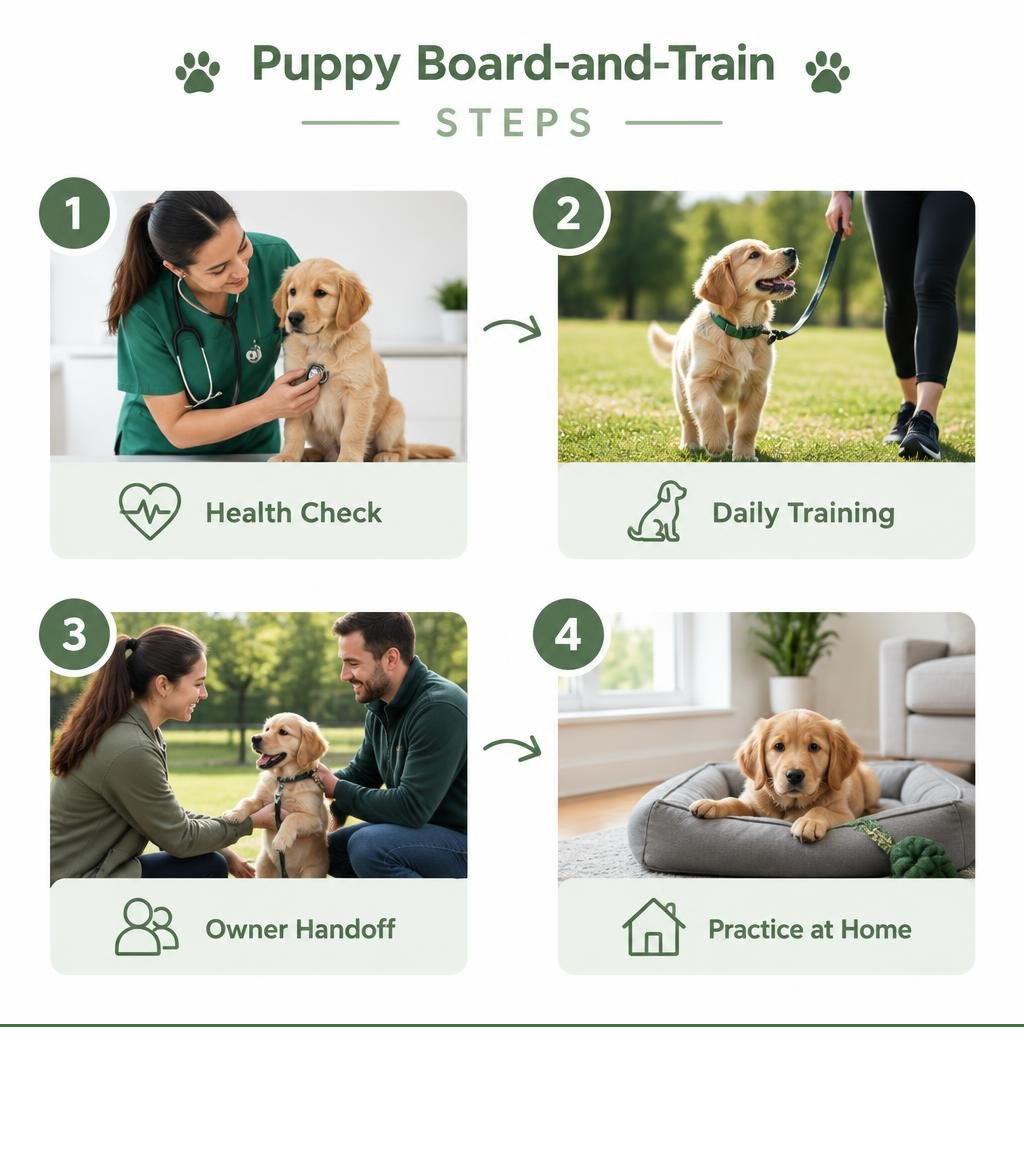
Enrolling your young companion in an immersive program provides a jump start on basic manners. Instead of brief, weekly lessons where you carry the entire teaching workload, your puppy stays in a dedicated learning environment with professional handlers. Every day includes structured routines, clear communication markers, and consistent feedback.

During a standard stay, puppies alternate between short, positive instruction sessions, outdoor relief breaks, supervised rest, and Tailored Play. This immersive structure prevents the development of bad habits like nuisance barking, counter surfing, and destructive chewing. Professional trainers build positive associations with human handling, grooming tools, and everyday household sounds.
Our approach centers on reward-based, humane handling methods. For pet parents exploring professional board and train obedience programs in Lakeway TX, working with trainers who follow positive reinforcement standards—such as those outlined in the AVSAB Humane Dog Training Position Statement—ensures that your puppy gains confidence without fear or intimidation.
Board-and-Train vs. At-Home Practice
Teaching a young dog at home takes patience, mechanical timing, and dozens of daily repetitions. When you take on solo instruction, everyday distractions, busy work schedules, and human inconsistency often slow progress. In contrast, an immersive program places your dog under experienced hands from morning to night.
Handlers recognize subtle body language cues instantly. They reward the exact moment your puppy offers a calm sit or loose leash, speeding up comprehension. While puppy basic obedience training at home remains a valuable bonding experience, a residential program handles the initial heavy lifting.
| Feature | Puppy Board-and-Train Program | Owner-Led Practice at Home |
|---|---|---|
| Primary Handler | Professional trainer with precise mechanics | Pet parent learning along the way |
| Daily Repetitions | High volume across multiple structured sessions | Dependent on owner work schedule |
| Environmental Control | Managed settings with controlled distractions | Prone to unexpected home distractions |
| Time Investment | Trainer manages foundational repetitions | Owner manages all daily drills and potty breaks |
| Owner Involvement | Critical during go-home handoff and home routines | Constant from day one |
Ideal Age Ranges and Health Prerequisites
Early behavioral development moves fast. The critical learning window occurs between 8 and 16 weeks of age, making it an ideal time to shape positive habits. Most immersive programs welcome puppies starting between 8 and 10 weeks of age, accepting dogs up to 5 or 6 months old for puppy-specific curriculums.
Before dropping your companion off for a stay, thorough health protocols protect every guest:
- Age-Appropriate Vaccinations: Documentation showing up-to-date core vaccines (such as DHPP/DA2PP and Rabies once age-eligible), administered on schedule.
- Clear Parasite Screening: A negative fecal exam result from your veterinarian within recent weeks to keep play areas clean.
- Preventative Care: Active, veterinary-approved flea and tick prevention.
- Veterinary Exam: A general health check confirming your pup is free of communicable illnesses.
These safeguards ensure that young, developing immune systems stay protected throughout their stay.
Program Tiers, Curriculum, and Timelines
Every puppy enters training with unique personality traits, energy levels, and learning speeds. Tiered programs allow owners to match their scheduling needs with specific behavioral goals. Whether you need a short boot camp for foundational manners or an extended stay for advanced reliability, structured tracks outline clear milestones.
Enrolling in a puppy boot camp establishes clear communication through positive markers, helping your puppy understand right from wrong in a gentle, encouraging manner.
Core Milestones in a Board-and-Train Puppy Program
A comprehensive board train puppy program targets early developmental milestones that make daily living enjoyable. Handlers focus on foundational manners that prevent common behavioral headaches down the road.
- Crate Comfort: Teaching your pup to settle peacefully in their crate for naps and nighttime sleep without vocal distress.
- Bite Inhibition and Toy Redirection: Guiding sharp puppy teeth away from hands, pant legs, and furniture toward appropriate chew toys.
- Marker Cues and Focus: Introducing communication words (like “yes” or clickers) that tell the puppy exactly when they made the right choice.
- Loose-Leash Foundations: Teaching your pup to walk alongside a handler without dragging or darting.
- Impulse Control and Sits: Encouraging default sits at open doorways, food bowls, and before greeting people.
- Recall Foundations: Building enthusiasm for coming when called across our Wide Open Spaces.
Following a structured dog puppy training guide during these early weeks sets the stage for a lifetime of dependable habits.
Program Lengths from Puppy Kindergarten to Advanced Obedience
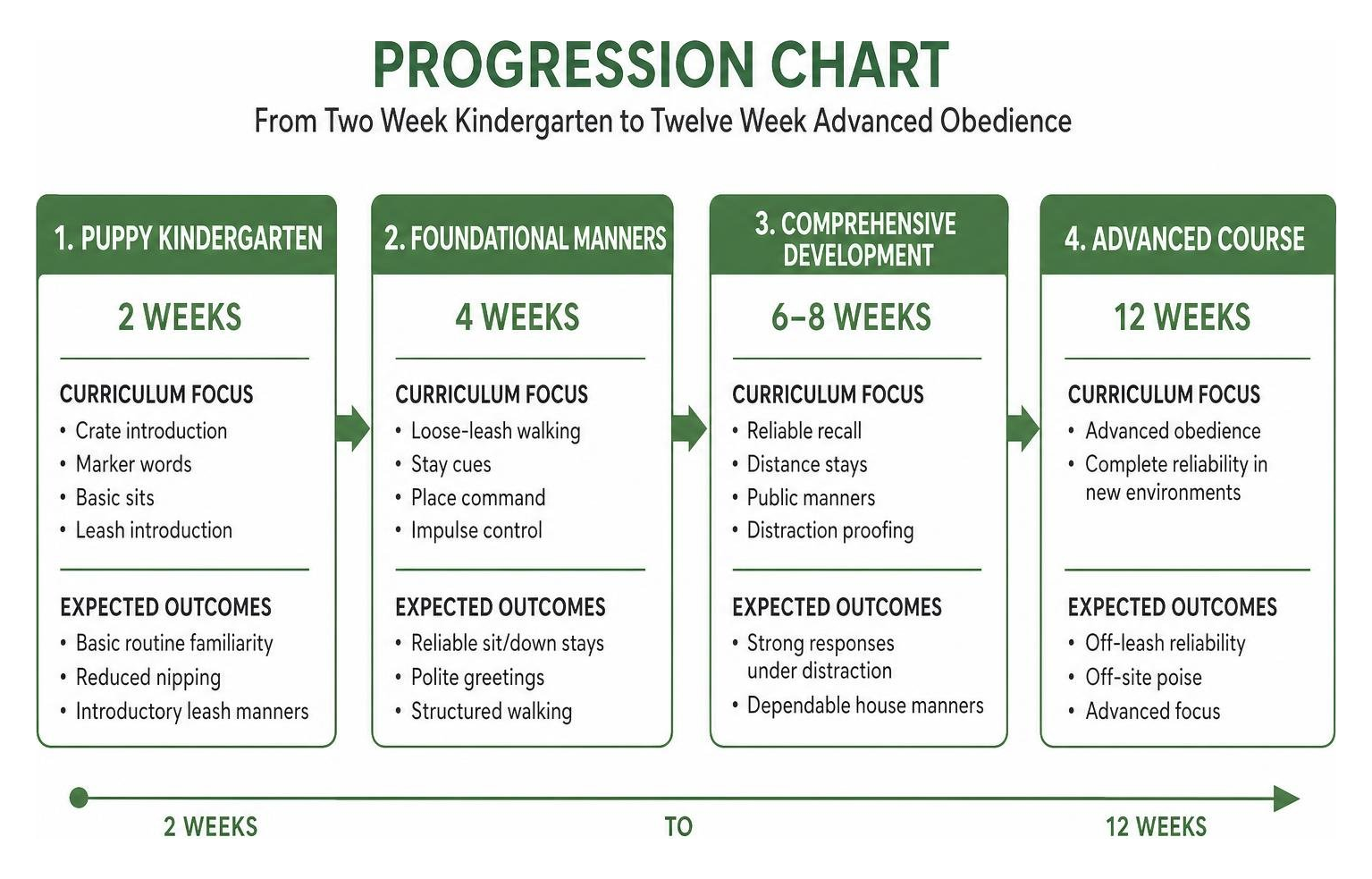
Program commitments vary based on how deeply you want behaviors proofed against distractions. Most residential stays require a minimum two-week commitment to help the puppy settle into a routine and absorb new skills. Adding extra days at standard daily rates allows trainers to tailor timelines when needed.
For pet owners interested in taking manners further, transitioning from basic puppy skills into advanced obedience training creates dependable responses around high distractions.
| Program Tier | Typical Duration | Curriculum Focus | Expected Outcomes |
|---|---|---|---|
| Puppy Kindergarten | 2 Weeks | Crate introduction, marker words, basic sits, leash introduction | Basic routine familiarity, reduced nipping, introductory leash manners |
| Foundational Manners | 4 Weeks | Loose-leash walking, stay cues, place command, impulse control | Reliable sit/down stays, polite greetings, structured walking |
| Comprehensive Development | 6–8 Weeks | Reliable recall, distance stays, public manners, distraction proofing | Strong responses under distraction, dependable house manners |
| Advanced Course | 12 Weeks | Advanced obedience, complete reliability in new environments | Off-leash reliability, off-site poise, advanced focus |
The Real Investment: Costs, Benefits, and Practical Drawbacks
Investing in residential training requires balancing your budget, time constraints, and long-term goals. While the upfront investment is higher than self-guided training, it gives busy families an efficient way to establish manners without letting bad habits take root.
Understanding regional pricing structures, such as dog training prices in Austin, helps you plan your pup’s education with confidence.
Evaluating the Cost of a Board-and-Train Puppy Program
Nationwide, immersive puppy programs generally average between $1,000 and $1,500 per week, depending on program depth, trainer experience, and facility accommodations. Shorter two-week foundational stays typically run between $1,800 and $3,000, while multi-week advanced courses range higher based on duration.
Reserving a training spot usually requires a standard deposit (often around $500), with the remaining balance due prior to the start date. Transparent pricing matters. At Pet Caddy, our rates are simple and clear with no hidden fees—supervised care, outdoor exercise, and Hands-On Care are always included.
Key Benefits for Busy Pet Owners
For households juggling demanding careers, school runs, or travel plans, an immersive stay provides immense relief:
- Fast-Tracked Learning: Hundreds of daily repetitions under expert guidance speed up understanding.
- Reduced Owner Stress: Avoid the exhausting early weeks of constant correction and boundary battles.
- Guided Environmental Exposure: Controlled, positive exposure to new sights, sounds, and playmates without overwhelming your pup.
- Expert Handling: Trainers address minor behavioral quirks before they become ingrained habits.
Families looking for the best puppy training in Austin often choose residential programs to ensure their companion develops solid manners right from the start.
Potential Drawbacks, Stress, and Setting Realistic Expectations
While residential programs deliver excellent progress, pet parents should hold realistic expectations. Moving to a new environment can cause temporary stress for sensitive puppies during their first day or two. Reputable facilities combat this with gentle handling, calm spaces, and small group settings.
Before signing up, consider whether boarding and training is right for your dog. An immersive program is not a magic fix that lasts forever without effort. Dogs do not generalize commands across different people automatically. If an owner fails to maintain household rules and commands after graduation, learned behaviors will fade.
The Key Transition: Bringing Your Trained Puppy Home
The true measure of a successful training program happens after pickup day. The training handoff bridges the gap between what your puppy learned with their trainer and how they respond to you in your living room.
A thorough handoff lesson ensures you understand the exact hand cues, verbal markers, and reward schedules used during your pup’s stay. Maintaining these principles preserves your investment in dog obedience training.
Reinforcing Potty Training and Daily Routines
A common question pet owners ask is whether a residential stay guarantees complete house training. While trainers establish strong crate routines and regular elimination habits, house training is location-specific. Puppies learn where to eliminate based on surface textures, scent markers, and familiar property boundaries.
Young puppies are physically limited by bladder development. Most dogs achieve full bladder control around six months of age with steady patience and routine. When your puppy returns home, stick to a tight schedule:
- Take them directly to your designated outdoor potty spot right after exiting the car.
- Take them outside immediately after waking up, within 15 minutes of eating, and following energetic play.
- Use your pup’s crate when you cannot provide direct supervision.
- Reward outdoor elimination instantly with warm verbal praise and a treat.

Owner Follow-Up Lessons and Long-Term Success
Your involvement after graduation makes all the difference. Reputable training programs provide video progress check-ins during the stay and hands-on coaching at pickup. Following the advice in our dog training complete guide ensures smooth integration into your home life.
Practice five-minute training games twice daily during regular meal times. Consistent handler mechanics and clear expectations will turn your puppy’s new skills into lifelong habits.
Frequently Asked Questions About Puppy Board and Train
How long does a puppy board-and-train program usually last?
Most puppy programs last between two and five weeks. A two-week stay builds foundational manners, crate familiarity, and leash basics. Stays of four weeks or longer allow trainers to proof commands around heavier distractions and build dependable recall.
Will my puppy be fully potty trained after graduation?
Your puppy will understand the concept of holding their bladder in a crate and eliminating outdoors on schedule. However, because puppies must learn the physical layout and boundaries of your specific home, you will need to reinforce the routine for several weeks upon their return.
What health requirements are needed before enrollment?
Puppies must have age-appropriate core vaccinations (such as DHPP), a recent negative fecal screening from a licensed veterinarian, and active flea and tick prevention. These health checks protect all puppies enjoying play and learning time together.
Conclusion
A well-structured training program provides an enjoyable, educational head start for your young dog. At Pet Caddy, our five-acre property gives puppies room to explore, learn, and grow in a stress-free Ranch Adventure setting. With Small Groups, Big Care, Supervised outdoor activities, and comfortable Kennels, we provide a true Like Home experience filled with Tail Wags.
When you want foundational manners tailored to your puppy’s personality, our team is ready to help your family thrive. Schedule your pup’s stay with our trusted team for puppy boarding and training in Spicewood, TX today.