Why Training Labrador Retrievers for Hunting Creates an Unbreakable Bond
Training Labrador retrievers for hunting is one of the most rewarding journeys a dog owner can take. Here’s what you need to know to get started:
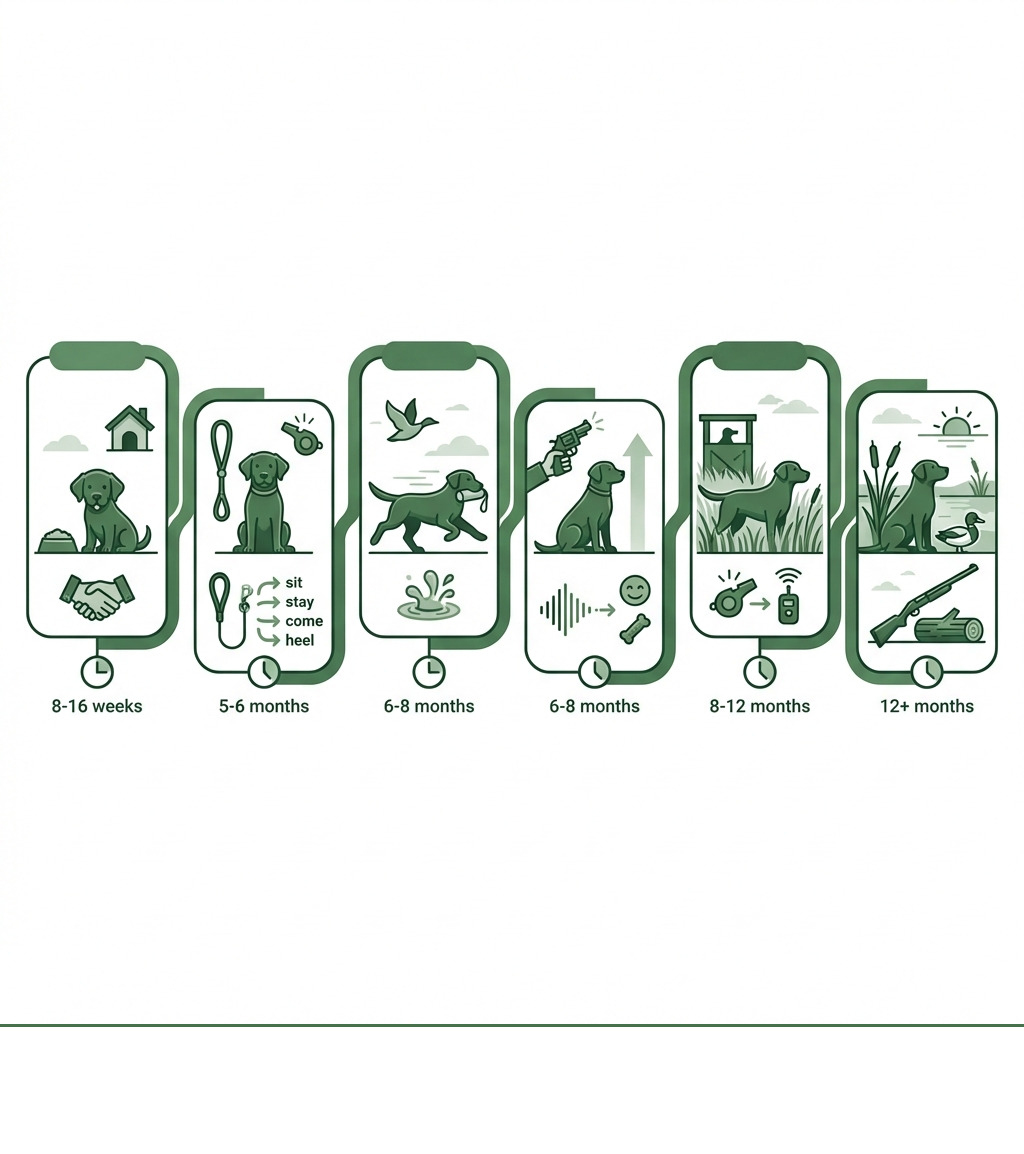
Key Training Stages for a Hunting Lab:
- Foundation (8-16 weeks): Basic obedience, early introductions to new things, and house training
- Formal Obedience (5-6 months): Sit, stay, come, heel, and place commands
- Introduction to Retrieving (6-8 months): Dummies, birds, and water exposure
- Gunfire Introduction (6-8 months): Gradual, positive exposure to prevent gun-shyness
- Advanced Field Work (8-12 months): Blind retrieves, whistle commands, and handling
- Hunting Experience (12+ months): Real-world scenarios and refinement
Timeline: Expect 6-12 months for foundational skills, and 2+ years for a fully finished retriever. Every dog learns at their own pace.
Labs are born with a natural instinct to retrieve. Your job isn’t to create that drive from scratch—it’s to guide it, shape it, and channel it into a reliable partnership in the field. Whether you’re after ducks in the marsh or pheasants in the uplands, a well-trained Lab becomes more than a hunting companion. They become a trusted teammate who reads your signals, stays steady under pressure, and brings back every bird with enthusiasm.
The journey from that wiggly, bumper-chewing puppy to a steady dog who waits patiently in a blind takes time, patience, and consistency. But the bond you’ll build along the way—through early morning training sessions, first water retrieves, and eventually, those perfect hunts—is worth every minute.
We get it—training is a full-time job, even when you have to be away. Here at our 5-acre ranch in the Austin area, we give your hunting Lab plenty of wide open space to stay sharp. Our ‘Like Home’ care includes lots of Hands-On Care and Tailored Play to keep them happy and engaged, all at no extra cost. After all, a well-trained dog deserves care that’s just as thoughtful.
Related content about training labrador retrievers for hunting:
The Foundation: Building Your Future Hunting Partner from a Pup
The journey to a reliable hunting companion begins long before your pup sees its first bird. It starts with a solid foundation laid during puppyhood. This includes careful selection, introducing them to new sights and sounds early on, and basic house manners.
When it comes to selecting a puppy for hunting, we look for more than just cuteness. A good indicator of potential is a puppy’s focus and attention. Instead of just bouncing off the walls, a promising pup will show curiosity and try to figure out what you want. Observing their tail position can also offer clues: a tail held straight out or slightly vertical often indicates a balanced and confident attitude. A tucked tail might suggest timidity, while an overly high tail could signal dominance.
Finding a reputable breeder who emphasizes hunting stock is key. They often have a deep understanding of genetics and can help you choose a puppy that is naturally wired for retrieving. Some puppies, if genetically predisposed, can retrieve a dummy and bring it back by 6-1/2 weeks old. While not every pup will be a retrieving prodigy, strong genetics certainly give them a head start!
Getting your puppy comfortable with the world is a cornerstone of training gun dogs. It’s about introducing your puppy to new sights, sounds, people, and other friendly dogs in a controlled, positive way. This helps them develop a calm temperament and comfort working alongside others, both human and canine. Without this early exposure, a dog might struggle with the new experiences of a hunting trip.
Basic house training and crate training are also a big help. We want our pups to be well-mannered companions at home, as well as in the field. House training involves frequent trips outside, especially after waking up or playing, and rewarding successful potty breaks with treats. Crate training turns the crate into a safe, comfortable den, never a place for punishment. This provides a secure space for your pup, which means less stress for both of you.
Starting on the Right Paw: First Steps for a Hunting Puppy
As soon as your furry family member arrives, make sure your home is puppy-proofed. This means removing any hazards and putting away items you don’t want chewed. Stocking up on appropriate chew toys can save your shoes and furniture from becoming puppy snacks!
From day one, start building that special bond. Simple retrieve games are a wonderful way to begin. You can start in a narrow space like a hallway, tossing a soft puppy bumper or even a rolled-up sock. Say “fetch” and encourage your pup to bring it back. The key is positive reinforcement—praise, gentle pets, and treats for every successful return.
Puppies have short attention spans! Keep training sessions brief, perhaps 5-10 minutes each, and always end on a positive note. This keeps the experience fun and builds a “want-to” attitude that will serve you well for years to come. This early positive exposure is a wonderful start for their journey From Puppy to Finished Retriever.
Mastering Obedience: The Critical First Step in Training Labrador Retrievers for Hunting
Obedience training isn’t just about good manners; it’s the absolute cornerstone of all field work for a hunting retriever. Without a strong foundation in basic obedience, advanced hunting skills simply won’t stick. It’s what teaches your Labrador retriever for hunting to focus on you amidst distractions, respond to commands, and maintain the steadiness needed for a successful hunt.
A fully trained Labrador needs to be steady to shot and steady to fall, meaning they won’t break and chase a bird until commanded. This level of control comes directly from consistent obedience training. It also helps build focus, ensuring your dog pays attention to your signals even when their instincts are screaming “go!”
Here are the key obedience commands that form the bedrock of a hunting dog’s education:
- Sit: A fundamental command for steadiness, especially important when waiting in a blind or before a retrieve.
- Stay: Teaches your dog to remain in place until released, important for preventing premature retrieves or chasing.
- Come (Recall): Arguably the most important command for safety and control. Your dog must reliably return to you, no matter the distraction.
- Heel: Teaches your dog to walk politely beside you, both on and off-leash, keeping them in range and under control.
- Place (Kennel): Directs your dog to a specific spot, like a dog bed, crate, or platform stand in a blind, and to stay there. This helps them understand where they should be and when.
- No: A clear indicator of unwanted behavior, important for correcting actions in the field.
We believe in keeping training sessions short, fun, and positive. This approach builds a strong bond and a dog that genuinely enjoys learning and working with you. Dogs have acute hearing, so you don’t need to shout commands. A clear, consistent tone is far more effective.
If you’re in the Austin area and looking for a little help with these foundational skills, we’d be happy to offer some friendly guidance. You can learn more about our basic gun dog training here: More info about our Basic Gun Dog Training services.
Why Patience and Consistency are Your Best Tools
Training a hunting dog, especially a Labrador, is a marathon, not a sprint. Patience and consistency are your greatest allies. Every dog learns at its own pace, and there will be days when progress feels slow. But remember, “there are no secrets involved: just patience, repetition, perseverance, consistency and the ability to anticipate reaction.”
Consistency means using the same commands, the same hand signals, and the same expectations every time. If one family member allows a behavior while another corrects it, your dog will become confused. We want to establish clear communication, so your dog understands exactly what you’re asking.
Ending every training session on a high note is a golden rule. Always finish with an exercise your dog can successfully complete, offering enthusiastic praise and a treat. This leaves them feeling confident and eager for the next session. We also advocate for a balanced approach, mixing “want-to” training (where the dog performs for a reward) with “have-to” training (where they perform because it’s a command). This balance helps develop a dog that is both enthusiastic and reliable.
Into the Field: Introducing Your Lab to the Hunt
Once your Lab has a solid foundation in obedience, it’s time to introduce them to the exciting world of hunting scenarios. This stage is all about building confidence and making positive associations with the elements they’ll encounter in the field.
Introducing your Lab to water should always be a positive experience. Many Labs naturally love water, but some might be hesitant. Start in shallow water, perhaps a kiddie pool or the edge of a calm pond in the Austin area. Go in with them, making it fun with toys and treats. Never force them or throw them into deep water. Ensure there’s an easy, clear exit for them to get out. As they gain confidence, you can gradually progress to deeper water. Some trainers even recommend mastering water exercises on land first, then transferring those skills to the water. A canine life jacket can be a great tool for hesitant swimmers, providing security as they build their skills. For more in-depth guidance, classics like Water Dog by Richard Wolters offer great tips.
Next comes the introduction to birds. Start with training dummies or bumpers. Make retrieving these fun and rewarding. Once your dog is enthusiastically retrieving dummies, you can transition to real birds. Many trainers use pigeons in launchers or pen-raised birds. The goal is to build your dog’s scent drive and enthusiasm for finding game. Begin with dead birds, allowing your dog to gain confidence with the feel and scent. Later, you can introduce live birds in a controlled environment, ensuring the experience remains positive and rewarding.
A Steady Approach to Gunfire Introduction
One of the most common concerns for hunting dog owners is preventing gun-shyness. Gun-shyness is a learned behavior, not an innate trait. Pups are not born gun-shy; it’s often developed through improper or sudden exposure to loud noises. For example, a dog might become gun-shy if exposed to loud construction noises, a starter pistol fired too close, or a chaotic duck blind with multiple guns firing simultaneously.
The key to preventing gun-shyness is gradual, positive exposure. Never surprise your pup with loud noises. Instead, introduce the sound of gunfire by pairing it with positive rewards. A common and effective method is to use a dummy launcher with a .22 pistol. Here’s how it works: have a helper fire the .22 pistol at a distance while you launch a dummy and send your dog for the retrieve. This teaches your dog that the sound of gunfire is associated with a fun retrieve and a reward. Start with the sound far away, gradually decreasing the distance and increasing the caliber of the firearm (from a cap gun to a 20-gauge, then a 12-gauge) as your dog remains comfortable and enthusiastic. The goal is for your dog to be excited by the sound because it signals a retrieve is coming, rather than fearful of it. Never force a dog to endure loud noises if they show signs of fear or anxiety.
Advanced Skills for the Accomplished Retriever
Once your Labrador retriever for hunting has mastered basic obedience and is comfortable with water, birds, and gunfire, it’s time to build on their skills for the field. This is where your dog becomes a truly exceptional hunting partner, capable of handling complex scenarios with grace and precision.
While Labs are versatile for both upland and waterfowl hunting, the specific advanced skills you focus on will depend on your primary hunting pursuits.
Higher-level field commands are important for effective communication at a distance. These include:
- Blind Retrieves: Guiding your dog to retrieve a bird they didn’t see fall, using hand signals and whistle commands. A fully trained Labrador can perform blind retrieving with pinpoint accuracy using a whistle system, even at great distances.
- Casting: Directing your dog left, right, or back using specific hand signals. This is critical for blind retrieves and working challenging terrain.
- Whistle Commands: Using a whistle for commands like “sit” (a single peep) or “come” (a series of peeps) allows for clear communication over long distances or in windy conditions.
The check cord is a great tool for training. It’s a long line (often 50 feet) that allows you to maintain control and establish working boundaries, especially when introducing new commands or teaching your dog not to range too far. For instance, when teaching your dog to stay in range during upland hunting, a check cord allows you to give a gentle tug and say “Too far” if they exceed limits, reinforcing the boundary without calling them back completely, which could stifle their hunting drive.
Responsible e-collar use can be a great tool in advanced training, but it’s important to use it correctly and gradually. An e-collar allows for immediate corrections, which can be a big help in the field. However, misuse can ruin a dog’s confidence. Start with the lowest possible stimulation (tone or vibration first) and only progress to static stimulation if necessary, always associating it with a specific command or unwanted behavior. The goal is to reinforce commands, not to punish.
For those interested in testing their dog’s advanced skills, organizations like the AKC offer Hunt Tests. These events provide structured scenarios to see your dog’s retrieving abilities and handling skills in action. You can explore these opportunities further at AKC Hunt Tests.
Specifics of training labrador retrievers for hunting waterfowl
Waterfowl hunting presents its own unique set of challenges and demands specific skills from your Lab.
- Working from a blind or boat: Your dog must learn to remain quiet and steady in tight quarters, waiting patiently for the “send” command. This requires extensive “place” training.
- Decoy introduction: Getting your dog comfortable around decoys is important so they don’t get distracted or try to retrieve them.
- Marking multiple falls: Often, several birds will fall at once. Your dog needs to learn to “mark” where each bird falls and retrieve them in a specific order, usually the hardest retrieve first.
- Enduring cold and wet conditions: Labs are built for cold water, but prolonged exposure requires conditioning. A neoprene vest can help keep young retrievers warm and comfortable, preventing them from shivering and wanting to leave their “place.”
Specifics of training labrador retrievers for hunting upland game
Upland hunting, whether for quail or pheasant, requires a different set of skills, focusing on flushing and staying within range.
- Working in range: This is an important skill for upland hunting. Your dog needs to quarter back and forth in front of you, covering the ground efficiently without getting too far ahead. A 50-foot check cord can be a big help here to teach them their boundaries.
- Quartering patterns: Training your dog to systematically search a field in a zig-zag pattern ensures no game is missed.
- Holding point: While Labs are primarily retrievers, some can be trained to “flush” birds on command, often after holding a “point” or indicating game.
- Flushing on command: For specific upland game like pheasants, your dog might be trained to flush birds out of cover when you give a command, rather than holding them.
Common Challenges and The Path to a Reliable Partner
Even with the best training plan, the path to a reliable hunting partner will have its bumps and detours. Common challenges are part of the journey, but with patience and the right approach, they can be overcome.
One frequent issue is breaking at the shot, where a dog charges for the fallen bird before being released. This usually stems from insufficient steadiness training. The solution? Go back to basics. Revisit “sit” and “stay” commands, practicing with increasing distractions and throwing dummies without sending the dog. Consistency is key here.
Another concern can be a hard mouth, where a dog grips game too tightly, causing damage. Conversely, a soft mouth is ideal—a gentle but firm hold. While genetics play a role, training can help. Teach the “hold” command using soft objects like a paint roller, ensuring they understand to carry gently. The “force fetch” method, where the dog learns to retrieve on command and hold the object, is often employed to instill a reliable, gentle retrieve.
Whining or barking in the blind can ruin a hunt and is a particularly difficult issue because dogs don’t always realize they’re doing it. This behavior needs to be nipped in the bud immediately. It often points to a lack of understanding of the “place” command or general steadiness. Reinforce quiet steadiness in a simulated blind environment with increasing distractions.
What to do when things go wrong? When your dog struggles, simplify the situation. Identify the root command that’s breaking down and practice it outside the hunting scenario. Don’t push your dog when they’re struggling; this can create negative associations. Sometimes, stopping the hunt before you do more harm than good is the wisest choice. Take a break, regroup, and revisit the problem with a fresh training plan.
The abilities of a fully trained Lab are something to see. They can learn to do blind retrieves with pinpoint accuracy using a whistle system, even at great distances. They can flush birds for upland hunting and retrieve game from all sorts of challenging spots. They become reliable, enjoyable partners who understand their role and work well with their handler.
For those times when your hunting buddy needs a little extra care while you’re away, our gun dog boarding in the Austin area can help. We offer a safe and engaging ‘Like Home’ environment that supports their training and keeps their Tail Wags. You can find More info about our Gun Dog Boarding options here.
Frequently Asked Questions about Training a Hunting Lab
How much time does it take to train a Labrador for hunting?
Training a Labrador retriever for hunting is a journey, not a quick destination. While Labs are smart and eager to please, the process takes time to build their skills for the field. Foundational skills, including basic obedience and early retrieving, can take 6-12 months of consistent work. To achieve a “finished” retriever capable of advanced tasks like blind retrieves, complex handling, and reliable performance in different hunting scenarios, you should expect 2+ years of dedicated training. Every dog learns at a different pace, so patience and consistency are your best friends.
What should I look for when selecting a Labrador puppy for hunting?
Choosing the right puppy sets the stage for success. Here are a few tips:
- Look for hunting lineage: Research breeders who specifically breed for hunting ability and have a proven track record. Ask to see the parents work, if possible.
- Observe the litter: When visiting the litter, look for puppies that show focus and attention, rather than just being wildly hyper or overly timid. A balanced temperament is ideal.
- Check tail position: A tail held straight out or slightly up often indicates a confident and balanced attitude. Avoid pups with constantly tucked tails (timid) or extremely high tails (potentially dominant and harder to train).
- A good breeder is your best resource: A reputable breeder will be transparent about their dogs’ health, temperament, and hunting abilities. They can help match you with a puppy that suits your personality and hunting goals.
How can I prevent my dog from becoming gun-shy?
Preventing gun-shyness is so important, as it’s a difficult issue to correct once established. Gun-shyness is a learned behavior, not genetic.
- Gradual exposure is key: Introduce loud noises gradually and at a distance. Start with a cap gun or a small-caliber firearm fired far away, always pairing the sound with something positive, like a fun retrieve with a dummy.
- Positive association: Your dog should learn that the sound of a gun means something good is about to happen (like a retrieve). This is why the dummy launcher method, where the sound of the shot is immediately followed by a thrown retrieve, is so effective.
- Never force it: If your puppy shows any signs of fear or anxiety (cowering, shaking, trying to run away), stop immediately. You’ve gone too fast or too close.
- Avoid chaotic situations: Never take a young, unprepared dog to a busy shooting range, a competitive field trial, or a chaotic hunt where multiple guns are firing unexpectedly. Their first experiences with gunfire must be controlled and positive.
Your Trusted Partner in the Field and at Home
The journey of training Labrador retrievers for hunting is one of the most rewarding experiences a dog owner can have. It’s a process that forges an unbreakable bond, built on teamwork, trust, and countless shared moments of learning and triumph. From that first puppy retrieve to a perfectly executed blind retrieve in the field, every step strengthens the unique partnership between you and your loyal companion.
We know that life can get busy, and sometimes, you might need to be away—whether it’s for work, a vacation, or even a hunt your pup isn’t quite ready for. During these times, finding care you can trust, care that understands and supports your dog’s training and needs, is so important.
At Pet Caddy, we’re proud to provide a “Like Home” experience for dogs in the Austin area, including our friends in Spicewood, Horseshoe Bay, Marble Falls, Steiner Ranch, Hudson Ranch, Lakeway, Barton Creek, Barton Creek Lakeside, and Bee Cave. Our spacious 5-acre ranch offers your hunting Lab plenty of room to run, explore, and stay engaged. We believe in “Small Groups, Big Care,” ensuring every dog receives personalized attention, hands-on human interaction, and all-day play in our wide-open spaces—all included at no extra cost. We offer transparent pricing with no hidden fees, so you can have peace of mind knowing your dog is enjoying a true Ranch Adventure while you’re away.
Because a well-trained hunting dog deserves care that matches their abilities and keeps their Tail Wags, even when you’re not there.
Ready to get started on your dog’s training? We’d love to help. Learn more about our advanced obedience training programs right here: Learn more about our advanced obedience training programs.