From Chaos to Calm: The Ultimate Guide to Leash Training Any Dog
Why Learning How to Leash Train Your Dog Changes Everything
How to leash train your dog is simpler than most people think — but it does take patience, consistency, and the right approach.
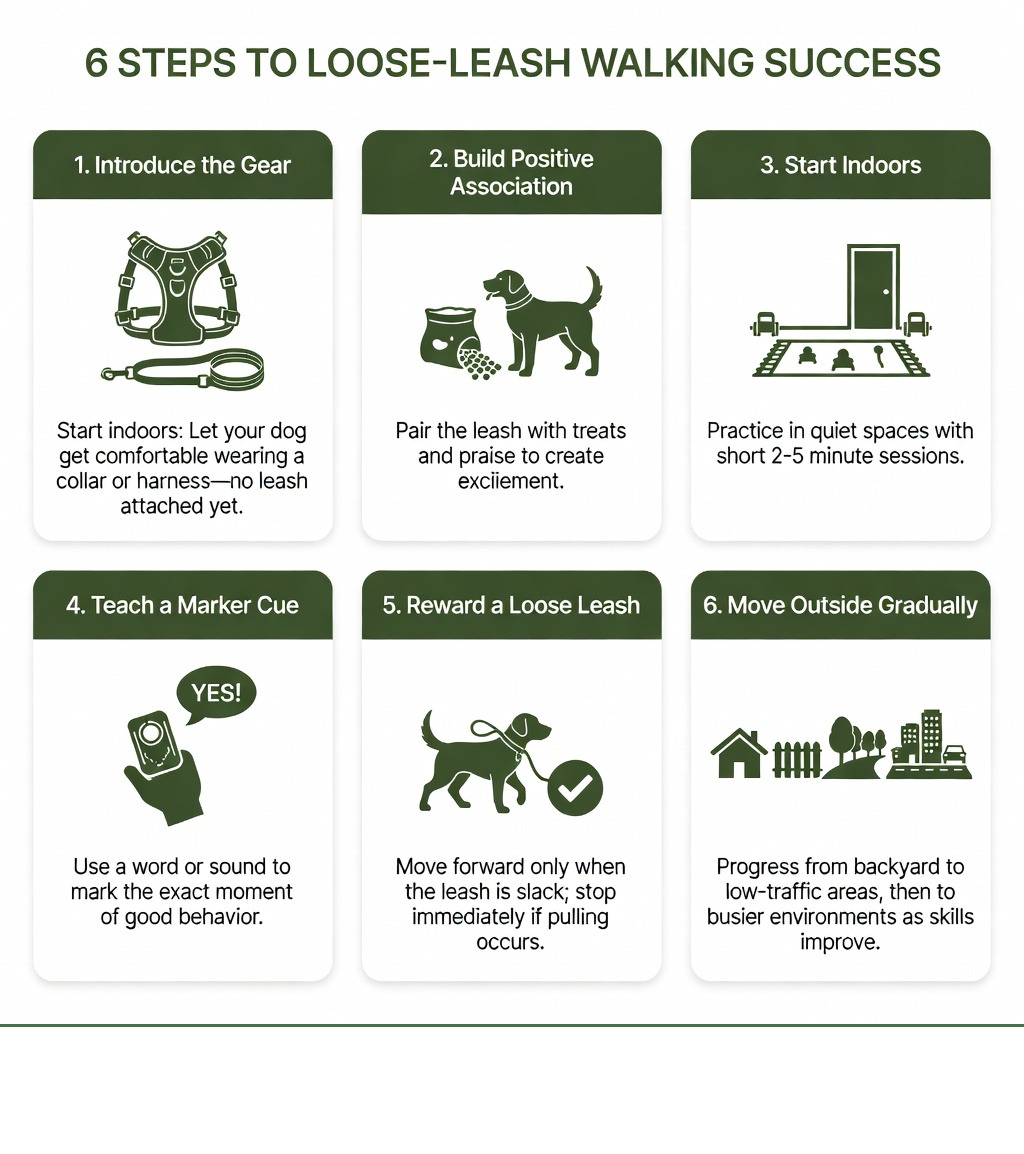
Here’s a quick overview of the core steps:
- Introduce the gear — Let your dog get comfortable wearing a collar or harness indoors before attaching a leash.
- Build a positive association — Pair the leash with treats and praise so your dog sees it as a good thing.
- Start indoors — Practice in a low-distraction space first, using short 2-5 minute sessions.
- Teach a marker cue — Use a word like “yes” or a clicker to signal the exact moment your dog does something right.
- Reward a loose leash — Only move forward when the leash has slack. Stop the moment your dog pulls.
- Move outside gradually — Progress from indoors to the backyard, then to busier areas as your dog improves.
Here’s the thing most people get wrong: dogs don’t naturally know how to walk politely beside you. It’s a skill they have to learn — just like sit, stay, or come. The good news is that with the right tools and a little practice, almost any dog can get there.
Whether you’ve got a bouncy new puppy, a strong-willed adult dog, or a rescue still figuring out the world, this guide walks you through everything step by step.
Key How to leash train vocabulary:
Gathering Your Gear for a Ranch Adventure
Before we head out into the wide-open spaces of Austin or Spicewood, we need the right tools. Think of this as packing for a ranch adventure; you wouldn’t head out into the brush without the right boots, and your dog shouldn’t start training without the right gear.
The foundation of a good walk is comfortable, safe equipment. Here is what we recommend:
- Flat-Buckle Collar: A standard collar is perfect for holding ID tags. When sizing, use the “two-finger rule” — you should be able to fit two fingers between the collar and your dog’s neck comfortably.
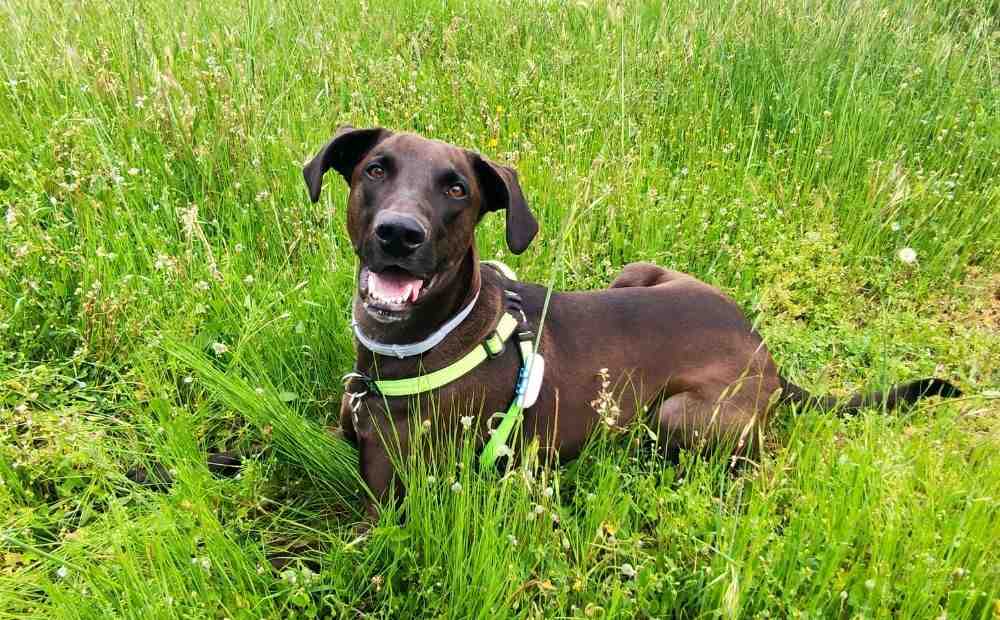
- Harness: For dogs that are still learning, a harness is often safer than a collar. It distributes pressure across the chest rather than the throat. A front-clip version is particularly helpful for pullers.
- 6-Foot Lead: Use a non-retractable leash. Retractable leashes actually teach dogs that pulling gets them more freedom, which is the opposite of what we want! A sturdy 6-foot nylon or leather lead provides the perfect balance of freedom and control.
- Martingale Collar: This is a great middle-ground tool. It tightens slightly when the dog pulls to prevent them from slipping out, but it doesn’t choke. It’s a favorite for dogs with narrow heads, like Greyhounds.
- Treats and a Pouch: Training is hungry work! Use high-value treats (like small bits of chicken or cheese) kept in a waist-strap bag for easy access.
- Clicker: A clicker is a fantastic way to mark the exact second your dog does something right.
How to Leash Train: Starting in the Comfort of Home
A common mistake is trying to teach a dog to walk in the middle of a busy park in Lakeway or Bee Cave. There are too many squirrels and interesting smells out there! Instead, we start where your dog feels most relaxed: right in your living room.
Begin by letting your dog wear their harness and leash around the house for short periods. This creates a positive association. While they have the gear on, play with them and give them treats. We want them to think, “When this harness goes on, great things happen!”
Keep these initial sessions short — about 2 to 5 minutes, three times a day. We also recommend practicing hand targeting, where your dog touches their nose to your palm. This is a great way to guide their movement without tugging the leash. Always watch for dog consent and cut off signals; if your dog seems stressed or backs away, take a break. Once they are comfortable indoors, move the practice to your backyard where distractions are still low.
How to leash train with positive cues
To be successful, you need a way to communicate. This is where marker words come in. When your dog walks beside you or looks up at you, say “Yes!” or use a tongue cluck, then immediately give a treat.
This is the core of teaching the dog that focus pays off. Before you even take a step, practice name recognition. Say your dog’s name, and when they make eye contact, reward them. Eye contact is the “secret sauce” of loose-leash walking; if they are looking at you, they aren’t lunging at a neighbor’s cat.
Building a bond before the first walk
At Pet Caddy, we believe training should feel “Like Home.” It’s about building trust through hands-on care. Before you ever hit the pavement, spend time just being together with the leash attached. If you’ve read our guide on walkies-without-woes-easy-steps-for-a-calm-leash-walk/, you know that a calm environment is the best classroom. Playful learning builds a bond that makes your dog want to stay near you, rather than feeling forced to.
Step-by-Step: Mastering the Art of the Loose Leash
Now that your dog is comfortable with the gear, it’s time to move. The goal is a “loose leash,” meaning the lead hangs in a relaxed “J” shape between you and your dog.
Research shows that walking a well-behaved dog provides significant stress relief for humans. On the flip side, a dog that pulls can make your blood pressure soar! To keep things calm, use the step-stop-treat method:
- Stand with your dog at your side (the “heel” position).
- Take one step forward. If the leash stays loose, say “Yes!” and treat at your pant seam.
- Take two steps. Repeat the reward.
- Gradually increase the number of steps.
- Use a release command like “Okay” or “Free” to let them know they can go sniff and be a dog.
For more advanced tips, check out our guide on leash-training-like-a-pro-from-pulling-to-perfect-walks/.
How to leash train without the tug-of-war
If your dog pulls, do not pull back. Dogs have an “oppositional reflex” — if you pull, they instinctively pull harder in the opposite direction. It’s like a furry version of a Chinese finger trap.
Instead, “be a tree.” The moment the leash goes taut, stop walking. Become immovable. Don’t jerk the leash; just wait. When your dog turns back to see why you’ve stopped, the leash will slacken. Mark that moment with a “Yes!” and keep walking.
If they are really determined to go forward, try 180-degree turns. The moment they get ahead of you, gently turn around and walk the other way. This teaches them that they have to pay attention to your direction to get anywhere. Tools like Front-hook harnesses can help by gently redirecting their chest back toward you if they try to bolt.
Troubleshooting Common Trail Troubles
Even the best-trained dogs have “off” days, especially high-energy breeds. Whether you’re walking Labradors who want to greet everyone or Huskies who want to pull a sled, distractions happen.
When you encounter a distraction like a squirrel or another dog, remember the 3Ds of training:
- Distraction: Start with easy things and work up to harder ones.
- Duration: How long can they keep their focus?
- Distance: If your dog is lunging or barking, you are too close. Move further away until they can focus on you again.
For high-energy pups, try some pre-walk play in the yard. A quick game of fetch can get those “zoomies” out so they can focus on their leash manners. If they start to lunge, redirect their attention with a high-value treat before they get fully worked up.
Training Different Pups: From Puppies to Rescues
Every dog is an individual. Puppies are blank slates but have the attention spans of gnats. Rescue dogs may come with a history of pulling or fear that requires extra patience.
For dogs that are particularly strong or reactive, head halters can be a useful management tool, but they require a slow, positive introduction. Always focus on emotional health and confidence building. A dog that feels safe is a dog that listens.
If you’re feeling overwhelmed, don’t hesitate to seek professional guidance. At Pet Caddy, our board & train programs in Austin and Steiner Ranch offer a “home away from home” where your dog can learn these skills in a stress-free, five-acre ranch environment.
Frequently Asked Questions about Leash Training
How long does it take to leash train a dog?
It varies! Some dogs pick it up in a few weeks, while others may take months of consistent practice. The key is persistence. Even a few minutes of practice every day makes a huge difference.
What is the best age to start leash training?
Immediately! Puppies can start learning the basics as soon as they come home. However, it’s never too late to train an adult or rescue dog. Older dogs often have better focus than puppies!
Why does my dog bite the leash during walks?
Leash biting is usually a sign of over-excitement or frustration. If your pup starts “tugging” the leash, stop moving and become boring. You can also try carrying a toy for them to hold during the walk to keep their mouth busy.
Conclusion
Learning how to leash train your dog is one of the most rewarding things you can do for your relationship. It turns a stressful chore into a joyful ranch adventure. Whether you’re strolling through Barton Creek or exploring the wide-open spaces of Horseshoe Bay, a polite walker is a happy walker.
If you need a little extra help, Pet Caddy is here for you. From our spacious five-acre ranch to our personalized hands-on care, we provide the perfect environment for your dog to thrive. Our pricing is completely transparent with no hidden fees, and all-day play is always included.
Ready to see those tail wags in action? Schedule your pup’s stay at Pet Caddy today and let us help your dog master the leash!