Why Loose Lead Walking Matters for You and Your Pup
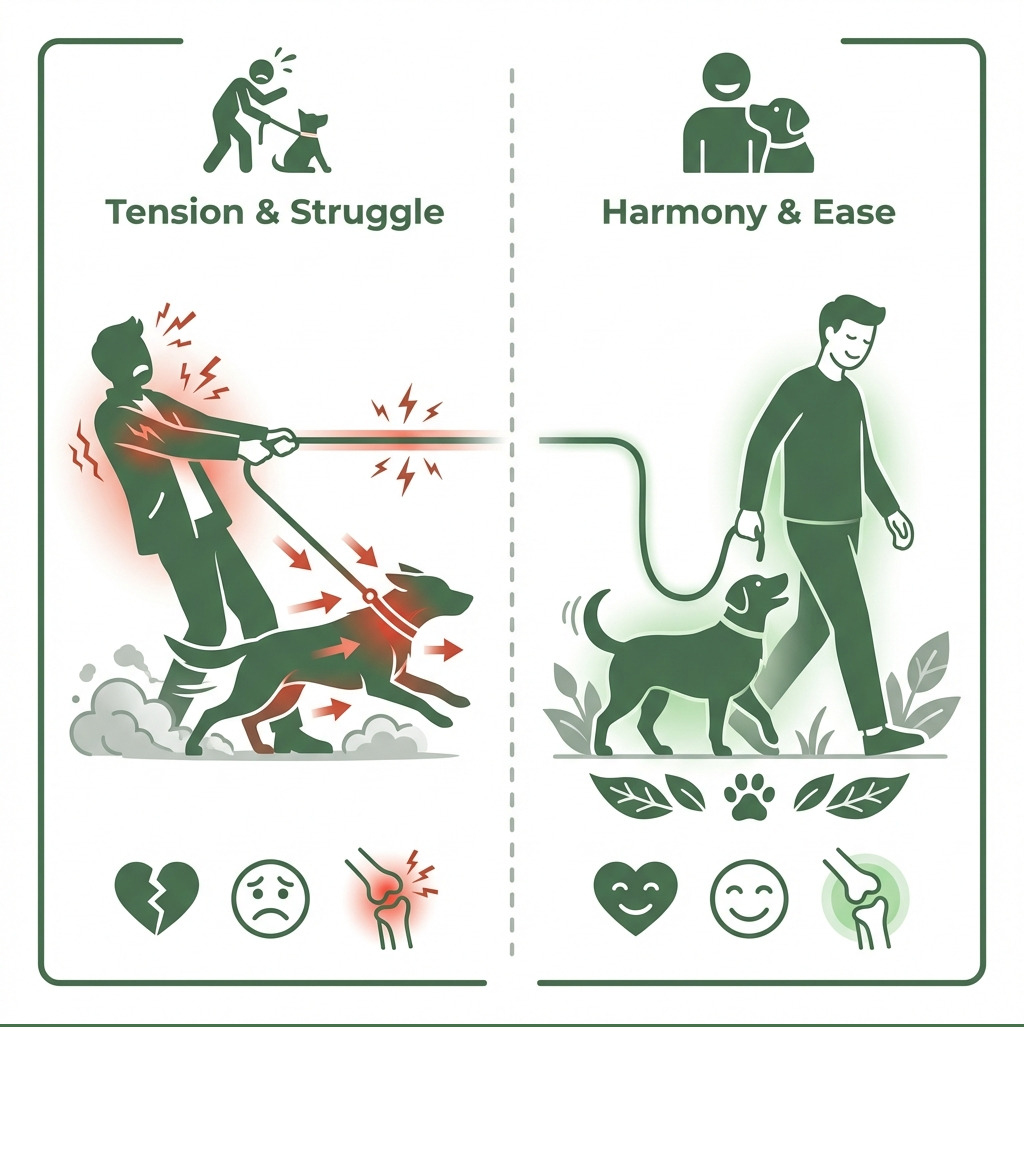
Loose lead walking is when your dog walks beside you without pulling, with a relaxed, slack leash forming a gentle “J” shape between you. It’s one of the most helpful skills your dog can learn—and one of the most common struggles for dog owners.
Quick Answer: How to Teach Loose Lead Walking
- Start indoors with minimal distractions
- Reward your dog for staying by your side with high-value treats
- Stop moving the instant the leash tightens
- Resume walking only when your dog returns and the leash is slack
- Practice daily in short, positive sessions
- Gradually add distractions as your dog improves
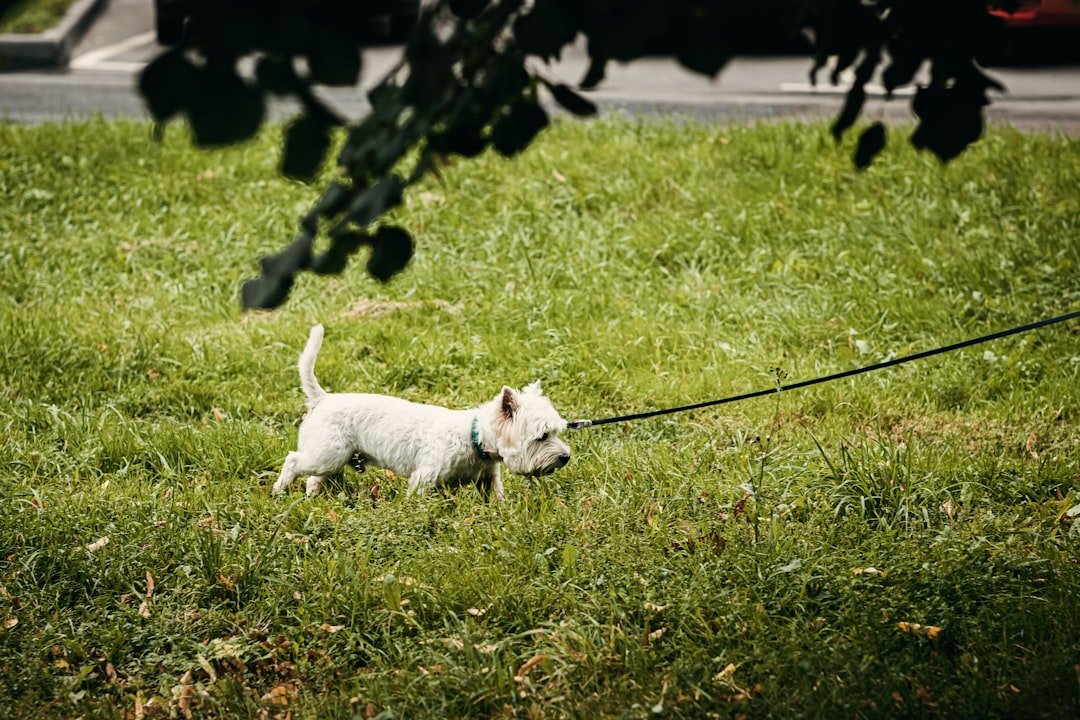
If you’ve ever been dragged down the sidewalk by an excited pup, you’re not alone. Dogs pull because it works—they get closer to that interesting smell, that friendly person, or the park they love. Meanwhile, you’re left frustrated, your shoulder aching, and your walk feeling more like a tug-of-war than a quiet stroll.
Here’s the good news: walks don’t have to be this way. With patience, the right tools, and reward-based training, you can teach your dog that staying close to you is more rewarding than charging ahead. The result? Calm, enjoyable walks where both of you can relax, share some tail wags, and breathe a little easier.
At Pet Caddy, we’re a locally owned Austin-area dog lover crew, and we believe walks should feel Like Home time, not a chore. Whether you’re navigating busy Austin streets or exploring our Wide Open Spaces on the 5‑acre ranch, loose lead walking makes every outing safer and more pleasant.
When you need extra support, our hands-on dog training in Lakeway and the Austin area is here to help with real people, real dogs, and clear pricing—no surprise add‑ons or hidden fees. Just Hands-On Care, Small Groups, Big Care, and a ranch that feels like a little Ranch Adventure for your best friend.
Let’s get started on the path to walkies without woes.
Basic loose lead walking terms:
Gearing Up for Success: The Right Tools for the Trail
Before we even take our first step, let’s talk gear! The right equipment can make all the difference in setting both you and your furry friend up for success in loose lead walking training.
What are the essential pieces of equipment needed for loose leash walking training? We recommend focusing on comfort, safety, and effectiveness.
First things first, you’ll need a sturdy, non-retractable leash. A standard 4-to-6-foot leash is great for starting. As you progress, a longer leash (8 to 15 feet) can be beneficial. It allows for more natural exploration and sniffing, which can have a calming effect on your dog. The extra length also helps prevent your dog from learning that pulling gets them to exciting smells, as they don’t need to strain to reach their goal.
Next, consider your dog’s comfort and your control. For many dogs, a Y-shaped harness is a fantastic choice because it allows for free shoulder movement, unlike harnesses that go straight across the chest. Many also feature a front-clip option. Attaching the leash to the front gently redirects your dog back towards you if they pull, serving as a kind reminder to stay by your side. While a back-clip harness is fine for dogs who already walk nicely, a front-clip can be a game-changer for those learning.
Occasionally, for dogs that need a little extra guidance, especially during the initial stages or for strong pullers, a head halter might be recommended by a trainer. These tools provide control around the dog’s muzzle, making it much harder for them to pull with their full body weight. They are designed to guide, not to cause pain, and should always be introduced positively and gently.
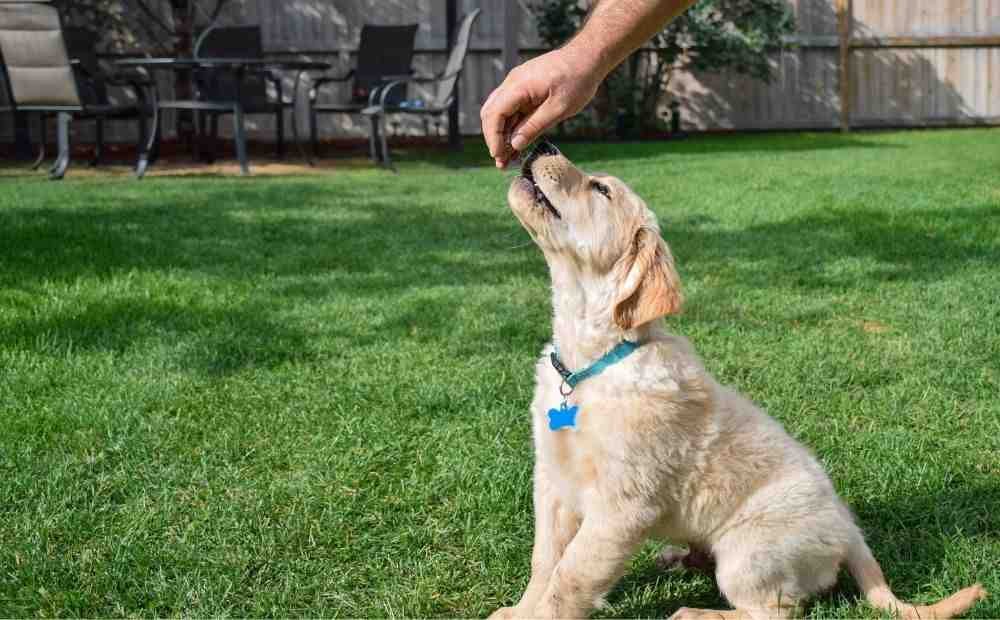
Finally, and perhaps most importantly, don’t forget your high-value treats! These are your dog’s paycheck, their motivation, and a clear way for you to communicate “Yes! That’s exactly what I want!” Think small, soft, and super tasty — tiny pieces of cooked chicken, cheese, or specialized training treats often work wonders.
Why Retractable Leashes Are Not Our Friends for Training
You might be wondering about retractable leashes. While they seem convenient, we strongly advise against using them for loose lead walking training. Why? Because they actually reinforce the very behavior you’re trying to stop! A retractable leash requires constant tension to extend, meaning your dog has to pull to get more length. This teaches them that pulling gets them somewhere, which is the opposite of what we want for a relaxed, loose lead walk. For effective Dog Obedience Training, consistency in leash tension is key, and retractable leashes make that impossible.
The First Steps: How to Teach Loose Lead Walking
Now that we’re properly geared up, let’s dive into the fun part: teaching your dog the art of the calm walk. Loose lead walking is a skill, and like any skill, it takes practice, patience, and plenty of praise.
We recommend starting your training sessions indoors or in a quiet, low-distraction area, like your backyard in Austin. This helps your dog focus on you, building a strong foundation before you head out into the exciting world.
Our approach is built on reward-based training, a kind, dog-friendly way to make learning feel like a game. We want your pup to associate walking nicely with good things happening. That means using your high-value treats to mark and reward the behaviors you like.
Keep training sessions short and sweet—5 to 10 minutes, a few times a day, works well. Always end on a win to build their confidence and keep them eager for the next session. Every dog is an individual, so move at your dog’s pace. No rush. Just steady, kind practice.
For younger companions, these early steps are a big part of Dog Training for Puppies. You can find more tips in our Dog Puppy Training Guide.
The Foundation of Loose Lead Walking: Prerequisite Skills
Before you step out the door with a leash, it helps if your dog has a few basics under their belt. These “prerequisite skills” make loose lead walking easier and less stressful for both of you.
One of the most helpful is attention games. Try a simple “name game”: in a quiet space, say your dog’s name in a happy tone. The instant they look at you, mark it with a cheerful “Yes!” or a clicker and give a treat. Repeating this teaches them that their name means, “Hey, check in with your person.”
Hand targets are another great tool. Teach your dog to touch their nose to your open palm on cue. This gives you a gentle way to guide their head and body, which can be a lifesaver on a busy Austin sidewalk.
We also want to build a habit of rewarding check-ins. This means your dog voluntarily looks back at you while walking. Even without a leash, walk around your home or yard, and when your dog glances at you, immediately reward them. This teaches them that keeping an eye on you pays off.
These skills are all part of solid Behavior Training for Dogs: What It Is and How to Get Started.
A Step-by-Step Guide to Loose Lead Walking
Let’s put those foundation skills to work and start teaching the actual mechanics of loose lead walking.
- Pick a Side and Position: Decide which side you want your dog to walk on (most folks choose the left, but either is fine). Hold your treats in the hand on that side. This encourages your dog to stay near the reward.
- Leash in a “J” Shape: Hold the leash in your opposite hand, letting it hang loosely in a gentle “J” shape. No tension.
- Lure with Treats (at First): With your dog at your chosen side, take one step forward. As your dog moves with you, immediately mark (“Yes!” or click) and reward with a treat delivered right at your hip on their side. Feed the treat where you want them to be.
- The “Be a Tree” Method: The moment your dog pulls and the leash tightens, stop walking immediately. Be a tree. Stand still and stay quiet. Wait. The instant the leash goes slack, mark and reward (if they came back to your side), then start walking again. This shows them that pulling stops the fun, and a loose leash keeps the walk going.
- Gradually Increase Steps: Start with one step and a reward. When your dog can do that calmly, move to two steps, then three, then five, and so on, before treating.
- Add a Verbal Cue: Once your dog is regularly walking nicely by your side for several steps, you can add a cue like “Let’s walk!” or “Heel!” just as you start to move. Over time, this word will signal what you’re hoping for.
The key is consistency. Every time your dog pulls, you stop. Every time they walk nicely, you pay them—with treats, praise, or forward motion. It’s a little walking agreement between you and your pup.
Navigating the Walk: Common Mistakes & Smart Solutions
Even with the best intentions, it’s easy to fall into common pitfalls during loose lead walking training. Let’s shine a light on these missteps and equip you with smart solutions to keep your training on track.
Common Training Mistakes (and How to Avoid Them!)
- Progressing Too Quickly: This is a common mistake. We get excited when our dog walks nicely in the living room and immediately take them to a busy park in Austin. A dog who walks nicely in a quiet space may struggle in a high-distraction one.
- Solution: Follow the “three D’s” – gradually increase Distance, Duration, and Distraction. Start in your home, then your quiet yard, then a quiet street corner, slowly adding more challenging environments only when your dog is consistently successful. It’s important to progress training slowly and in appropriate environments.
- Walking Too Slowly: Dogs naturally walk at a faster pace than we do. Walking too slowly can make it harder for your dog to match your rhythm and can make the walk boring for them.
- Solution: Walk at your natural, comfortable pace. Reward your dog for matching your pace while keeping the leash slack. This ensures the walk feels natural and engaging for both of you.
- Phasing Out Rewards Too Soon: We often hear, “But I don’t want to carry treats forever!” Treats are communication tools, not bribes. Phasing them out too quickly is a missed opportunity to reinforce good behavior.
- Solution: Continue using treats! Initially, use them frequently. As your dog improves, you can transition to intermittent, unpredictable rewards (they won’t know when the next jackpot is coming!). You can also start incorporating life rewards, like allowing them to sniff a favorite bush (with a loose leash, of course!). Treats serve as positive reinforcement that communicates success and keeps the behavior strong.
- Inconsistency Between Family Members: If one person consistently practices loose lead walking while another allows pulling, your dog will get confused and progress will be slow.
- Solution: Ensure everyone in the household is on the same page with the training methods and cues. Consistency is key for your dog to understand what’s expected.
Troubleshooting Pulling and Distractions
Even with the best preparation, challenges will pop up. Here’s how to tackle them:
- When Your Dog Pulls: Beyond the “Be a Tree” method, another technique is the U-turn. The moment your dog pulls, simply turn 180 degrees and walk in the opposite direction. Reward them when they catch up and the leash slackens. This teaches them that pulling takes them away from their goal, while staying by you keeps them moving forward.
- Managing Distractions: Distractions are everywhere, especially in a vibrant place like Lakeway or Marble Falls! When your dog fixates on another dog, a squirrel, or an interesting smell, it’s time to intervene proactively.
- Solution: Use your dog’s name or a “Watch Me” cue to redirect their attention to you. The instant they look at you, reward them generously. If the distraction is too intense, increase your distance from it. You can also use a high-value treat to lure their attention away and past the distraction. If all else fails, gently turn and walk in the opposite direction until your dog is re-engaged with you.
- Handling Leash Tension Effectively: How we hold the leash can cue our dogs. Constant tension can create an “opposition reflex,” where dogs instinctively pull against pressure.
- Solution: Learn light-handed but effective leash management skills. This involves techniques like the “gather” (efficiently shortening the leash without adding tension) and the “dip” (lowering your hands to remove tension). You can even pre-teach your dog that these movements are cues for them to orient back to you for a reward. Skilled Leash management skills explained can transform your walks.
- We never want to yank or jerk the leash. This not only causes discomfort but can also create anxiety and fear, damaging your bond and making training much harder. Our goal in Dog Training Complete Guide is always positive reinforcement.
Beyond the Basics: Making Walks a Joyful Adventure
Once your dog has mastered the basics of loose lead walking, you might wonder how to keep walks engaging and enjoyable for both of you. It’s not just about getting from point A to point B; it’s about the journey!
Differentiating a Formal ‘Heel’ from a Relaxed ‘Off-Duty’ Walk
One of the unique insights in loose lead walking training is understanding the difference between a formal ‘heel’ and a more relaxed ‘off-duty’ walk. These are distinct behaviors, and using different cues for each helps your dog understand expectations.
| Feature | Formal ‘Heel’ Walk | Relaxed ‘Off-Duty’ Walk (Loose Lead Walking) |
|---|---|---|
| Purpose | Focused attention, precise positioning, safety in crowded areas or specific commands. | Enjoyable exploration, sniffing, mental stimulation, general safety. |
| Dog’s Position | Close by your side (usually left), shoulder aligned with your leg, focused on you. | Within leash length, generally near you, but with freedom to roam slightly and sniff. |
| Leash Tension | Always slack, but dog remains in precise position. | Always slack, forming a “J” shape; no pulling allowed. |
| Dog’s Focus | Primarily on handler, ready for next command. | On handler and environment (sniffing, observing), checking in periodically. |
| Cues | “Heel,” “Close,” “With Me” | “Free Time,” “Go Sniff,” “Explore,” “Okay” |
| Appropriate For | Obedience competitions, navigating busy streets, specific safety needs, formal training. | Most daily walks, park strolls, sniffaris, enjoying nature in places like Steiner Ranch or Horseshoe Bay. |
Why is loose lead walking often preferred for most outings? A formal heel requires intense concentration from your dog and isn’t something they can (or should) do for an entire walk. It’s like asking them to be “on duty” the whole time. A relaxed, loose lead walk allows your dog to be a dog! They get to sniff, explore their environment, and engage their senses, which is incredibly enriching for them. This makes walks more engaging and less restrictive, allowing your dog to get more out of their time outdoors.
Making Walks Engaging for Your Dog
Most dogs find slow, plodding steps around the neighborhood to be quite boring. This boredom can sometimes lead to them making their own excitement by lunging or barking. So, how can we make walks more enjoyable?
- Sniff Breaks (“Sniffaris”): Dogs are hard-wired to sniff! Their noses are their primary way of experiencing the world. Denying them this opportunity can be frustrating. Incorporate “sniffaris” into your walks. When you reach a safe, interesting spot, give a cue like “Go sniff!” and let them explore freely on a loose leash for a few minutes. This is fantastic mental enrichment and can actually tire them out more than just physical exercise.
- Vary Your Routes: Explore new paths and environments in Austin, Lakeway, or Bee Cave. Changing your walking path keeps things fresh and offers new smells and sights for your dog to investigate.
- Play Games: Turn walks into a game! You can play “Find It” by tossing treats into the grass for your dog to sniff out. Or try “Catch Me If You Can,” where you playfully jog a few steps, and when your dog catches up, you reward them. This makes staying close to you a fun, unpredictable adventure.
- Meeting Your Dog’s Exercise Needs: A walk isn’t always enough to meet all of your dog’s exercise and mental stimulation needs. Ensure your dog gets adequate physical and mental exercise beyond just leash walks. This might include sprints, tug games, fetch, puzzle toys, or even short training sessions at home. A dog with pent-up energy is more likely to pull!
Why On-Leash is Safer for City and Ranch Walks
While we love the idea of dogs running free, keeping your dog on a lead is crucial for their safety and the safety of others, whether you’re strolling through downtown Austin or exploring the wide-open spaces of a ranch near Spicewood or Hudson Ranch.
- Preventing Run-Offs: Even with the best recall, a sudden distraction (like a squirrel or another dog) can cause your dog to bolt. On-leash walking prevents them from running into traffic or getting lost.
- Managing Interactions: Not all dogs are friendly, and some people are fearful of dogs. A leash allows you to safely steer encounters with other dogs or people, preventing potential conflicts or unwanted greetings.
- Avoiding Hazards: On a leash, you can quickly pull your dog away from dangerous items like broken glass, toxic plants, or even wildlife like snakes that might be found in our beautiful Texas landscapes. This is especially important in unfamiliar areas.
- Respecting Others: Keeping your dog on a leash is a sign of respect for other pet owners, the public, and local regulations.
For our younger companions, instilling these habits early on is part of Puppy Basic Obedience Training.
Frequently Asked Questions about Loose Lead Walking
Why does my dog pull so much?
Dogs pull for a few key reasons, and it’s rarely out of spite.
- Excitement: A walk is often the highlight of their day, and they’re eager to get going.
- Pulling is Self-Rewarding: If pulling gets your dog to an interesting smell or the park entrance, they learn that it works.
- Environmental Distractions: The world is full of fascinating things to investigate, and they want to get there fast.
- Not Enough Exercise: Pent-up energy can lead to pulling on the leash.
- Learned Habits: If a dog has pulled for a long time, it’s simply a habit.
How long does it take to teach loose lead walking?
This is a common question, and the honest answer is: it varies!
- Patience is Key: This skill takes time and consistency. There’s no magic wand, but the results are worth it.
- Every Dog is Different: A young puppy might learn quickly, while an adult dog with a long history of pulling will take longer. Some breeds might also find it more challenging.
- Consistency Matters: Daily, short, positive training sessions are best. If everyone in the household is on board, your dog will learn faster.
- It Can Take Weeks to Months: You may see improvement in a few weeks, but mastery in different environments can take months. Think of it as a lifelong practice.
What if my dog is reactive or lunges at other dogs on walks?
This is a stressful situation, but there are ways to manage it.
- Manage Distance: The first step is to manage your dog’s distance from triggers (other dogs, people, etc.). Find the distance where your dog notices the trigger but doesn’t react—this is their “threshold.”
- Reward Calm Behavior: At their threshold, when they see a trigger but stay calm, reward them with high-value treats. This teaches them that seeing a trigger calmly is a good thing.
- Use the U-Turn: If your dog gets tense, a quick U-turn helps create distance and breaks their focus. Reward them for turning with you.
- For More Complex Cases: If reactivity is severe, we strongly recommend professional guidance. Our dog training services in the Austin area offer hands-on, personalized help. Our experienced trainers in Spicewood, Horseshoe Bay, and Marble Falls can create a custom plan to help your dog feel more confident on walks. Building a strong Teach Dog Come cue can also be a great tool.
Conclusion: Enjoy the Journey Together
Teaching your dog loose lead walking is one of those quiet, steady projects that pays off every single day. It turns pulling and frustration into peaceful strolls, shared sniffs, and simple time together.
At Pet Caddy, we’re proud to be a locally owned Austin-area business with a 5‑acre Ranch Adventure that feels Like Home for your dog. We believe every pup deserves happy walks and every owner deserves tail wags, not shoulder aches.
On the ranch, dogs enjoy Wide Open Spaces, Tailored Play in Small Groups, Big Care, and plenty of Hands-On Care from our team. Dogs aren’t stuck in small kennels all day—they’re out playing, exploring, and relaxing under Supervised care that feels personal and relaxed.
If you’re facing tougher challenges like reactivity or long-standing pulling habits, our dog training services in the Austin area offer calm, personal guidance. We keep our pricing transparent, with no hidden fees, and hands-on human interaction always included.
When you’re ready to make walks easier and give your pup a little ranch life on the side, schedule your pup’s stay or training session and let’s enjoy the journey together—one loose leash and one set of happy tail wags at a time.