Why Basic Obedience for Puppies Starts the Moment They Come Home
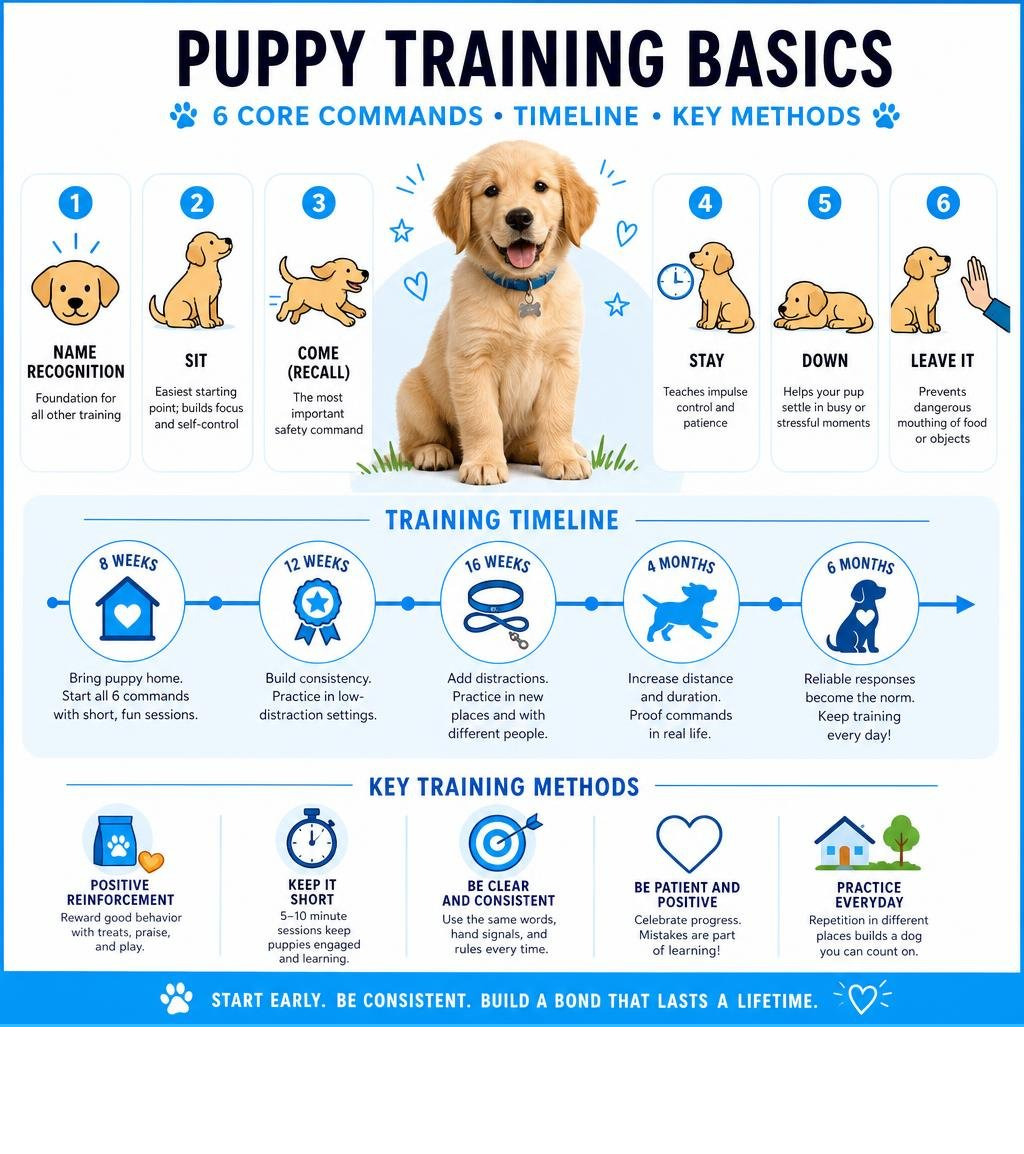
The six commands every puppy should learn first:
- Name recognition – the foundation for all other training
- Sit – the easiest starting point; builds focus and self-control
- Come (recall) – the most important safety command
- Stay – teaches impulse control and patience
- Down – helps your pup settle in busy or stressful moments
- Leave it – prevents dangerous mouthing of food or objects
You can start teaching all of these at 8 weeks old, right when your puppy comes home.
Anyone who has brought home a new puppy knows the feeling. One minute they’re asleep in your lap, melting your heart. The next, they’ve eaten a shoe, peed on the rug, and are using your hand as a chew toy. That chaos cloud has a name: it’s a puppy doing exactly what puppies do.
The good news? It doesn’t stay that way. And you don’t need to be a professional trainer to change it.
Basic obedience isn’t about turning your pup into a robot. It’s about building a shared language — one that keeps them safe, makes daily life calmer, and deepens the bond between you. According to the American Veterinary Society of Animal Behavior, the earliest weeks of a puppy’s life are the single most important window for shaping how they’ll behave for the rest of their years.
Short sessions. Clear signals. Consistent follow-through. That’s really all it takes to get started.
Here at Pet Caddy, we work with Austin-area dog owners every day who want the best for their pups — from their very first sit to their first real-world adventure on our 5-acre ranch. This guide walks you through everything you need to know to start your puppy off right.
Basic basic obedience for puppies terms:
What is Basic Obedience for Puppies and Why Does It Matter?
When we bring a new puppy home, we often focus on the fun parts: choosing toys, picking a name, and taking endless photos. But teaching basic obedience for puppies is actually the single best investment you can make in your dog’s future.
To understand why early training is so important, we have to look at some sobering facts from across the country. Every year, at least 10 million unwanted pets end up in humane shelters in the United States. Many people assume these shelters are filled only with mixed-breed dogs, but the reality is that most of the dogs turned in to humane shelters are purebred dogs. Often, these dogs are surrendered simply because they never learned basic manners, leaving their owners feeling overwhelmed by normal canine behaviors that grew out of control.
Additionally, irresponsible breeding practices carry high risks; statistics show that 60% of all breedings result in the death of either the mother or one or more of the puppies. Raising a dog is a serious commitment, and training is the key to making sure your puppy grows into a safe, welcome member of your family and community.
At its core, basic obedience is about cooperation and safety. It is a structured way to help your puppy understand what we expect of them in a human world. By teaching them simple manners, you prevent behavior problems before they start. Rather than waiting for your pup to do something wrong and then scolding them, proactive training teaches them what to do instead.
When you combine structured guidelines with our own local expertise in Puppy Basic Obedience Training, you build a reliable foundation of trust and clear communication.
The Core Commands of Basic Obedience for Puppies
To make training simple, think of it like learning a sport. In basketball, you must master dribbling, passing, and shooting before you can play a real game. In dog training, we have our own core fundamentals:
- Sit (The “Dribbling” of Training): This is the staple command you will use dozens of times a day. We use it before opening doors, before putting down the food bowl, and before greeting guests. It is the perfect default behavior because a puppy who is sitting cannot be jumping up or running out the door.
- Come / Recall (The “Passing” of Training): This is the single most important safety command. A reliable recall can save your dog’s life if they ever slip out of their collar or run toward a busy road.
- Heel (The “Shooting” of Training): Walking politely by your side without pulling is what makes outings enjoyable. Heel training is a wonderful way to build trust, connection, and focus between you and your dog during your walks.
- Stay: This command teaches your puppy impulse control. It tells them to remain in one spot until you give them a specific release word, which helps them stay calm even when exciting things are happening nearby.
For a practical breakdown of how to introduce these concepts at home, explore our guide on Puppy Training 101: Commands Every New Dog Parent Needs to Know.
Timing, Methods, and the Week-by-Week Roadmap
Many new owners wonder exactly when they should begin. The answer is simple: training starts the very day your puppy comes home, which is typically around 8 weeks of age.
Puppies have a natural developmental window between 7 and 14 weeks of age. During this short period, their brains are like sponges. They are naturally inclined to stay close to their handlers, and they accept new sights, sounds, and experiences with ease. Gentle exposure during this time is incredibly valuable for their long-term behavior.
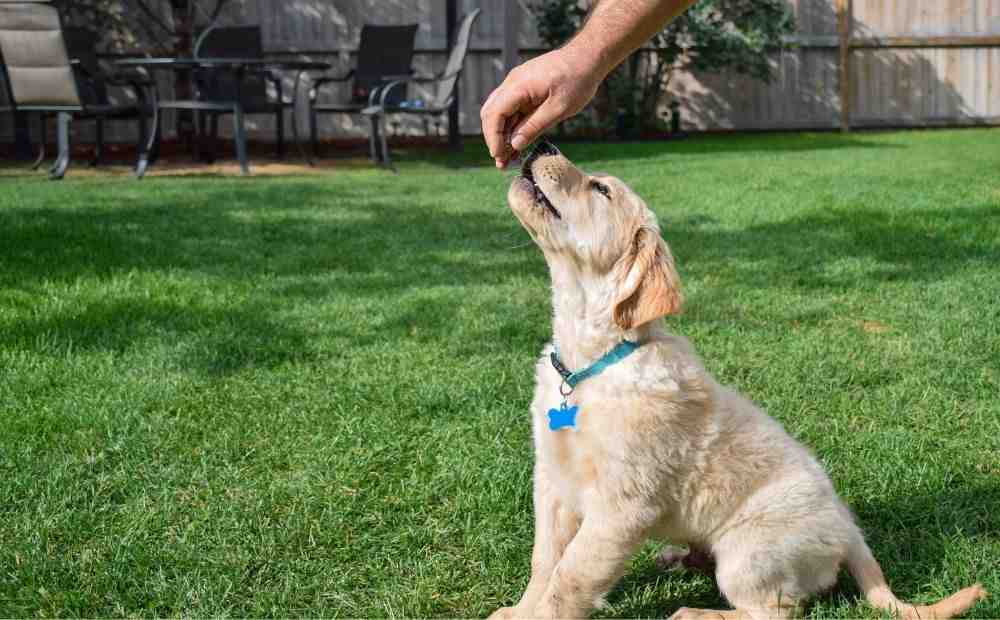
When it comes to training methods, modern science is clear: positive reinforcement is the most effective and humane way to train. This means we reward the behaviors we want to see with small treats, happy praise, and play. When a puppy associates a behavior with a good outcome, they will naturally want to repeat it.
We strongly avoid aversive techniques like leash corrections, physical punishments, or yelling. These old-school methods are counterproductive; they teach your puppy to fear you, which damages your bond and can lead to anxiety or defensive behaviors later in life. Instead, we use clear communication, markers (like a clicker or the word “Yes”), and rewards to guide them.
To help you navigate this early journey, we have also put together a comprehensive Dog Puppy Training Guide.
A Week-by-Week Basic Obedience for Puppies Timeline
To keep your training structured and stress-free, it helps to follow a week-by-week plan that matches your puppy’s physical and mental development. Here is a reliable schedule to guide you through the first six months:
8 to 10 Weeks: Home, Name, Crate, and First Potty Routine
Your focus during these first two weeks should be on helping your puppy settle into your household routine. Teach them their name by saying it in an upbeat voice and giving them a tiny treat the moment they look at you. Introduce the crate as a safe, happy place by tossing treats inside, and establish a consistent bathroom schedule.
10 to 12 Weeks: Sit, Marker Games, and Gentle Exposure
Now that your puppy knows their name, you can start teaching the “Sit” command using a food lure. Lift a small treat slowly over their nose, and their bottom will naturally lower to the floor. Introduce marker training by saying “Yes!” right as they do the behavior, followed immediately by a treat. Continue gentle exposure to new sounds, different floor surfaces, and friendly people.
12 to 16 Weeks: Down, Come, Leash Introduction, and Bite Inhibition
During this stage, introduce the “Down” command by luring a treat from their nose straight down to the floor between their front paws. Start practicing the “Come” command indoors in a quiet hallway. Introduce them to wearing a flat collar and a lightweight leash around the house, and work on bite inhibition by redirecting their sharp puppy teeth to appropriate chew toys.
4 to 6 Months: Stay, Loose-Leash Walking, Impulse Control, and Proofing
As your puppy grows, they will have a bit more focus. Now is the time to build duration with the “Stay” command and begin practicing polite loose-leash walking. Start “proofing” their commands, which means practicing the things they know in slightly more distracting environments, like your front yard or a quiet local park.
You can explore our local tips on Dog Training for Puppies to see how to tailor these stages to your daily life.
Puppies vs. Older Dogs: What Changes?
While dogs can learn at any age, there are significant differences between training a young puppy and training an older dog.
Puppies are blank slates. They have not had time to develop bad habits, which makes teaching them the right behaviors very straightforward. However, they also have tiny bladders and short attention spans, meaning your training sessions must be kept brief — just 3 to 5 minutes at a time, repeated a few times a day.
Older dogs have longer attention spans and better physical control, but they often come with established habits. If an adult dog has spent years pulling on the leash or barking at the door, training them requires reversing those learned behaviors. This process takes more time, patience, and repetition.
For example, if an older dog has learned to ignore the “Come” command, we often have to use a “reverse heel” drill to rebuild their focus. This involves walking in tight circles, changing directions frequently, and rewarding them heavily whenever they turn to catch up with us. To learn more about managing these differences, take a look at our guide on Dog Obedience Training.
Setting Up for Success with Professional Training
A professional board and train program is an incredibly efficient option for busy owners. Your puppy stays with professional trainers who do the heavy lifting of building foundational manners in a structured environment, ensuring consistent and positive reinforcement throughout the day.
To set your puppy up for success, you will need a few simple, high-quality tools to get started:
- A standard 4-to-6-foot flat leather or nylon leash (avoid retractable leashes, which teach dogs to pull).
- A standard flat buckle collar or a comfortable training harness.
- A dedicated treat pouch to keep rewards easily accessible.
- Small, soft, bite-sized treats (about the size of a pencil eraser) so your puppy can eat them quickly and stay focused.
If you are working on early house manners, our guide on Potty Training Puppy offers practical advice on setting up your home environment for success.
At Pet Caddy, our professional services are designed to give you complete peace of mind. Our pricing is transparent with no hidden fees, and we include hands-on human interaction and all-day play at no extra cost. Having the right setup is half the battle.
Housetraining and Solving Common Puppy Antics
Housetraining is often the first major test of patience for new puppy parents. The key to success is preventing accidents before they happen through careful supervision and a strict routine.
Crate training is one of the most effective tools for housebreaking. Dogs instinctively avoid dirtying the area where they sleep. Choose a crate that is just large enough for your puppy to stand up, turn around, and lie down comfortably. If the crate is too large, they may use one corner as a bathroom and sleep in the other.
Keep your puppy on a strict potty schedule. Take them outside:
- First thing in the morning.
- Every 1 to 2 hours throughout the day.
- Immediately after they eat, drink, sleep, or finish a play session.
- Right before bed.
When you take them out, go to the same designated spot, use a cue like “go potty,” and reward them with praise and a treat the second they finish.
If an accident happens indoors, do not punish them. Yelling or rubbing their nose in it will only teach them to fear you or to hide when they need to go. Simply clean the area thoroughly with an enzymatic cleaner to remove the scent, and adjust your schedule to take them out a bit sooner next time. For more step-by-step guidance, explore our local advice on Puppy Potty Training.
Troubleshooting Common Puppy Antics
Puppies explore the world with their mouths and paws, which can lead to some frustrating habits. Here is how to handle the most common puppy antics using gentle redirection:
Biting and Nipping
Puppy biting is normal, especially during teething. If your puppy nips your hands during play, immediately make a quiet, calm marker sound (like “Ouch”), stop moving, and redirect their teeth to a safe chew toy. If they are too excited to stop, they may be overtired. Place them in their crate or playpen for an enforced nap.
Chewing
To prevent inappropriate chewing, puppy-proof your home by keeping shoes, cords, and valuables out of reach. Provide plenty of safe, appealing chew toys, such as stuffed rubber toys. If you catch them chewing on a table leg, calmly say “Leave it,” redirect them to their own toy, and praise them when they take it.
Jumping Up
Puppies jump because they want to be close to our faces to greet us. If your puppy jumps on you, turn your back, fold your arms, and ignore them completely. Do not touch them or speak to them. Once they have all four paws on the floor, ask them to “Sit,” and reward them with calm praise and scratches.
Frequently Asked Questions About Puppy Training
What is the best age to start formal training?
You can start teaching simple manners and name recognition at home as early as 8 weeks of age. For structured group classes, puppies can typically join once they have received their initial round of vaccinations, which is usually around 10 to 12 weeks of age. Starting early helps build good habits before adolescent behaviors begin to show. To learn more about early training timelines in our local area, read our guide on Austin puppy development.
How do I handle a puppy that keeps biting my hands?
Redirection is the most effective approach. Always keep a toy nearby during play sessions. The moment your puppy’s teeth touch your skin, stop the interaction and offer them the toy instead. This teaches them that biting human skin makes the fun stop, while biting toys keeps the game going. Never use physical corrections, as this can make your puppy hand-shy or fearful.
Are purebred dogs less likely to end up in shelters?
No. A common misconception is that shelter dogs are primarily mixed breeds, but statistics show that the majority of dogs turned in to humane shelters are actually purebred dogs. This is why early training and basic obedience are so important for every dog, regardless of their breed or pedigree.
Conclusion
Teaching basic obedience for puppies is a rewarding journey that shapes your wild little companion into a polite, confident dog you can proudly take anywhere. By starting early, using positive reinforcement, and staying consistent, you build a relationship based on trust and clear communication.
If you are looking for support along the way, Pet Caddy is here to help. Located in the beautiful Austin, TX area, our spacious 5-acre ranch provides a peaceful, stress-free environment where your pup can learn, play, and grow. We serve families across Austin, Spicewood, Horseshoe Bay, Marble Falls, Steiner Ranch, Hudson Ranch, Lakeway, Barton Creek, Barton Creek Lakeside, and Bee Cave.
We believe in providing a true “home away from home” for your pet. Our boarding, daycare, and training services feature Hands-On Care, Supervised Small Groups, Big Care, and Tailored Play in our Wide Open Spaces. Your dog will never be confined to a kennel all day; instead, they will enjoy a true Ranch Adventure filled with Tail Wags and loving attention.
Ready to start your pup’s training journey? Schedule your pup’s stay with us today!