Why the First Weeks of New Puppy Training Set the Tone for Life
New puppy training starts the moment your pup walks through the door — not when you feel ready, not after a few weeks of settling in. Every waking moment is a learning moment for your dog.
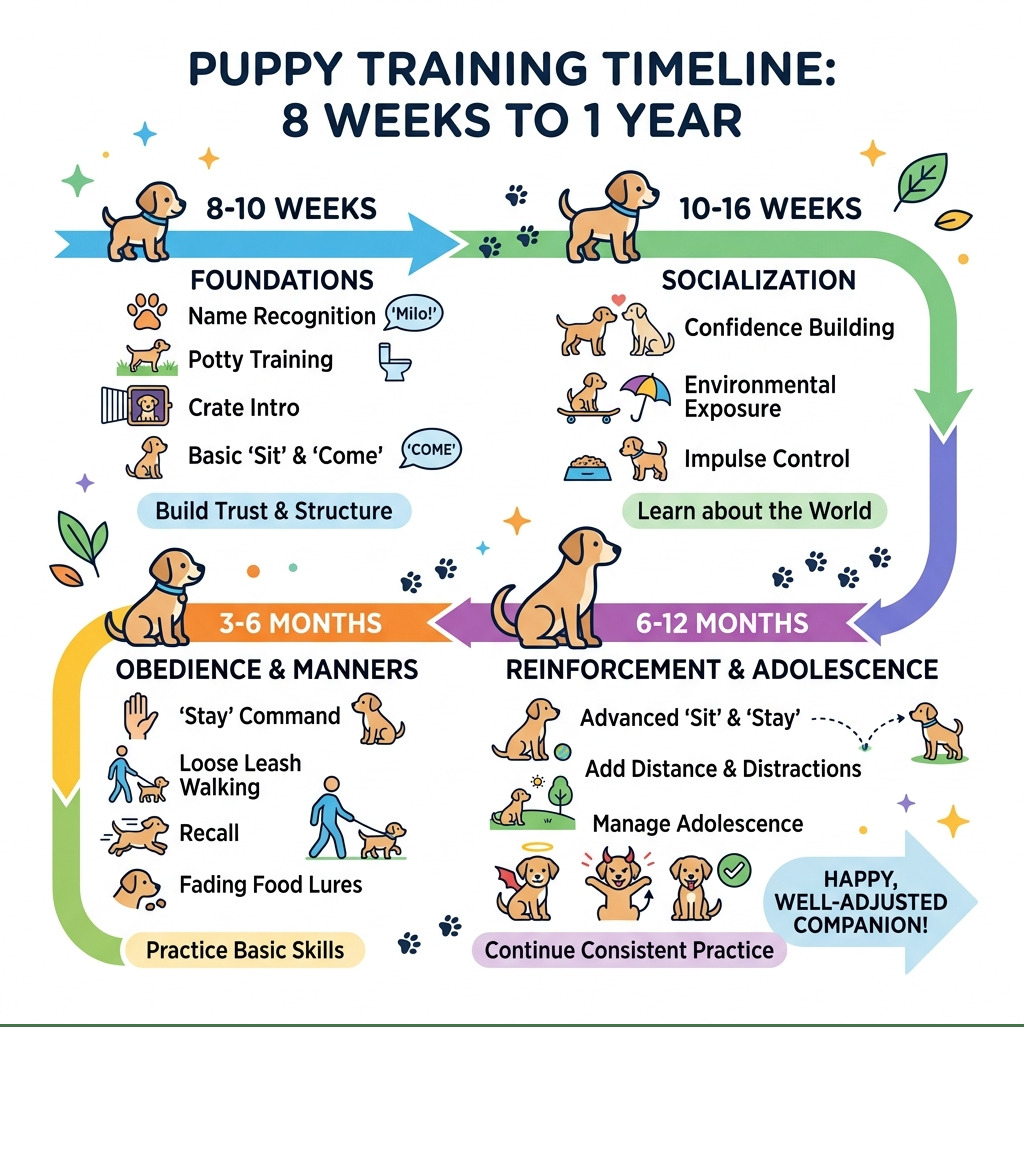
Here’s a quick look at what to focus on and when:
| Age | Training Focus |
|---|---|
| 8-10 weeks | Name recognition, potty training, crate intro, basic Sit and Come |
| 10-16 weeks | Confidence building, environmental exposure, impulse control |
| 3-6 months | Stay, leash walking, recall, fading food lures |
| 6-12 months | Reinforce basics, add distance and distractions, manage adolescence |
The first 16 weeks are the most important window your puppy has for learning how the world works. Miss it, and you’re not out of luck — but you’ll have more work ahead of you.
The good news? You don’t need to be a professional trainer. You just need a plan, a little patience, and the willingness to show up consistently.
This guide walks you through everything: what to do on day one, how puppies actually learn, which behaviors to teach first, and how to handle the chaos that comes with those tiny teeth and boundless energy. Whether you’ve got a brand-new 8-week-old or a pup who’s already picked up a few bad habits, you’re in the right place.
Basic New puppy training terms:
Getting Started with New Puppy Training
Bringing a new ball of fur home to Austin or Lakeway is one of life’s greatest joys, but let’s be honest: it’s also a bit like inviting a tiny, adorable tornado into your living room. The secret to surviving the first week is realizing that your puppy is stressed. They’ve just left their mom and littermates, and everything they knew is gone.
Day One and the 8-Week-Old Milestone
Most puppies arrive at their new home around 8 weeks old. This is a critical time because they are sponges for information. On day one, the goal isn’t a perfect “Heel”; it’s decompression.
We recommend setting up a base camp. This is a puppy-proofed area—perhaps a laundry room or a sectioned-off part of the kitchen—where your pup has their crate, water, and safe toys. Limiting their world initially prevents them from feeling overwhelmed and helps stop potty accidents before they start.
You might experience the “puppy blues” or a “What was I thinking?” moment during these first few nights. That’s normal! Puppies often cry at night because they feel lonely. To help them settle, place the crate in your bedroom so they can hear your breathing and feel secure.
Teaching Basics in New Puppy Training
Once your pup has had a nap and a snack, you can start micro-sessions of New puppy training. Keep these to five minutes or less.
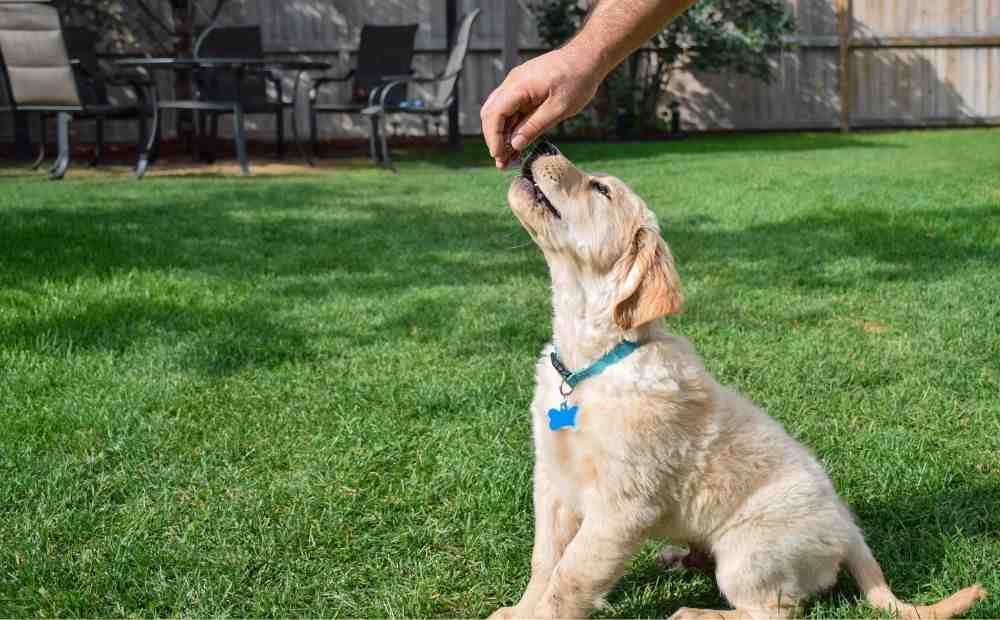
- Name Recognition: Say your puppy’s name. The second they look at you, say “Yes!” and give them a tiny treat. We want them to think their name is the best word in the English language.
- Eye Contact: This is the foundation of focus. Reward your puppy just for checking in with you.
- Sit and Come: These are the “please” and “thank you” of the dog world. Use a treat to guide their nose up and back (luring) to get a sit, or back away enthusiastically to encourage them to follow you for a “Come.”
For a deeper dive into these initial steps, our guide on Puppy Training 101: Commands Every New Dog Parent Needs to Know is a great resource.
Building Confidence During New Puppy Training
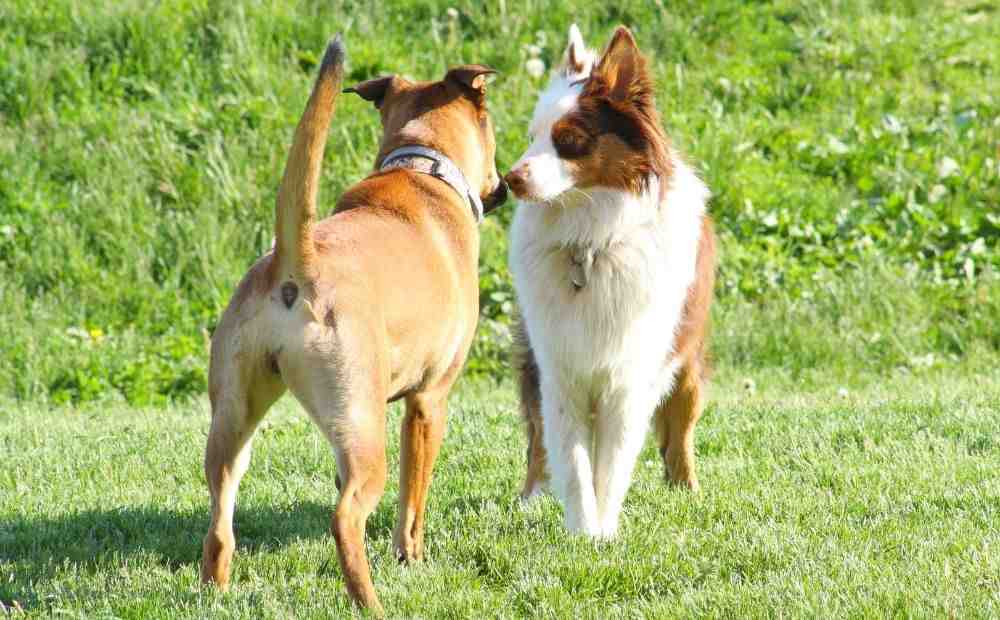
Socialization isn’t just about meeting other dogs; it’s about environmental exposure. Between 7 and 14 weeks, puppies are in a “sensitive period” where they are most open to new experiences.
We want to introduce them to the sights and sounds of Central Texas life—the sound of a lawnmower, the feel of gravel under their paws, or the sight of someone wearing a big cowboy hat. The goal is to make these things “no big deal.” If your pup seems scared, back up and give them space. For local tips, read about Austin Doggy Daycare.
The Building Blocks of Positive Reinforcement
In our New puppy training programs, we exclusively use positive reinforcement. Why? Because it works, and it builds a bond based on trust rather than fear. Puppies repeat behaviors that earn them good things—like treats, praise, or a game of tug.
Markers and Rewards
A “marker” is a sound (like a clicker or the word “Yes!”) that tells the puppy exactly what they did right at the moment they did it. It’s like taking a mental snapshot of the good behavior. Follow the marker with a reward within one or two seconds.
Three Ways to Teach Behaviors
- Luring: Use a treat like a magnet at the puppy’s nose to guide them into a position (like a Sit or Down).
- Capturing: Wait for the puppy to do something naturally (like a stretch or a sit) and mark/reward it.
- Shaping: Reward small steps toward a goal. If you want them to go to their bed, reward them for looking at the bed, then stepping toward it, then putting one paw on it.
By using these methods, you’re teaching your puppy how to learn.
House Training and Crate Success
Potty training is usually the biggest hurdle for new owners in Marble Falls or Spicewood. The golden rule? Supervision is everything. If you aren’t watching them, they should be in their “den”—the crate.
The Den Instinct
Dogs naturally avoid soiling where they sleep. A properly sized crate (just big enough to stand, turn, and lie down) leverages this instinct. If the crate is too big, they might use one corner as a bathroom.
A Bulletproof Potty Schedule
Puppies have tiny bladders. A good rule of thumb is that a puppy can “hold it” for one hour for every month of age, divided by two when they are active. So, an 8-week-old (2 months) needs a break every hour or so when awake.
- Take them out: Immediately after waking up, after eating, after playing, and right before bed.
- Use a Cue: Say “Go potty” when they start.
- Reward: Give a treat the second they finish outside.
If an accident happens (and it will!), don’t scold them. Simply clean it with an enzymatic cleaner to remove the scent. For a complete walkthrough, read From Puppy to Potty Pro: Everything You Need to Know About House Training and the ASPCA guide on house training.
Managing Puppy Manners and Common Challenges
As your puppy grows, they’ll start testing boundaries. This is when New puppy training moves from “cute” to “necessary for my sanity.”
Biting and “Hyper Attack Mode”
Puppies explore with their mouths. If they nip you, make a high-pitched “Ouch!” and stop play for a few seconds. If they are in “Hyper Attack Mode” (the puppy witching hour), they are likely overtired. Puppies need 16-18 hours of sleep a day. If they’re acting like a gremlin, it’s probably time for a nap in their crate.
Impulse Control and Leash Walking
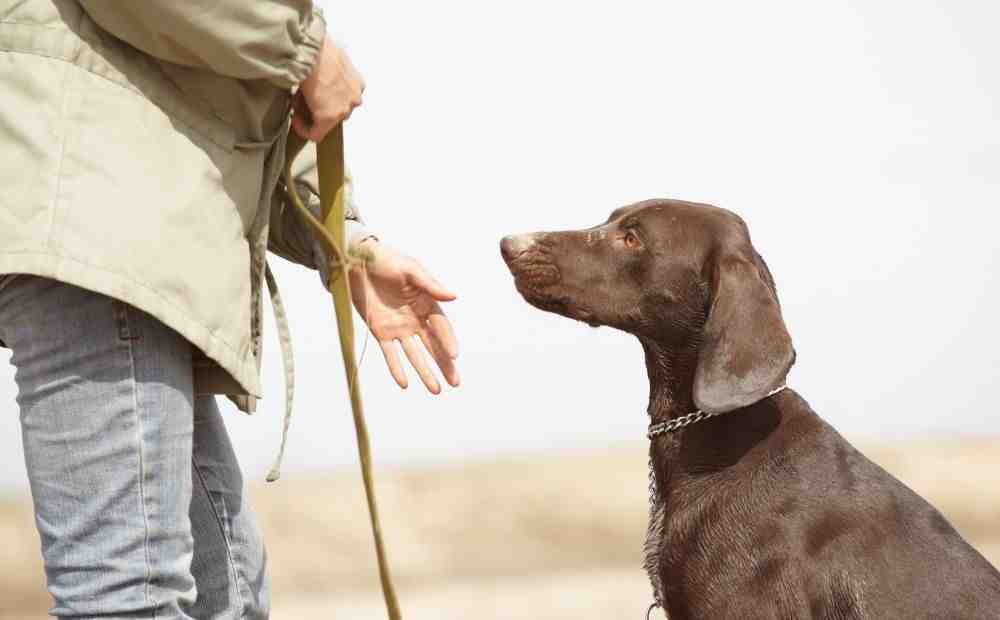
Teach your pup that they don’t get what they want by lunging or barking. Have them “Sit” before you put their food bowl down or before you open the door for a walk.
For leash walking, start indoors. Attach the leash and just walk around the kitchen, rewarding them for staying near your side. Gradually move to the driveway and then the sidewalk. You can find more troubleshooting tips at Puppy Potty Training.
Frequently Asked Questions about Puppy Training
When should I start training my new puppy?
Right now! Whether they are 8 weeks or 8 months, training starts the second they enter your home. Formal obedience can start as early as 8 weeks with short, positive sessions.
What if my puppy regresses during adolescence?
Around 6 to 12 months, your “perfect” puppy might suddenly “forget” their name or start chewing the baseboards. This is normal adolescence. Stay consistent, go back to basics, and reinforce your house rules. Sometimes a Puppy Boot Camp can help get them back on track.
Is it too late to train my dog if I missed the early milestones?
It is never too late. While the first 16 weeks are a “prime” learning window, dogs are lifelong learners. You might have to work a bit harder to undo rehearsed bad habits, but with patience and positive reinforcement, any dog can learn new tricks.
Conclusion
At Pet Caddy, we know that New puppy training can feel overwhelming, but you don’t have to do it alone. We are proud to be a locally owned Austin-area business, offering a “home away from home” for your furry family members.
Our five-acre ranch is a true adventure for dogs, providing wide-open spaces where they can play and explore under constant supervision. Whether you need help with the basics or want a structured environment for your pup to grow, our board & train and daycare services are designed with your dog’s happiness in mind. We believe in transparent pricing with no hidden fees—hands-on human interaction and all-day play are always included.
Ready to turn that puppy chaos into cuddles? From Steiner Ranch to Horseshoe Bay, we’re here to help your pup thrive. Schedule your pup’s stay with us today and let the ranch adventure begin!